
Type & Composition
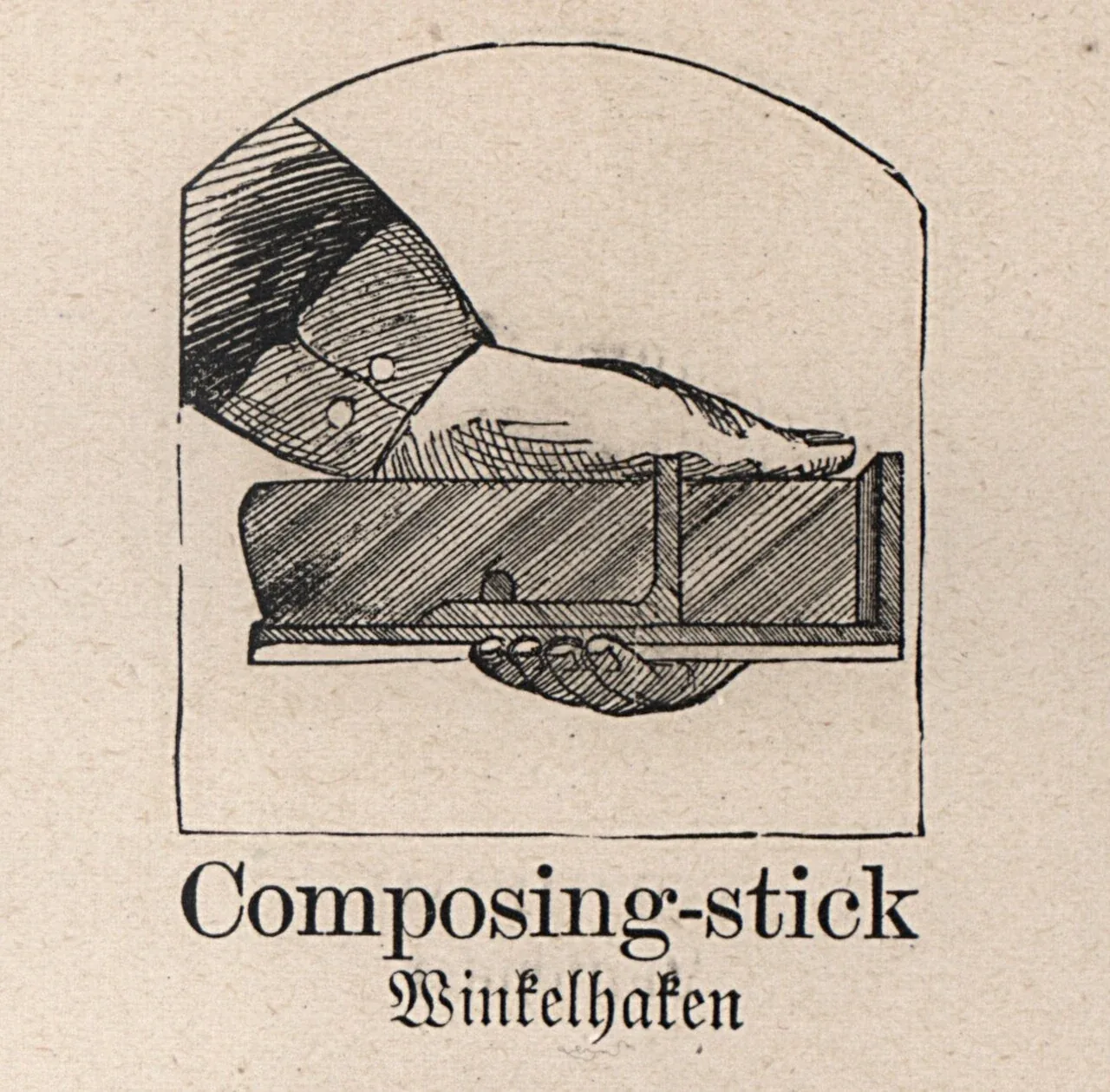
The Composing Stick, Line by Line
The composing stick is a small tool with an outsized role: it holds one line of type while a compositor assembles words from individual sorts. The Library of…
5 min readIndependent field journal · 50 essays
A closer look at letterpress, relief printmaking, working tools, and the printed objects that carry their histories.
See how a print is made From the journalAlbion and the Press Lever
Where pressure meets material, decisions become visible. We follow those decisions across pressrooms, type cases, relief blocks, collections, and the printed page.
A relief print, in three moves
Relief printing makes the surface do the explaining: the raised image receives ink, then transfers to paper.
Based on the V&A guide to print and the National Gallery of Art’s printmaking basics.
Remove the areas that should stay white, leaving the image raised on the block.
Roll a controlled layer of ink across the parts that will make the impression.
Bring paper into contact with the inked block by hand or with a press.
At the workbench
A small vocabulary for the surfaces and tools in the archive.
A map of the field
Five paths into the archiveSelected from the journal
The composing stick is a small tool with an outsized role: it holds one line of type while a compositor assembles words from individual sorts. The Library of…
5 min read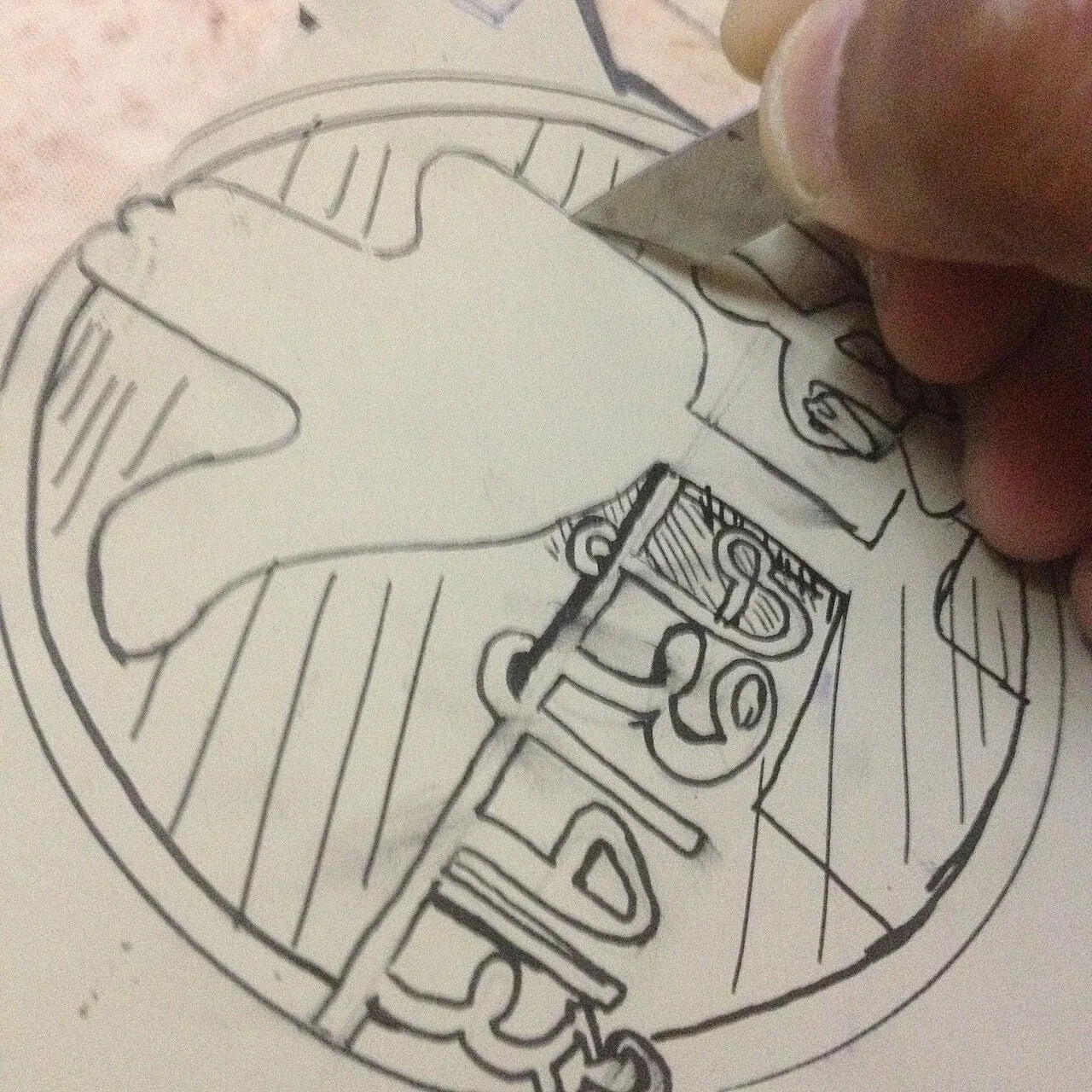
The photograph shows a sheet of linoleum being carved for a stamp. Its caption identifies the design as a stamp featuring Chandigarh's Open Hand Monument, the Rock…
5 min read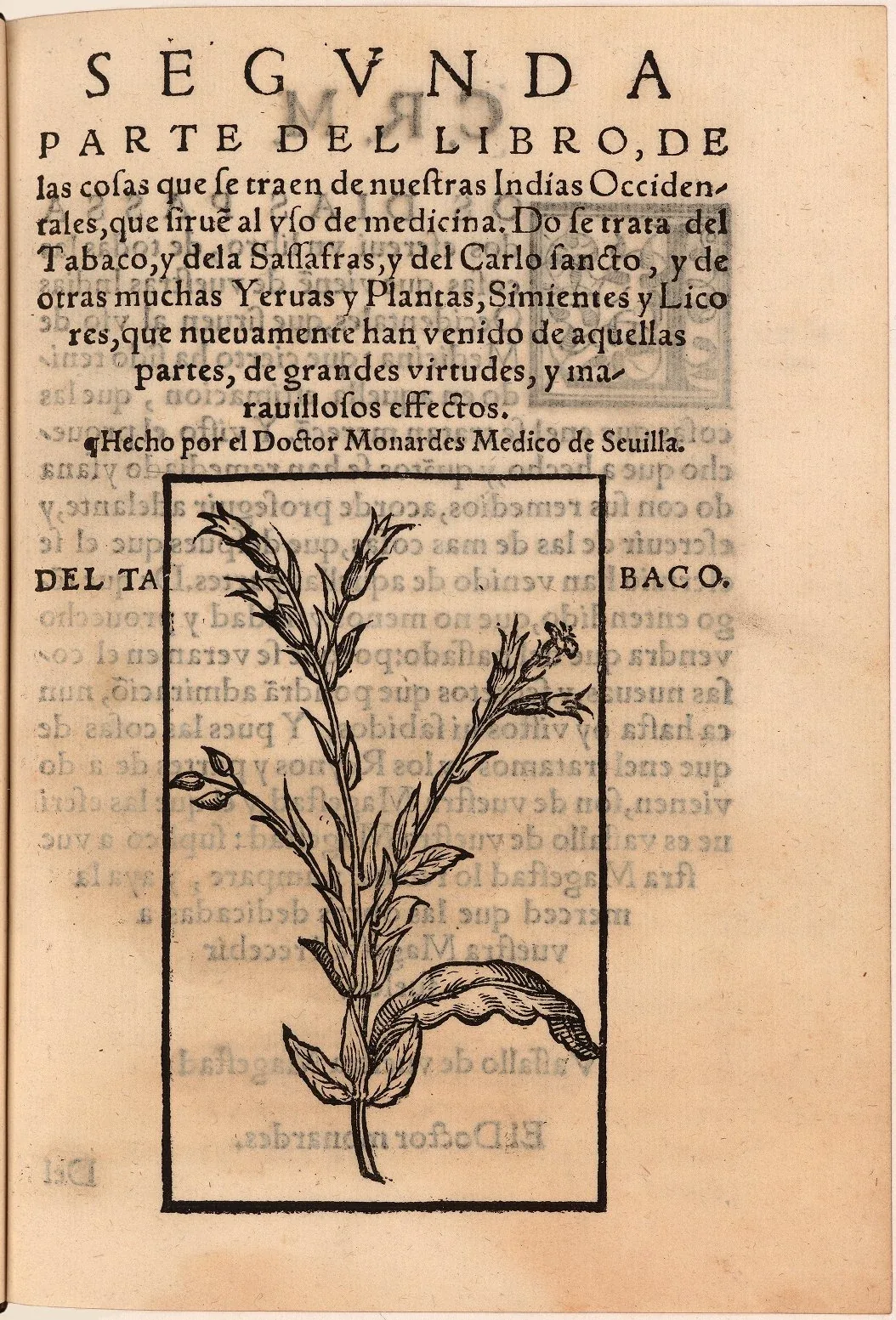
The 1574 woodcut of a tobacco plant appears on a title page in Nicolás Monardes's *Historia medicinal*. The file record identifies it as a plant illustration and…
5 min readMore from the field
The press shown here is identified in its Commons file record as the Kelmscott–Goudy press at the Cary Graphic Arts Collection. RIT’s collection record gives the…
A printer’s case is not a decorative box of letters. It is a working storage system that determines how a compositor reaches the type needed for a line. The cover’s…
A two-colour linocut is not simply a black-and-white print with a second ink added at the end. Each color depends on a carved surface, an inking decision, and a…
*Popular Irish Stories* appeared in Glasgow in 1850 as number 23 in a “New and Improved Series.” The National Library of Ireland catalogue describes it as a 24-page…
A working archive
Machines, materials, skill, place, and time leave traces together. Each essay follows the evidence that survives—and marks where the record becomes quiet.
Browse all 50 essays