
The Print Field / Essay 42
Popular Irish Stories: A Glasgow Chapbook
*Popular Irish Stories* appeared in Glasgow in 1850 as number 23 in a “New and Improved Series.” The National Library of Ireland catalogue describes it as a 24-page…
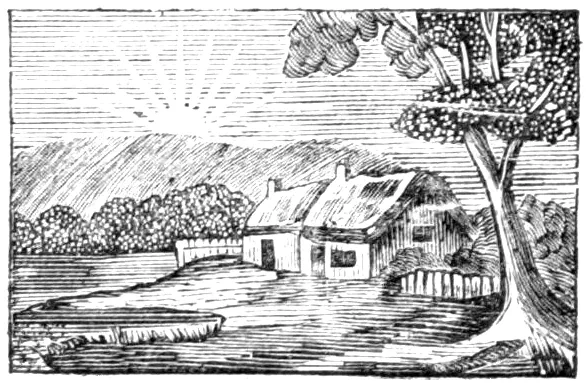
A one-penny book with a woodcut on its title page
Popular Irish Stories appeared in Glasgow in 1850 as number 23 in a “New and Improved Series.” The National Library of Ireland catalogue describes it as a 24-page Scottish chapbook, printed for the booksellers, with a title vignette. The digitized title page adds that it cost one penny and was “compiled from the best authors.” The cover woodcut is a small part of a cheap printed book, but it helps show how a title page invited a reader into the text before the stories began.
Chapbooks were compact publications often associated with inexpensive reading. That general description should not turn this single item into a representative sample of every chapbook. The catalogue gives us concrete facts: Glasgow, 1850, the series number, the title, a 24-page extent, and a small format of about 16 centimetres. The printed page provides its own wording. Together, catalogue and object allow a reader to examine how the publication presents itself.
The vignette works at the threshold
A title vignette sits at the threshold between cover and contents. It can catch the eye, establish a tone, or help distinguish one title from another in a bookseller's stock. The woodcut does not have to tell a story in full. Its small scale makes it a compact visual signal, while the surrounding typography carries the title, series information, price, and place of printing.
Woodcut is a relief process: the parts left standing take ink, while carved areas remain unprinted. A printer can place a block into a forme along with type, so image and text can be printed together in a coordinated page. The exact block and printing order for this title page are not documented in the cited catalog entry. The image itself indicates a woodcut, but a close technical study would be needed to identify its relation to the page's type and any signs of reuse.
A title promises a kind of reading
The title promises Irish stories, but the catalogue notes that the book was published in Glasgow and categorizes it as a Scottish chapbook. Those details show that subject, place of publication, and bibliographic classification can differ. A modern reader should not assume the compiler's identity or the stories' origins solely from the title. The contents page and source texts would need to be examined for that work.
The phrase “compiled from the best authors” is part of the book's own sales language. It is not an independent quality assessment. Such wording helps reveal how the publication marketed itself to buyers: the compiler invokes authority without naming every source on the title page. That choice invites further bibliographic research into the contents, but it does not license us to invent a list of authors.
Price, series, and circulation
The one-penny price gives the book a place in the economy of inexpensive print. Its series number suggests that a bookseller could handle it among other small titles. The NLI catalogue notes the series, while the digitized page supplies the price. These facts point toward circulation through a trade in small printed items. They do not tell us the print run or how many copies sold.
A chapbook's format shaped its use. At 24 pages and approximately 16 centimetres, it was small enough to be carried and read outside a formal library setting. Readers might encounter the title through a bookseller, at home, or through someone else's copy. Those are plausible modes of circulation, but the surviving record of this particular book does not say which one applied to a given reader. Physical evidence and advertisements can sometimes help answer those questions.
What a woodcut can and cannot reveal
The title-page image is evidence of the book's designed surface. It can be described by visible subject and technique once the high-resolution page is consulted. It does not identify the artist, unless a signature or separate record does so. The Commons record lists the author as unknown. That is a clear reminder that not every printed image can be assigned to an individual maker.
The NLI catalogue and the digital facsimile give two complementary records. The catalogue supplies format and subject headings; the page shows the book as printed. A file converted from the source image retains its composition but may change color, crop, or detail slightly. The local WebP used here is credited to the source scan, not presented as an original photograph of the physical copy.
Price, series, and picture make different promises
The chapbook's title page offers several kinds of information before the stories begin. A price tells a prospective buyer what the item costs. A series number places it within a continuing range. A vignette supplies a visual point of recognition. The phrase about the best authors offers a claim of borrowed authority. These elements coexist on one page, but they do not prove the same thing or carry equal evidential weight.
The distinction is useful when evaluating the publication's own advertising language. A printed price is evidence of an advertised price, not a sales total. A series number is evidence of presentation within a series, not proof that every preceding number sold successfully. The statement about authors does not identify a verified list of contributors. Reading the page this way makes its commercial function visible without turning its promises into modern factual endorsements.
The woodcut contributes at the point where a buyer encounters the item as an object. Its task may be identification, attraction, or an association with the stories; determining the exact subject requires the original page. Its presence does not make it a complete illustration of the contents. The resulting interpretation is specific to this chapbook's threshold: a small publication uses a compact arrangement of price, number, words, and picture to establish what kind of reading it offers. Examining that arrangement helps explain how the book presents itself, rather than repeating its claim to the best authors as if it were an independent review.
Further reading
Sources & records
Linked records provide object descriptions and historical context. Comparisons, close readings, and explicitly hypothetical examples are editorial analysis. This essay was revised on 22 October 2026; it does not report first-hand workshop research. The image source and license appear in its caption.
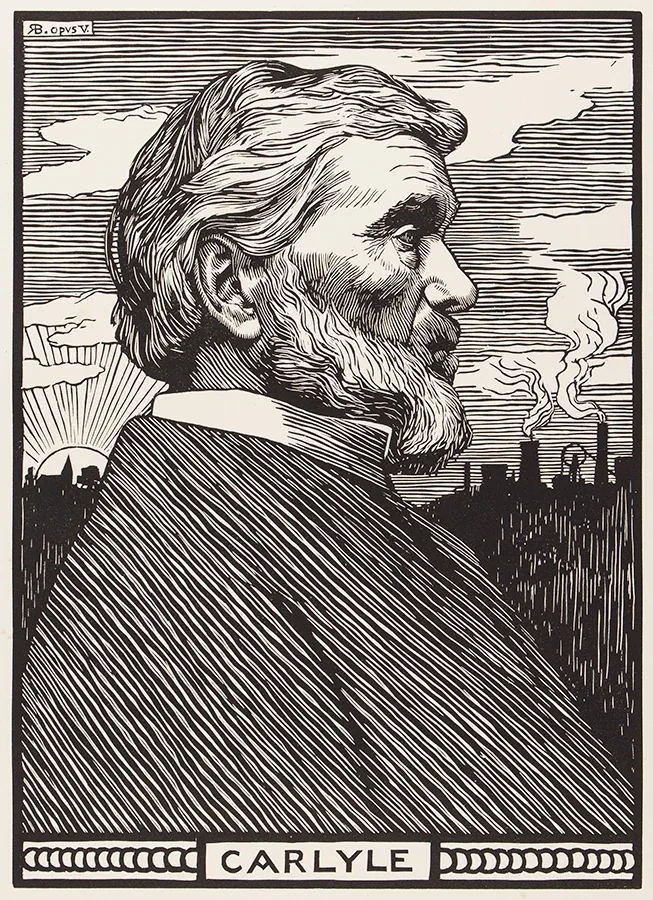
Robert Bryden’s Carlyle Woodcut
The file record identifies this image as Robert Bryden's woodcut of Thomas Carlyle, made for *Some Woodcuts of Men of Letters of the Nineteenth Century*. The file…
5 min read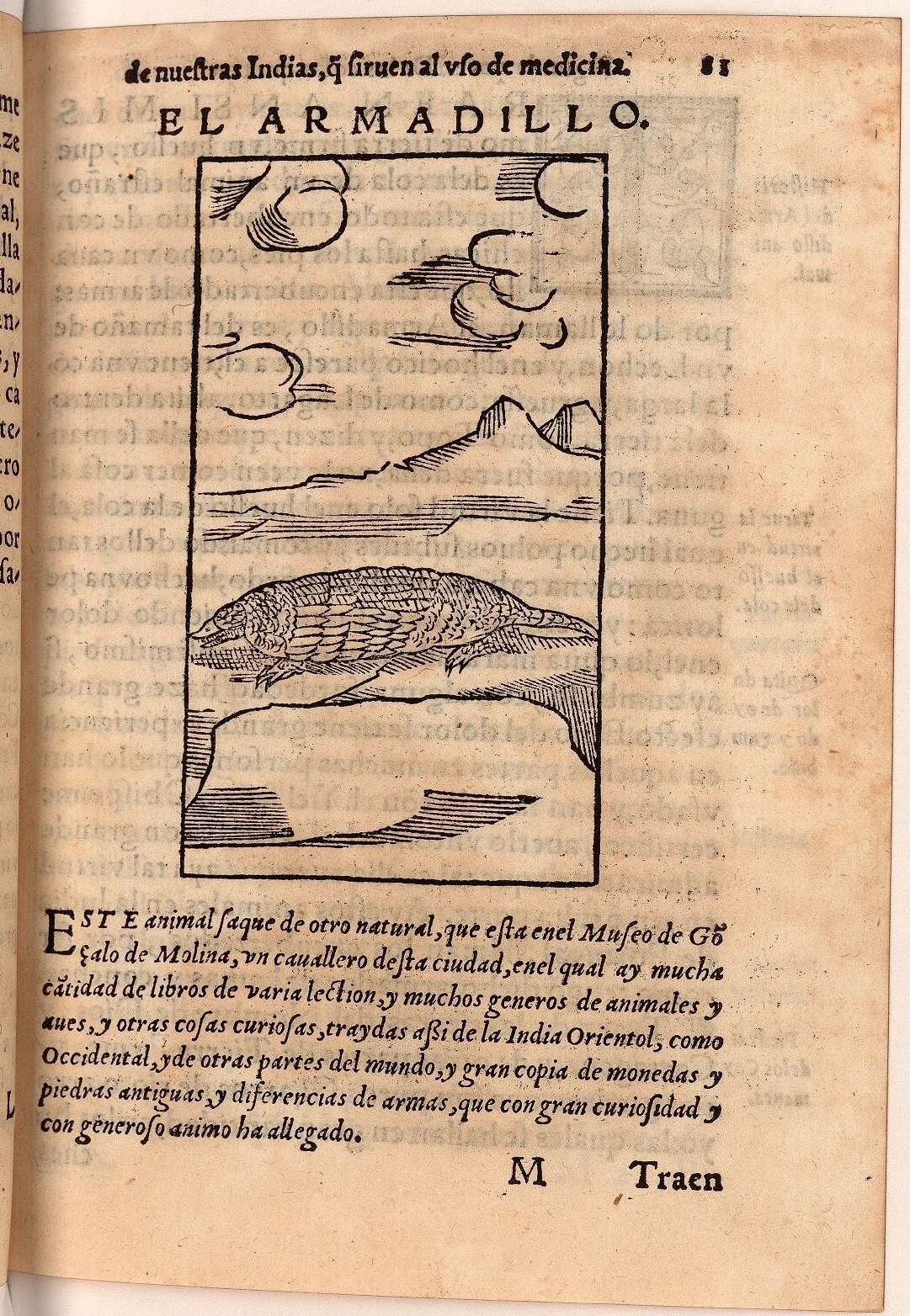
Monardes’s Armadillo Woodcut
The Commons record identifies this image as a woodcut illustration of an armadillo from Nicolás Monardes's 1574 *Historia medicinal*. The illustration belongs to a…
5 min read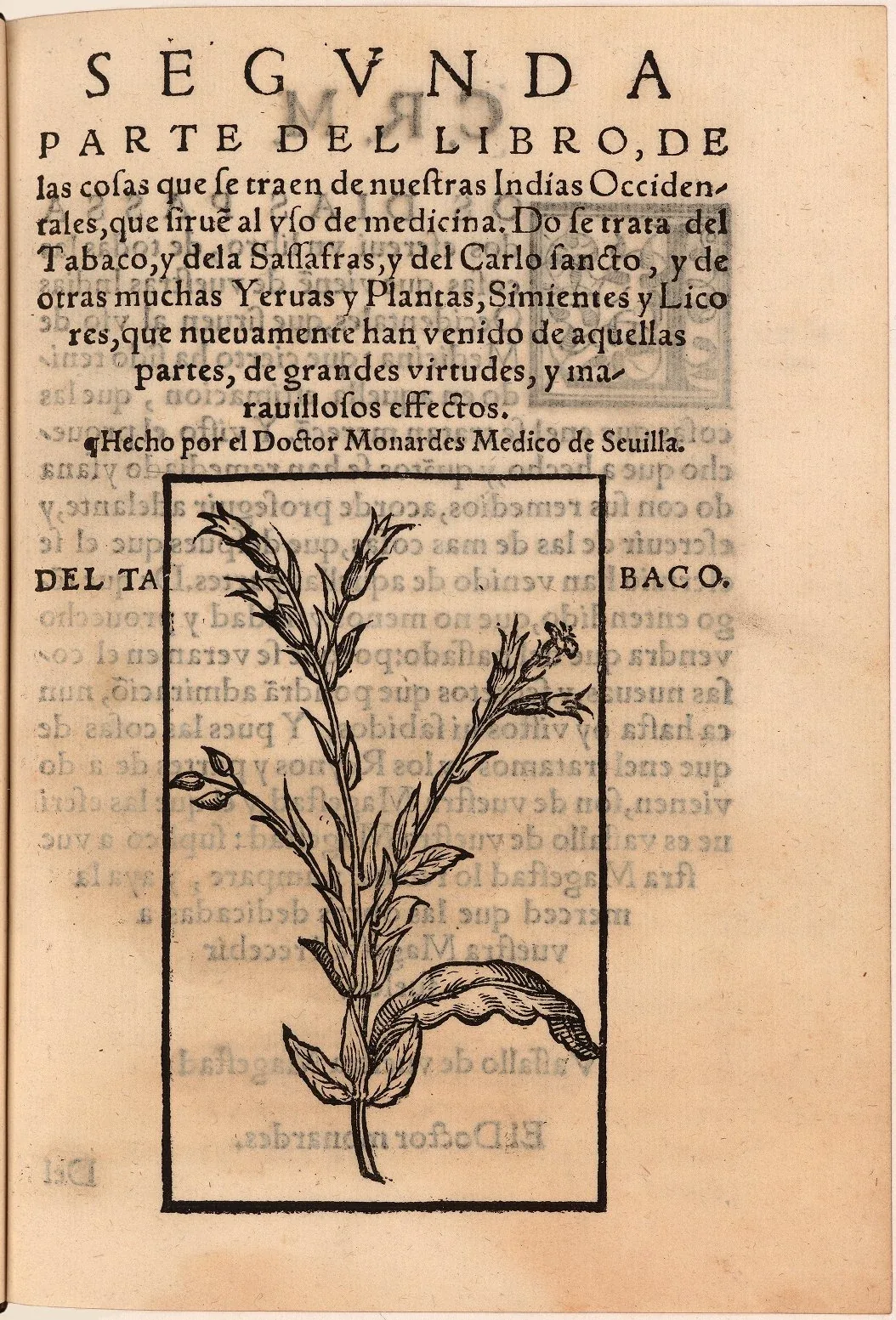
Tobacco on a 1574 Title Page
The 1574 woodcut of a tobacco plant appears on a title page in Nicolás Monardes's *Historia medicinal*. The file record identifies it as a plant illustration and…
5 min read