
The Print Field / Essay 43
Monardes’s Armadillo Woodcut
The Commons record identifies this image as a woodcut illustration of an armadillo from Nicolás Monardes's 1574 *Historia medicinal*. The illustration belongs to a…
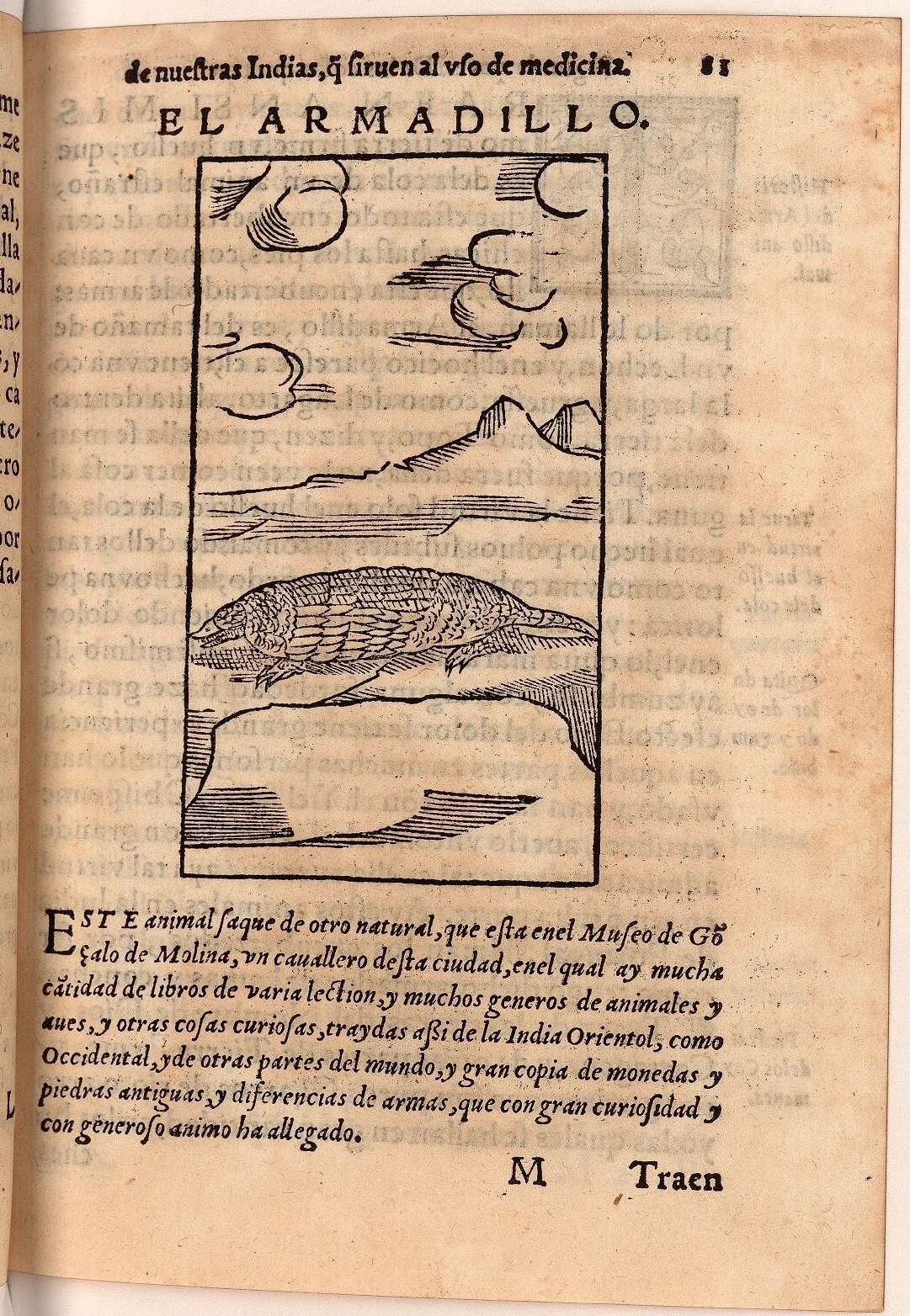
An unfamiliar animal enters a medical book
The Commons record identifies this image as a woodcut illustration of an armadillo from Nicolás Monardes's 1574 Historia medicinal. The illustration belongs to a book about materials and remedies arriving from the Americas, not to a modern zoological field guide. The University of Notre Dame's rare-book exhibition notes that Monardes never visited the Indies; products arriving in Seville informed the work that made him known. This context changes how the animal should be read: the image participates in a European effort to describe and classify distant goods and creatures.
The woodcut gives the animal a visible form that can be reproduced within a book. It also carries limits. A printed image depends on the artist's observation or source, the block's carving, the available paper, and the page's scale. The picture may help readers recognize a subject, but it cannot alone prove exactly where the animal was seen, who drew it, or how accurately it reflects a living specimen.
A medical history is not a modern prescription
Monardes's book discusses the uses attributed to products from the Americas. Notre Dame's exhibit notes a historical claim that ground armadillo tail bone was recommended for earaches. That statement belongs to a sixteenth-century medical text, not to present-day clinical guidance. Repeating it without context could confuse a historical record with a proven treatment. The correct way to discuss it is as evidence of what the book reported, not as an endorsement of efficacy.
Early printed medical books often combined observation, received authorities, practical recipes, and claims about new materials. A modern reader should distinguish those categories rather than treating everything on a page as a validated finding. The original text, later translations, and the history of medical practice can all help explain how a claim was made and understood. None can turn a sixteenth-century remedy into current health advice without modern scientific evidence.
The woodcut as a portable description
Before photography, a woodcut could carry a repeatable image from one copy of a book to another. The block held a composition in relief: raised areas received ink, cut-away spaces remained blank, and pressure transferred the design to paper. Once placed in a forme, the image could be printed as part of a page with text. The illustration's repeatability helped readers compare an object described in words with a visible representation.
Repeatability is not the same as accuracy. The block may simplify, exaggerate, or follow conventions. A printer can reproduce the same design many times, but the result's likeness depends on the source image and maker's knowledge. The armadillo woodcut should therefore be approached as a historical representation. It tells us that the book chose to include this animal, not that every detail was drawn from direct examination by Monardes.
A network of trade and information
Notre Dame's exhibition emphasizes the role of goods arriving in Seville in Monardes's work. The book translated objects and reports from overseas into a European printed reference. The image of an armadillo sits within that information network: imported materials, commercial routes, descriptions, and printing all contributed to what readers could encounter on a page.
The network was not neutral. The movement of goods from the Americas took place within colonial encounters that shaped who controlled materials and whose knowledge was recorded. The source cited here establishes Monardes's role as a writer working from goods and accounts reaching Spain; a full account of the people who supplied knowledge would require additional historical sources. It is important not to fill that gap with conjecture, but equally important not to mistake a European publication for the sole origin of the knowledge it contains.
Reading an animal image with care
Begin with the page's own caption and the Commons source record. It names an armadillo and links the image to the 1574 book. Then compare the illustration with descriptions in the text. What features were emphasized? Which parts may have been simplified to make the animal legible in the available space? The image can be studied as a design and as a piece of historical evidence without assuming it is a direct naturalistic portrait.
The scanned book preserves more than the isolated cut. Page placement, nearby prose, chapter headings, and other illustrations can clarify why the image appears there. Cropping it for a modern cover makes it easier to feature, but that crop can remove the context that gave it meaning. The article should reconnect the image to its book and date so the reader does not mistake it for a contemporary animal photograph.
Repetition can stabilize an image without validating a claim
The armadillo cut separates two forms of reliability. A well-preserved block can reproduce a recognizable design across impressions. That consistency concerns the printed image. It does not establish that every anatomical feature is correct or that a medicinal claim attached to the animal is sound. A stable representation can carry uncertain knowledge very effectively. This is the article's central comparison, rather than a claim about a specific reader's response to Monardes.
The Notre Dame exhibit makes the distinction concrete by describing a historical use attributed to armadillo material. The medical assertion belongs to the history of the text. It should not become a present-day recommendation merely because its neighboring image can be identified and reproduced. The image, the asserted use, and modern evidence are separate questions. Establishing the book's date or author cannot resolve all three at once.
An isolated modern crop makes that separation even more important. Removed from the surrounding page, the animal can look like an independent natural-history illustration. Restoring the book reference shows that it participated in a particular printed account of materials reaching Spain. The analysis therefore follows a chain: an animal is represented, a book gives the representation a context, and repeated impressions distribute that context. At each step, something is made more portable without necessarily becoming more accurate. That explains both the historical power of woodcut illustration and the need to evaluate the claims its reproducibility helped carry.
Further reading
Sources & records
Linked records provide object descriptions and historical context. Comparisons, close readings, and explicitly hypothetical examples are editorial analysis. This essay was revised on 22 October 2026; it does not report first-hand workshop research. The image source and license appear in its caption.
Robert Bryden’s Carlyle Woodcut
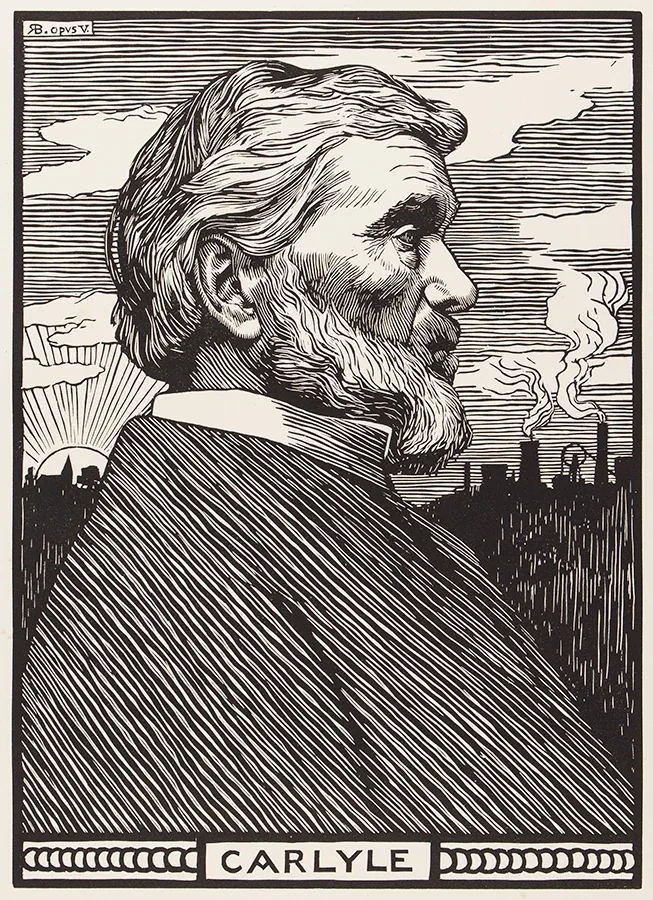
The file record identifies this image as Robert Bryden's woodcut of Thomas Carlyle, made for *Some Woodcuts of Men of Letters of the Nineteenth Century*. The file…
5 min read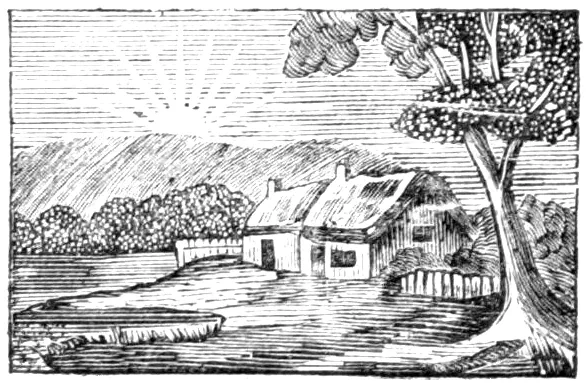
Popular Irish Stories: A Glasgow Chapbook
*Popular Irish Stories* appeared in Glasgow in 1850 as number 23 in a “New and Improved Series.” The National Library of Ireland catalogue describes it as a 24-page…
5 min read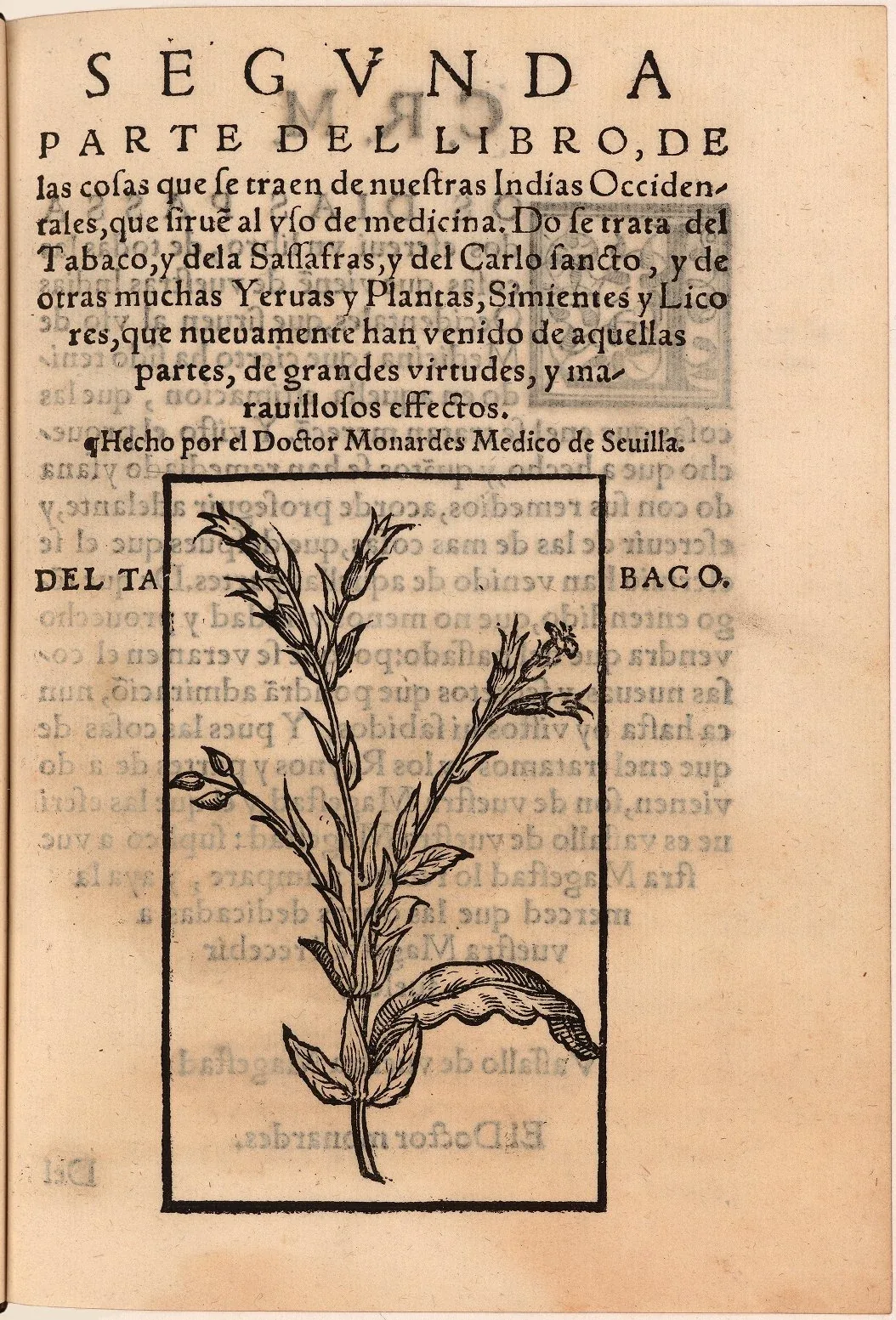
Tobacco on a 1574 Title Page
The 1574 woodcut of a tobacco plant appears on a title page in Nicolás Monardes's *Historia medicinal*. The file record identifies it as a plant illustration and…
5 min read