
The Print Field / Essay 41
Robert Bryden’s Carlyle Woodcut
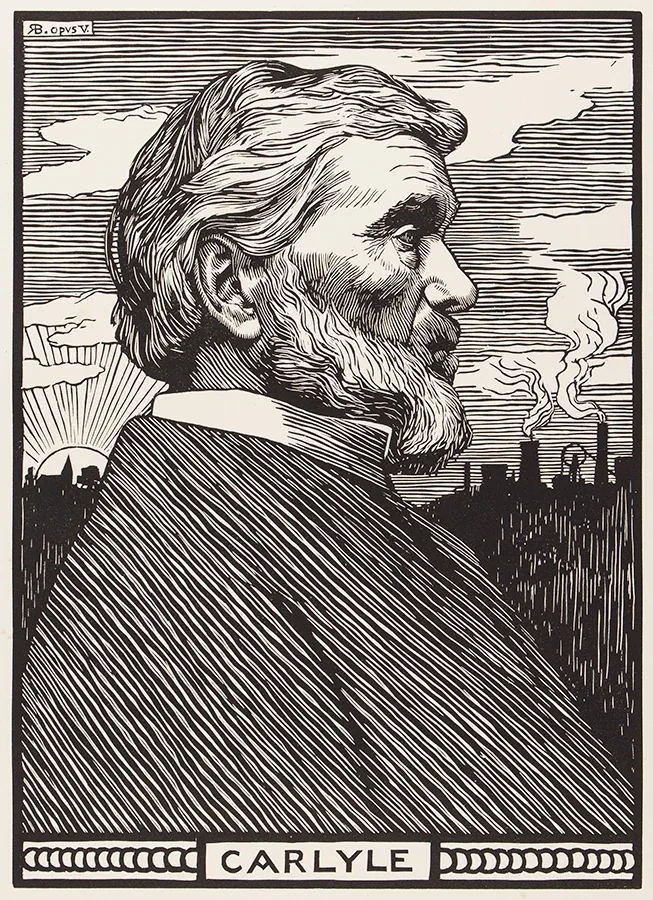
The file record identifies this image as Robert Bryden's woodcut of Thomas Carlyle, made for *Some Woodcuts of Men of Letters of the Nineteenth Century*. The file…
A portrait that belongs to a series
The file record identifies this image as Robert Bryden's woodcut of Thomas Carlyle, made for Some Woodcuts of Men of Letters of the Nineteenth Century. The file dates the work to 1901 and gives the printed image as 14 by 10 inches. A precise edition or impression history requires a fuller portfolio record. That information already tells us more than a generic label of “portrait”: the image was conceived in relation to a portfolio that grouped literary figures, and Carlyle appears as one subject within a larger sequence.
A portrait woodcut makes a person recognizable through a carved surface. The artist removes areas that should remain blank, leaves raised areas to carry ink, and transfers that relief to paper. The block's cut lines and dark fields turn a face into a printable pattern. The result is not a transparent likeness. It is an interpretation shaped by the artist's choices, the source image, and the technical demands of carving.
The title names Carlyle, a nineteenth-century writer, and the series frames him as a “man of letters.” That phrase belongs to the portfolio's historical language. It signals an editorial choice about whose portrait merits inclusion. The series is itself a form of classification: it gathers individuals under a common description and makes the viewer encounter them as a sequence.
A woodcut organizes light and texture
Woodcut printing depends on the material that remains above the carved surface. A dark mass may define hair, clothing, or shadow; a network of fine lines can suggest texture; unprinted paper provides light. The artist must plan those relationships in reverse because the printed image reverses the block. A line that is cut away appears pale in the impression, and an uncut ridge receives ink.
The supplied reproduction can be examined for silhouette, direction of the face, and contrast between portrait and background. It may also show the print's border or lettering, depending on the crop. Those are visible facts. Claims about the exact reference photograph, a specific print run, or the artist's intentions require a catalogue essay or archival record. A close visual reading is most useful when it stays separate from details that the image does not reveal.
The portfolio changes how the portrait reads
Seen alone, Carlyle's portrait can feel like a single statement about one individual. Seen as part of a series, it also participates in a collective editorial project. A sequence of portrait prints invites comparison: who is shown, how each face is rendered, and whether a consistent format makes the subjects appear equally authoritative. Even if a viewer cannot see every sheet at once, the series title gives a context for thinking about the image's place within a set.
Such a portfolio is not a neutral list of writers. It reflects the selections made by its creators and the audiences they imagined. The phrase “men of letters” sets a gendered boundary around the series. Naming that boundary is not a claim about Bryden's private motives; it is an observation about the wording and structure documented in the title. A modern reader can attend to both the artwork and the category that frames it.
Dimensions and reproduction
Fourteen by ten inches describes a large printed image compared with a small bookplate. The dimensions help explain why a portrait could hold a substantial amount of carved detail while still being intended for a portfolio or wall. A digital preview may reduce that scale to a few hundred pixels, concealing the texture of the woodcut. Enlarging the image on screen can recover some line detail, but it does not reproduce the physical quality of paper and ink.
The Commons file page is also the source for the cover's public-domain status and uploader metadata. The artwork's history and the digital reproduction's file history should not be treated as the same thing. The exact portfolio or edition record would tell readers more about its publication context, while the image file lets them view this particular reproduction.
The portfolio gives a face an editorial neighborhood
Bryden's Carlyle can be read as an individual portrait and as a member of a selected group. The portfolio title places the subject among nineteenth-century men of letters. That frame does not merely add bibliographic information after the image has been understood; it changes the comparison a viewer is invited to make. A face is now one example within a category, presented alongside other chosen reputations.
The useful question is what the series format makes comparable. Similar dimensions, repeated typography, or a consistent portrait arrangement could encourage a viewer to grant the subjects a shared kind of importance. Those possibilities need to be checked against actual portfolio sheets rather than asserted from this reproduction alone. The title, however, already establishes selection. Someone has decided which people belong in the group and which historical description holds them together.
The woodcut adds a different layer of interpretation. Carved lines organize the sitter's face through contrast and texture, while the portfolio organizes the sitter's place among writers. These are two forms of editing, one visual and one collective. Neither proves that the portrait is an exact likeness or that the selection is a complete account of literary culture. Their interaction is the article's distinctive subject: a reproducible face can become part of an argument about reputation. Reading the title and the marks together explains how that argument works without attributing private motives to Bryden or assigning an undocumented impression history.
Further reading
Sources & records
Linked records provide object descriptions and historical context. Comparisons, close readings, and explicitly hypothetical examples are editorial analysis. This essay was revised on 22 October 2026; it does not report first-hand workshop research. The image source and license appear in its caption.
Popular Irish Stories: A Glasgow Chapbook
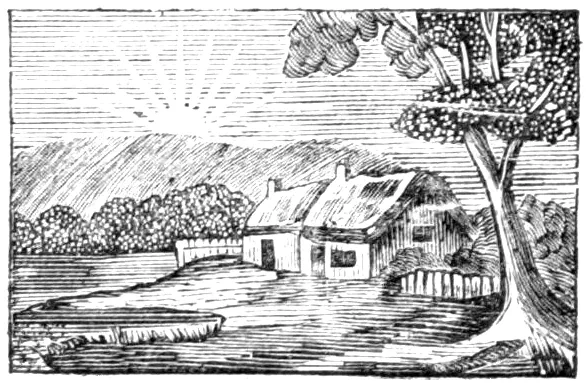
*Popular Irish Stories* appeared in Glasgow in 1850 as number 23 in a “New and Improved Series.” The National Library of Ireland catalogue describes it as a 24-page…
5 min read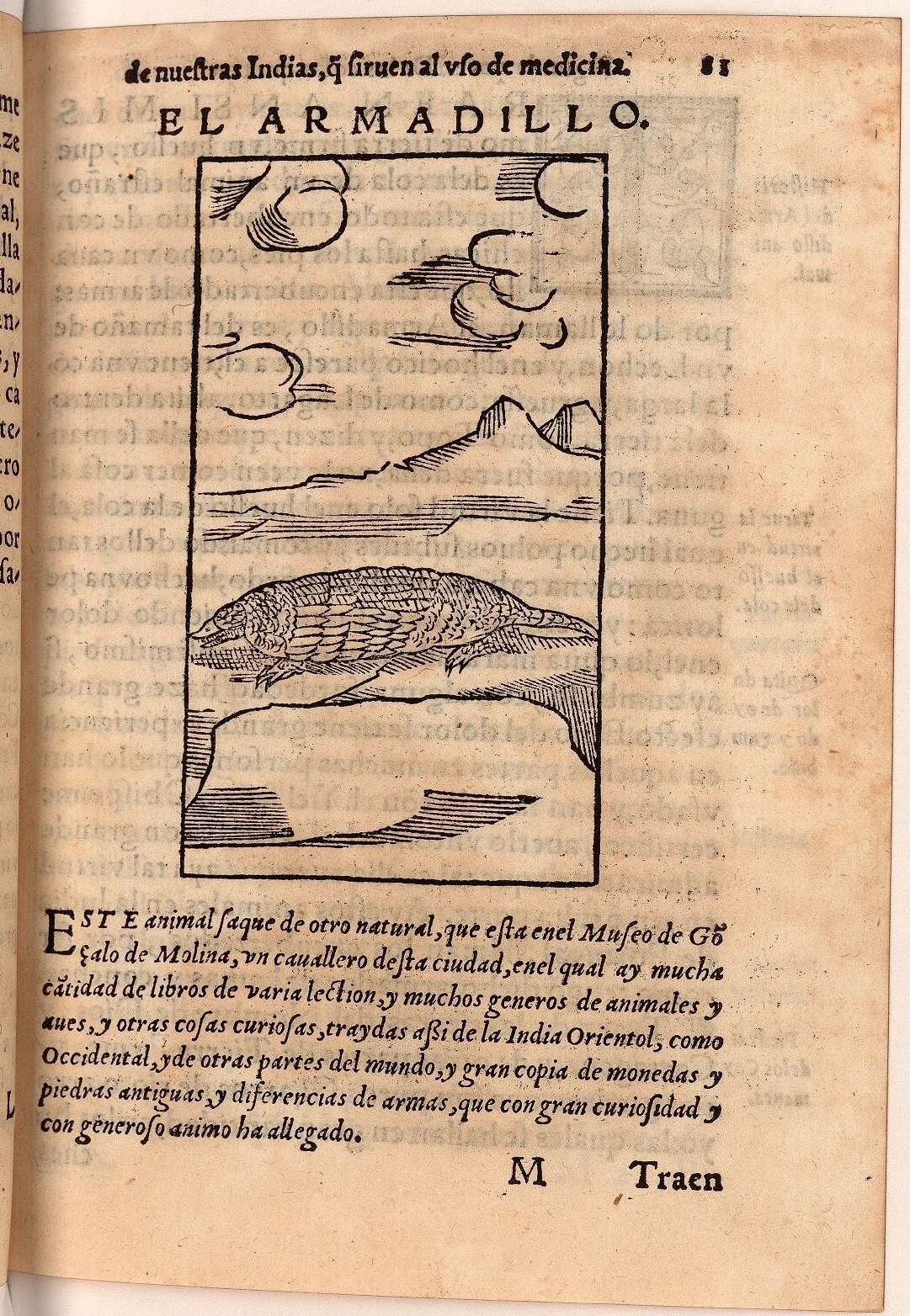
Monardes’s Armadillo Woodcut
The Commons record identifies this image as a woodcut illustration of an armadillo from Nicolás Monardes's 1574 *Historia medicinal*. The illustration belongs to a…
5 min read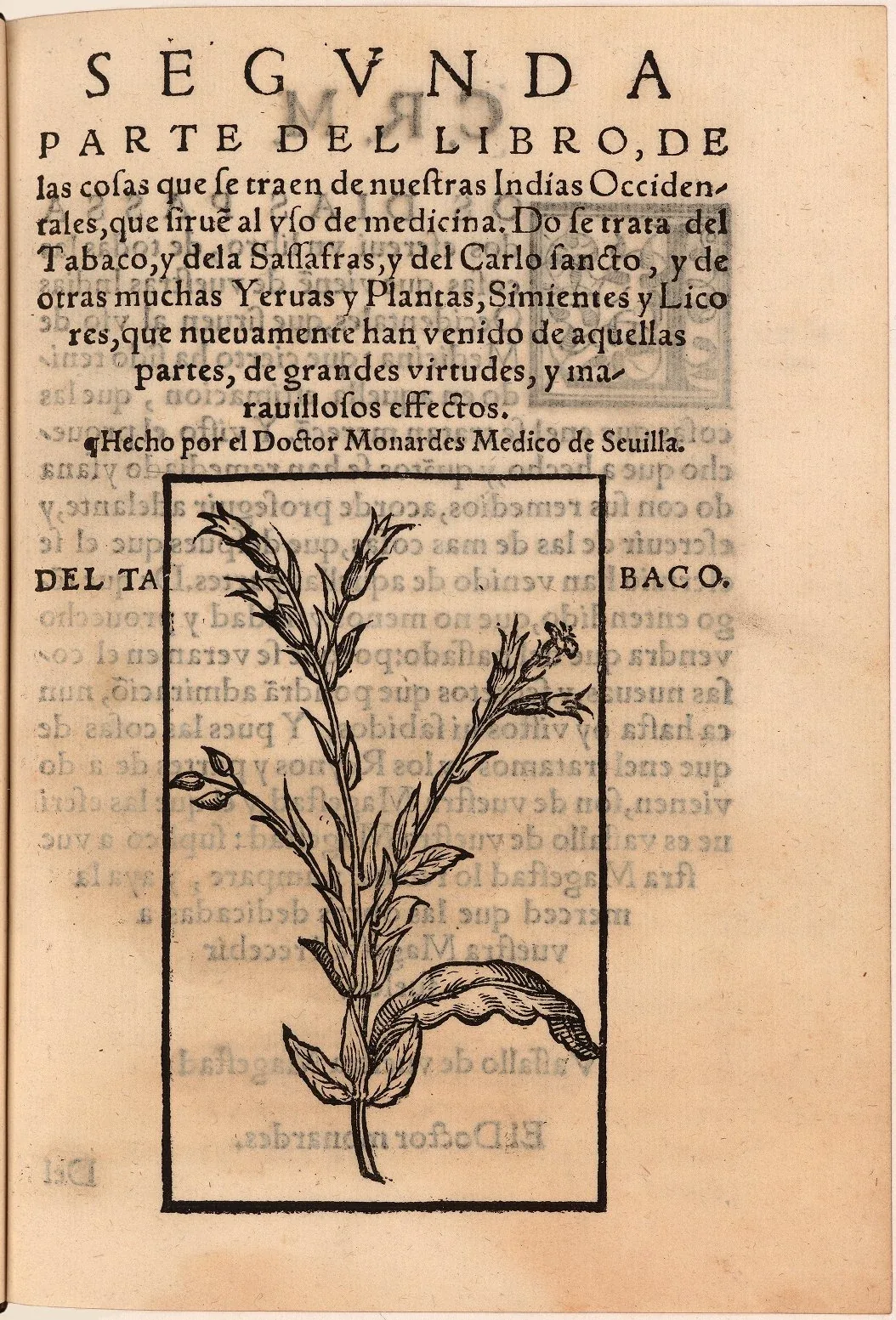
Tobacco on a 1574 Title Page
The 1574 woodcut of a tobacco plant appears on a title page in Nicolás Monardes's *Historia medicinal*. The file record identifies it as a plant illustration and…
5 min read