
The Print Field / Essay 20
Woodblock Tools and the Printed Book
A photograph labeled as traditional Chinese printing tools at the China Printing Museum shows objects gathered for display: pearwood plates, brushes, and other…
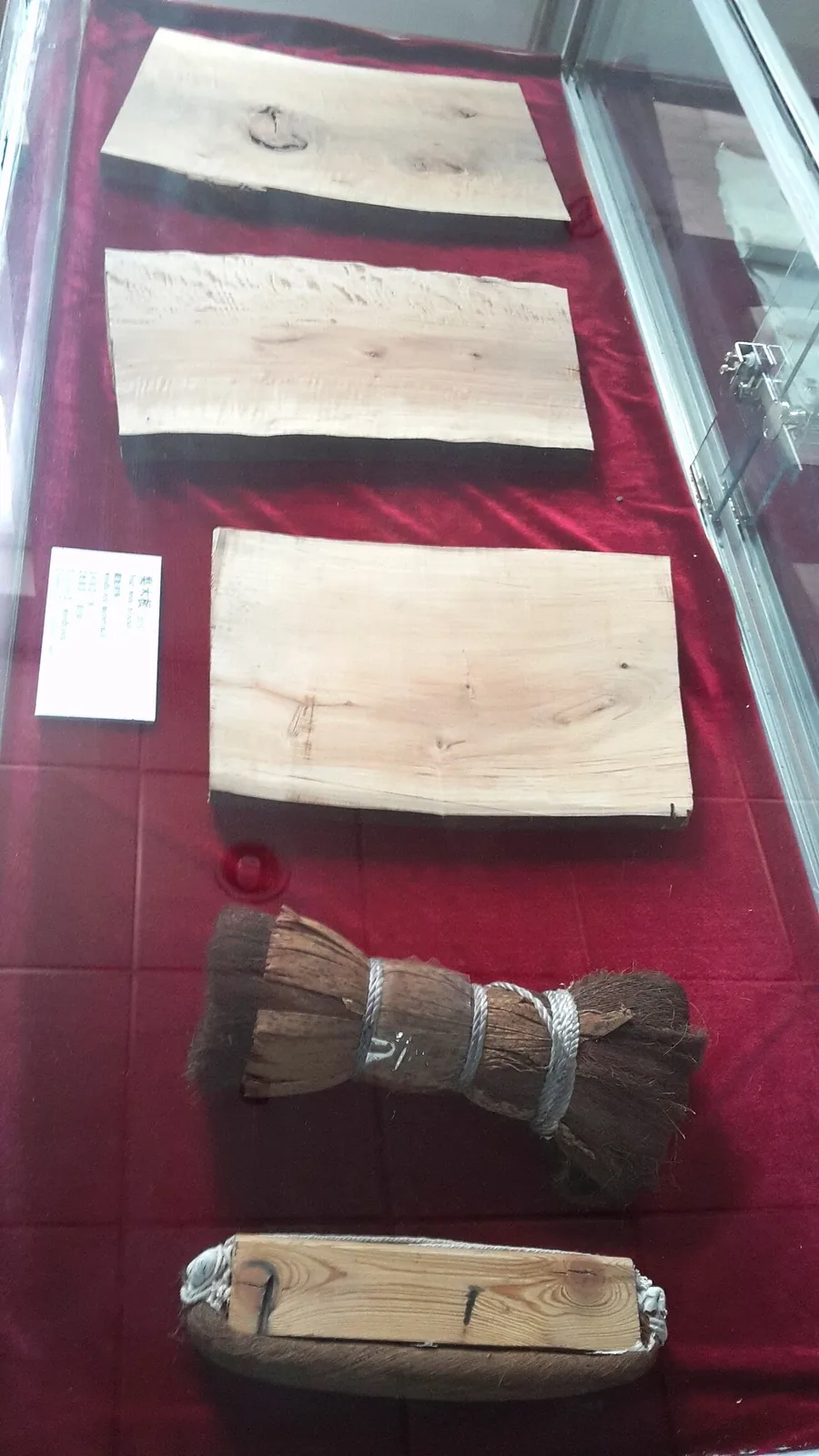
Tools in a museum case, work outside it
A photograph labeled as traditional Chinese printing tools at the China Printing Museum shows objects gathered for display: pearwood plates, brushes, and other implements associated with printing. The caption places them in an exhibition setting, not in the middle of an active job. That difference is useful. A museum case preserves tools for comparison, while an operating workshop uses them in a sequence involving a block, ink, paper, pressure, and the hands that coordinate each step.
The British Library's account of the Diamond Sutra provides a well-documented reference point for woodblock printing. Its complete copy, dated 868 in the colophon, was printed from woodblocks onto seven sheets of paper that were joined into a scroll about five metres long. The International Dunhuang Programme describes sections of the text being printed separately. This particular object does not explain every workshop or every book tradition, but it gives readers a surviving artifact with a date and a physical format to examine.
The block carries a page-sized decision
In relief printing, the surface that stands proud receives ink and transfers an impression; recessed areas remain unprinted. A woodblock can carry text, an image, or both. Once prepared, it preserves a composition as a printable surface. That makes the block different from movable type: instead of rearranging individual letters for each line, the printer uses a carved surface whose design is fixed for the duration of the block's use.
The contrast should not be turned into a contest. A block is useful when a page's arrangement needs to be held together; movable type offers the possibility of reusing separate characters in new combinations. Which method suits a job depends on the text, design, materials, available labor, and number of impressions required. The object record at the museum can tell a reader what a displayed tool is called, but the surrounding books and prints provide evidence of how particular workshops put tools to use.
Brush, ink, and the print surface
Tools associated with block printing draw attention to ink distribution. The print must receive enough ink to make the raised design legible without flooding the finer details. The paper must contact the inked surface evenly enough to transfer the marks. Variations in pressure, ink, paper, and the condition of the block can affect the impression. These are general material considerations; an individual historical print needs to be examined before describing its exact shop method.
A long scroll also makes a different material problem visible: separately printed sheets have to become a readable sequence. The International Dunhuang Programme's account of the Diamond Sutra provides a reference for discussing those joined components. A photograph of display tools cannot establish the scroll's exact ink recipe or paper preparation. The useful connection is instead between a fixed design on a block, a transferred impression on a sheet, and the assembly that lets a reader move through the finished object.
A block is both image and storage medium
When a design is carved into a block, words and images share one physical surface. A page can preserve their spatial relationship without requiring each element to be assembled as a separate piece at press time. The block also carries the labor invested in its preparation. If a block remains in good condition, it can produce multiple impressions; the degree of wear, repairs, and later recarving has to be evaluated from the object and its documentation.
That fixed surface makes the block an archive of composition. A surviving block can reveal letterforms, line breaks, image placement, and perhaps corrections. But it cannot by itself tell us how widely a print circulated, who read it, or what its makers intended unless those points are supported by accompanying evidence. A block is an unusually direct witness to a design, yet it is not a complete social history.
Where does the composition remain between print runs?
The most revealing comparison between a woodblock and movable type is what happens after an impression has been made. A carved block holds an arrangement as a single surface. Distributing movable type returns separate elements to an inventory and releases them for another arrangement. One method preserves a page spatially; the other preserves reusable pieces from which pages can be built. Neither is inherently the correct choice for every publication.
Imagine a hypothetical page expected to be printed again without alteration. Keeping its block preserves line breaks and the relationship between text and image. If its wording changes, however, the fixed arrangement becomes a constraint. Conversely, separate sorts can be rearranged, but that flexibility requires the line and page to be assembled again when their earlier arrangement has been distributed. The comparison explains two different kinds of reuse without inventing the workflow of the museum display.
The Diamond Sutra brings another scale into view: a printed composition also becomes a physical publication through joined sheets. The block does not by itself determine the final scroll's assembly or reading sequence. Tools, printable surfaces, sheets, and joins preserve different stages of the object. Reading those stages separately gives the museum case a practical explanatory role. It shows where a design is held stable, where it meets paper, and where printed pieces become a readable whole. That is a more specific account of the tools than treating every brush and plate as an interchangeable symbol of an ancient craft.
Further reading
Sources & records
Linked records provide object descriptions and historical context. Comparisons, close readings, and explicitly hypothetical examples are editorial analysis. This essay was revised on 22 October 2026; it does not report first-hand workshop research. The image source and license appear in its caption.
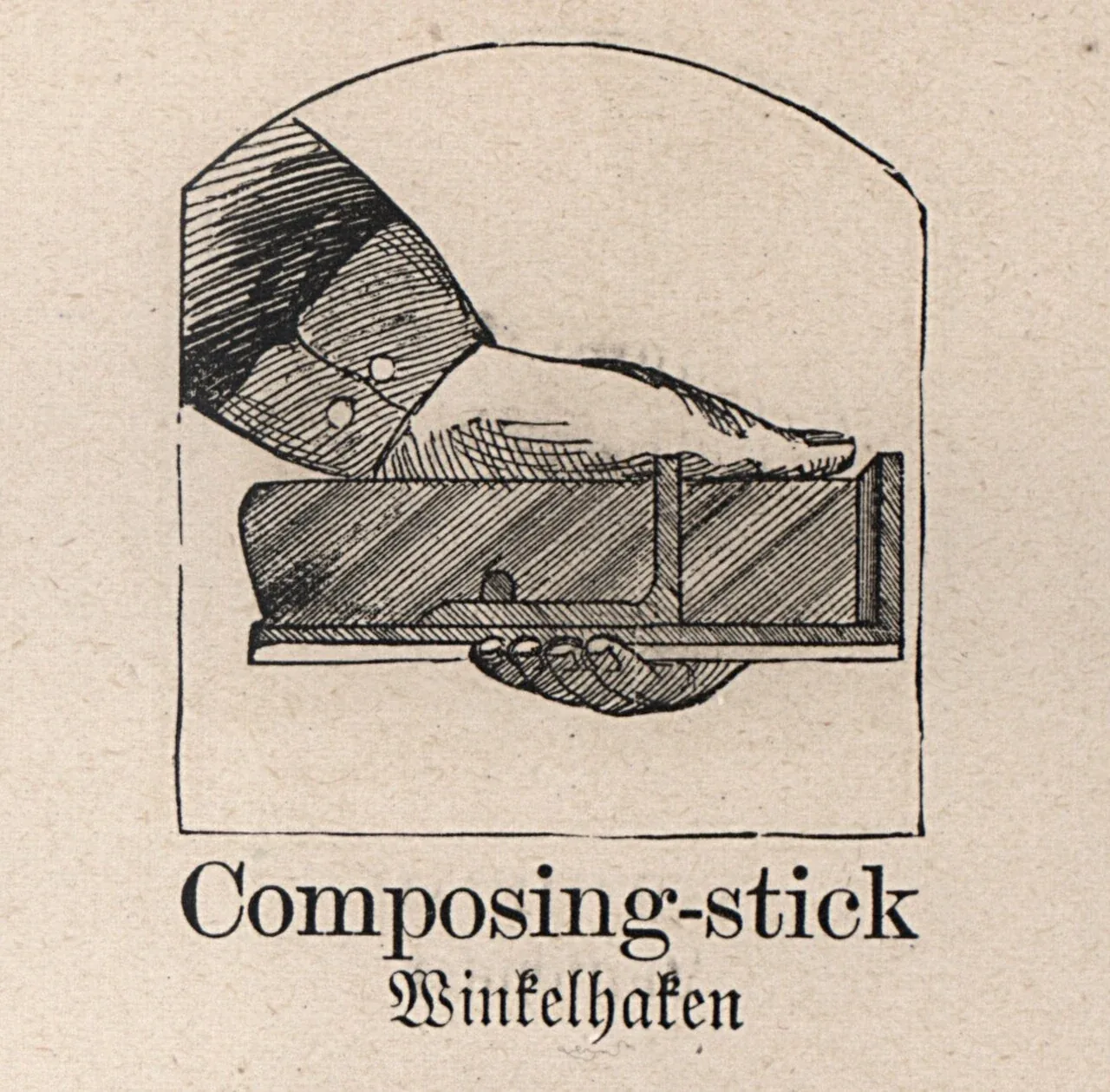
The Composing Stick, Line by Line
The composing stick is a small tool with an outsized role: it holds one line of type while a compositor assembles words from individual sorts. The Library of…
5 min read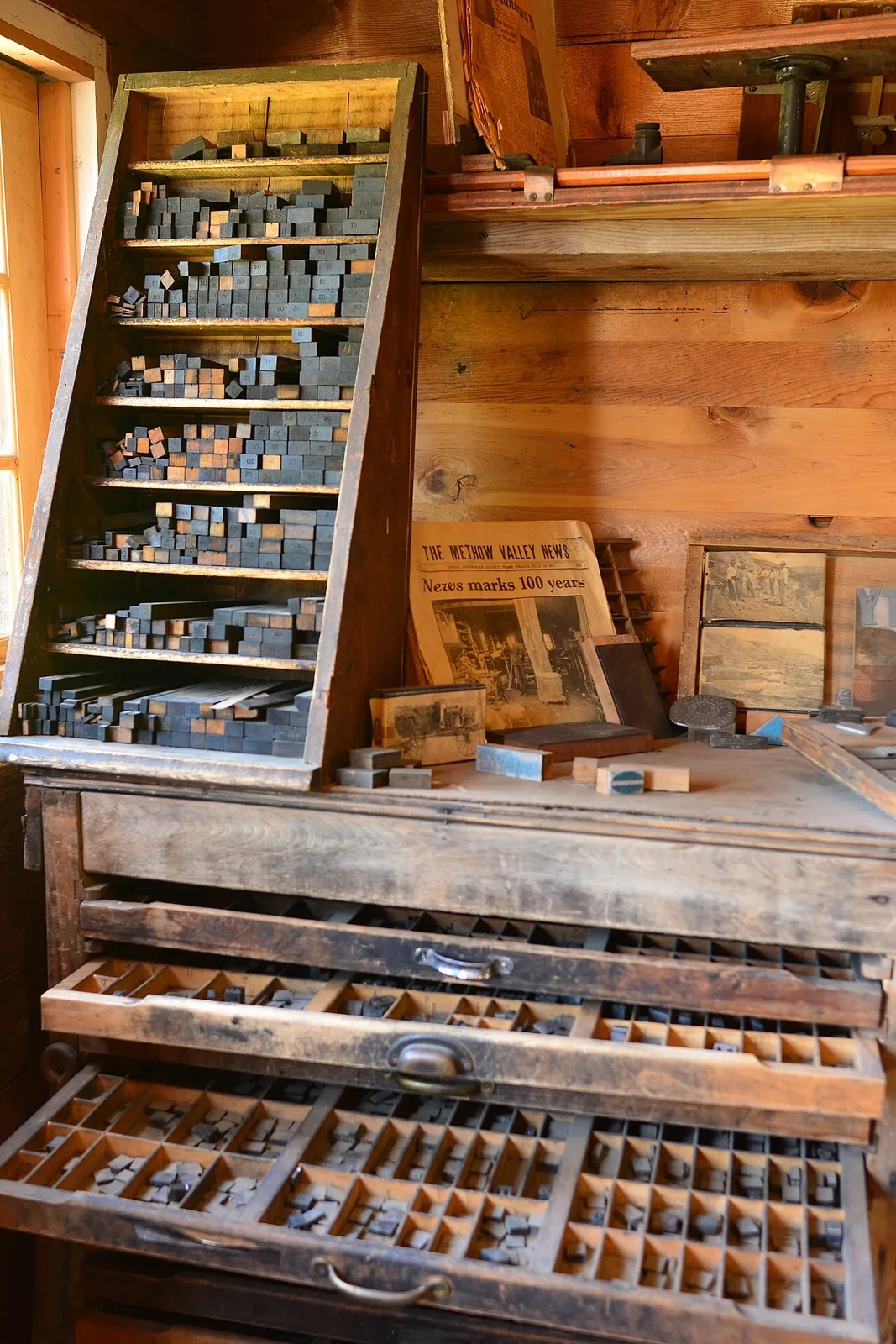
The Type Case as a Shop Index
A printer’s case is not a decorative box of letters. It is a working storage system that determines how a compositor reaches the type needed for a line. The cover’s…
4 min read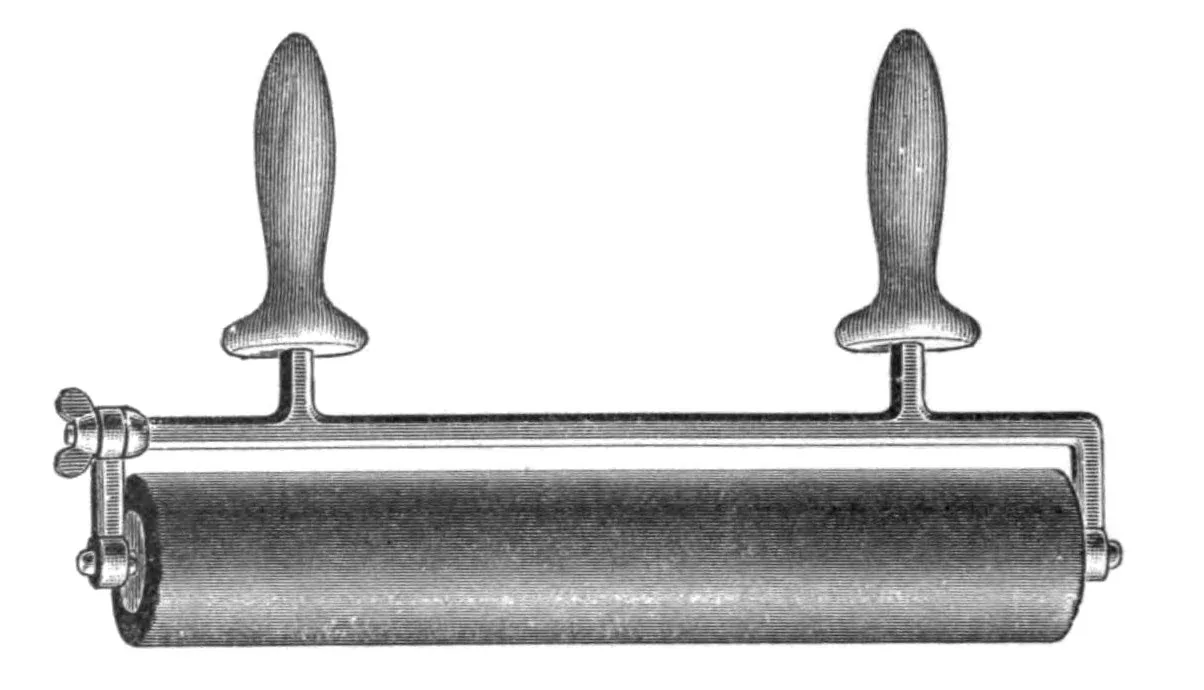
Inking with a Hand Roller
The cover reproduces an illustration of a composition hand roller from an American Type Founders catalogue dated 1906, as identified in the source file. The file…
5 min read