
The Print Field / Essay 15
Wood-Type Specimens as Records
The wood type specimen in this cover is identified by its Commons record as an American Wood Type Company advertisement for ornaments, held in the Houghton…
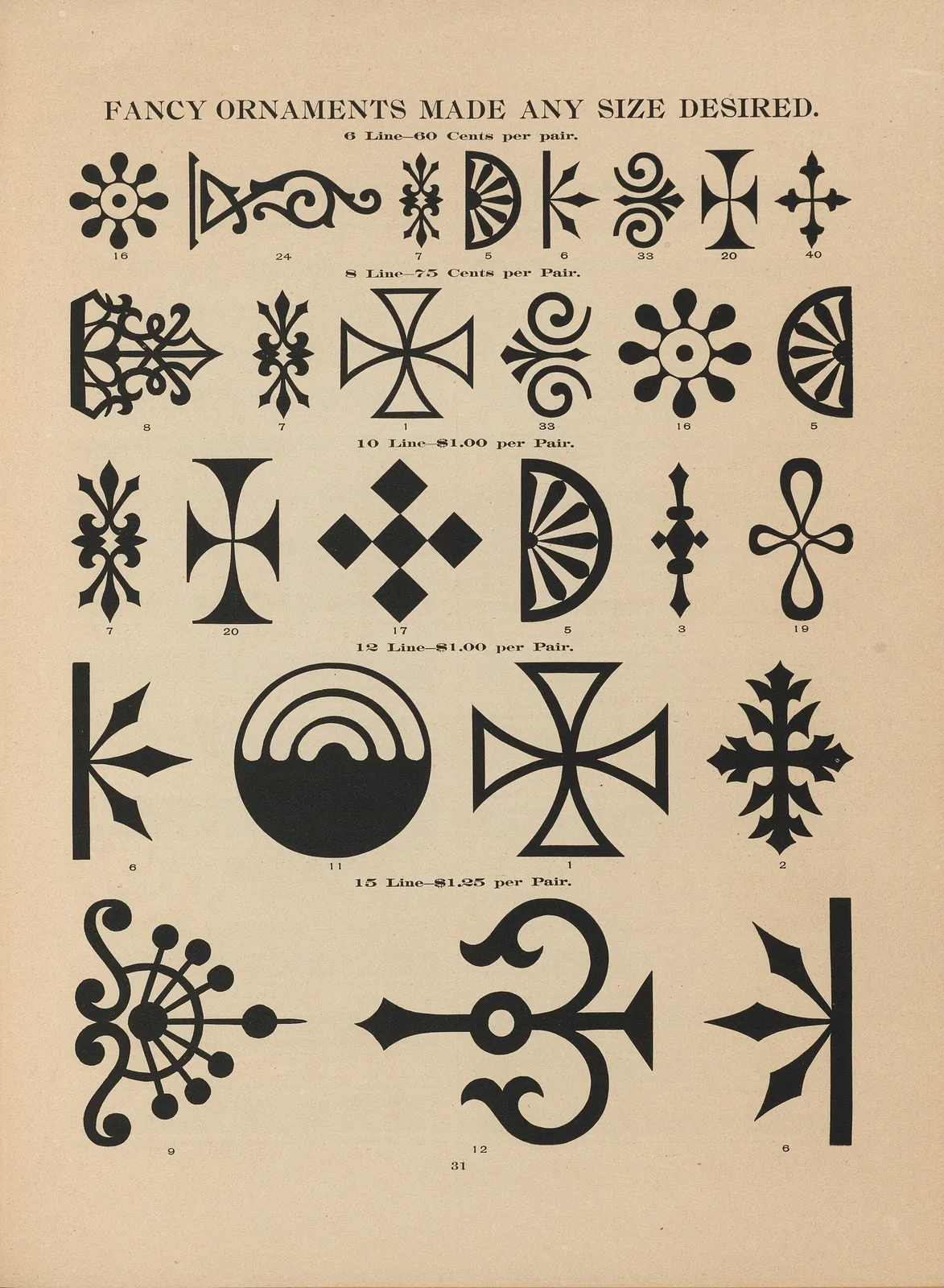
A specimen is a print and a catalog
The wood type specimen in this cover is identified by its Commons record as an American Wood Type Company advertisement for ornaments, held in the Houghton Library’s typographic collections. RIT’s Cary Graphic Arts Collection provides a broader account of nineteenth-century wood type and publishes a selection of specimens from its own holdings. These are different collections and should not be merged into a single inventory. Together, however, they show why specimen sheets matter: they preserve printed designs and record how a maker chose to present its stock.
The pictured advertisement is headed “Fancy Ornaments Made Any Size Desired” and is dated circa 1885 in the Houghton file record. It concerns decorative modules, so it should not be mistaken for a complete alphabet specimen. A specimen is not merely an attractive sample. It is a working document designed to let printers, designers, and customers see a type’s character before ordering or using it. In this advertisement, motifs, spacing, scale, and repeated combinations can be compared. Its promise to supply ornaments at different sizes invites a practical question: how would a pattern fit the border or panel a customer needed? The page is evidence of presentation as well as manufacture.
Wood type grew from a production problem
RIT explains that very large metal type could develop uneven faces as the metal cooled, making it difficult to print at large sizes. Wood was lighter and easier to work at scale. Early wood letters were carved by hand; Darius Wells’s lateral router, engineered in the 1820s, made larger-scale production possible. This history helps explain why specimen collections contain forms designed for posters, signs, and other display work. Their scale responds to both a manufacturing constraint and a communication need.
Because wood type could be made in diverse sizes and styles, a specimen book can show a wide typographic vocabulary. A printer might compare condensed forms with broader letters, or plain faces with ornamental designs. Those differences were practical choices: a line meant to be seen across a street has different requirements from small text on a book page. The specimen does not tell us how every customer used the type, but it documents the range available.
Reading the page as an object
To study a specimen, begin with what is present. Identify the motifs, available sizes, repeated arrangements, and any accompanying foundry or catalog marks. Note whether the page is a single impression or a reproduced image; a modern facsimile is not the same object as an original printed specimen. Check the institution’s record for date, creator, and collection history. If the catalog identifies a maker, use that attribution. If it does not, avoid assigning one based only on style.
The physical page can also show ink transfer, paper condition, or signs of wear. Those details may be meaningful, but their causes should not be guessed. A weak impression could result from the inking, type face, press pressure, paper, or later reproduction. A blank area may be part of the design rather than a defect. The specimen’s purpose and the conditions of its production help interpret what the sheet shows.
Collections and missing context
RIT’s 2013 specimen exhibition account described more than five hundred wood type fonts in the Cary Collection and a volunteer restoration program. This is the exhibition’s historical account, not a newly verified current inventory. That number belongs to the Cary’s catalog, not to the entire world of surviving wood type. Other institutions, museums, and private collections hold separate examples. The Houghton specimen shown here belongs to a different institutional record. Clear attribution prevents the reader from turning one collection’s count into a general statistic.
Wood type was often used in commercial work where the printed item had a short life. Specimen sheets may therefore outlast the posters or notices made from the fonts they display. This creates an archival imbalance: the catalog survives, while the everyday printed material can disappear. A specimen can help researchers identify type in a surviving poster, but visual comparison should account for scale, printing condition, and possible re-cutting or later copies.
From block to impression
Since wood type is a relief surface, the raised face takes the ink. The printer locks the blocks with other type and spacing material, then prints the forme. Large blocks can require special care during setup because their size and weight make them different to handle from small sorts. The exact requirements vary with press and type; one should consult the shop’s instructions rather than assume every press can accommodate every block.
RIT’s specimen resources preserve the type’s visual evidence, while a printed specimen also demonstrates the type in use. The result is both a sample and a record of an act of printing. Readers can study the design, but they can also ask how the printing process shaped the page: how much ink was used, how the letters met the paper, and which portions were intended to dominate. The most useful interpretation keeps the specimen connected to its physical block, its catalog description, and the printing context that produced it.
A sales page selects the comparison for you
This wood-ornament advertisement is already an argument about a printer's possible choices. Its maker selects the motifs, sizes, and arrangements that will represent an inventory. A lively display of ornaments may emphasize an especially intricate motif while making less conspicuous how a long border or a different page proportion would behave. The printed page is evidence of a demonstration, not an unfiltered view of everything the type could do.
This makes comparison across specimen pages more useful than judging one isolated decorative motif. First identify what is being held constant: motif, scale, arrangement, or printing conditions. If both motif and arrangement change, an apparent improvement in rhythm cannot be attributed to one of them alone. This is a proposed reading method; it does not claim that the Houghton specimen was designed as a controlled test. Historical commercial pages were made to persuade and inform customers, with their own priorities.
The distinction also separates a specimen from the surviving blocks at RIT. The specimen preserves a printed selection at one moment. A block collection preserves material that may be incomplete, worn, restored, or reorganized. Put together, they can answer complementary questions about offered forms and printable objects. Read side by side, they support a more discriminating choice: ask not just whether an ornament is attractive, but what the specimen has made easy to compare and what another printed trial would still need to reveal.
Further reading
Sources & records
Linked records provide object descriptions and historical context. Comparisons, close readings, and explicitly hypothetical examples are editorial analysis. This essay was revised on 22 October 2026; it does not report first-hand workshop research. The image source and license appear in its caption.
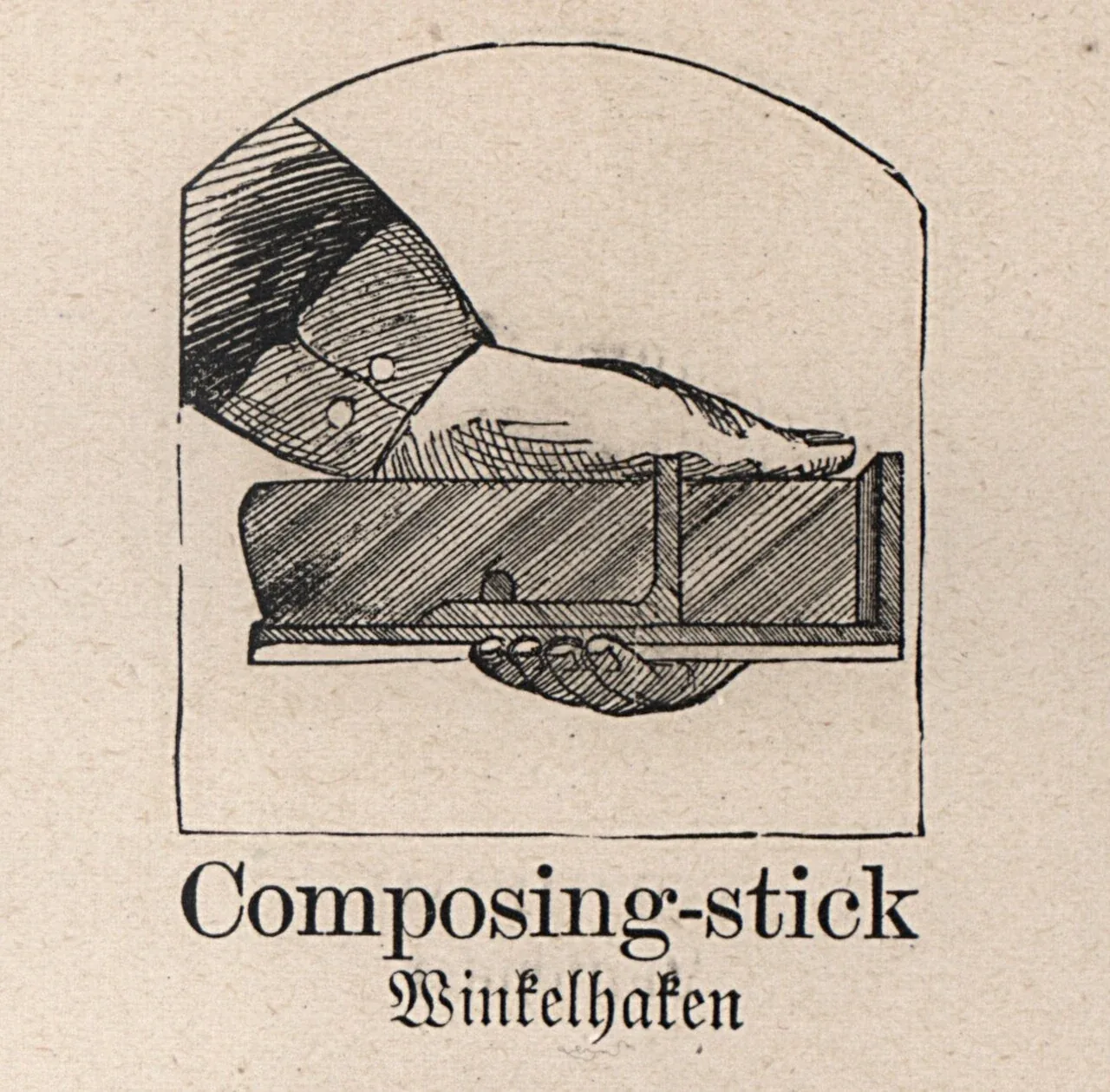
The Composing Stick, Line by Line
The composing stick is a small tool with an outsized role: it holds one line of type while a compositor assembles words from individual sorts. The Library of…
5 min read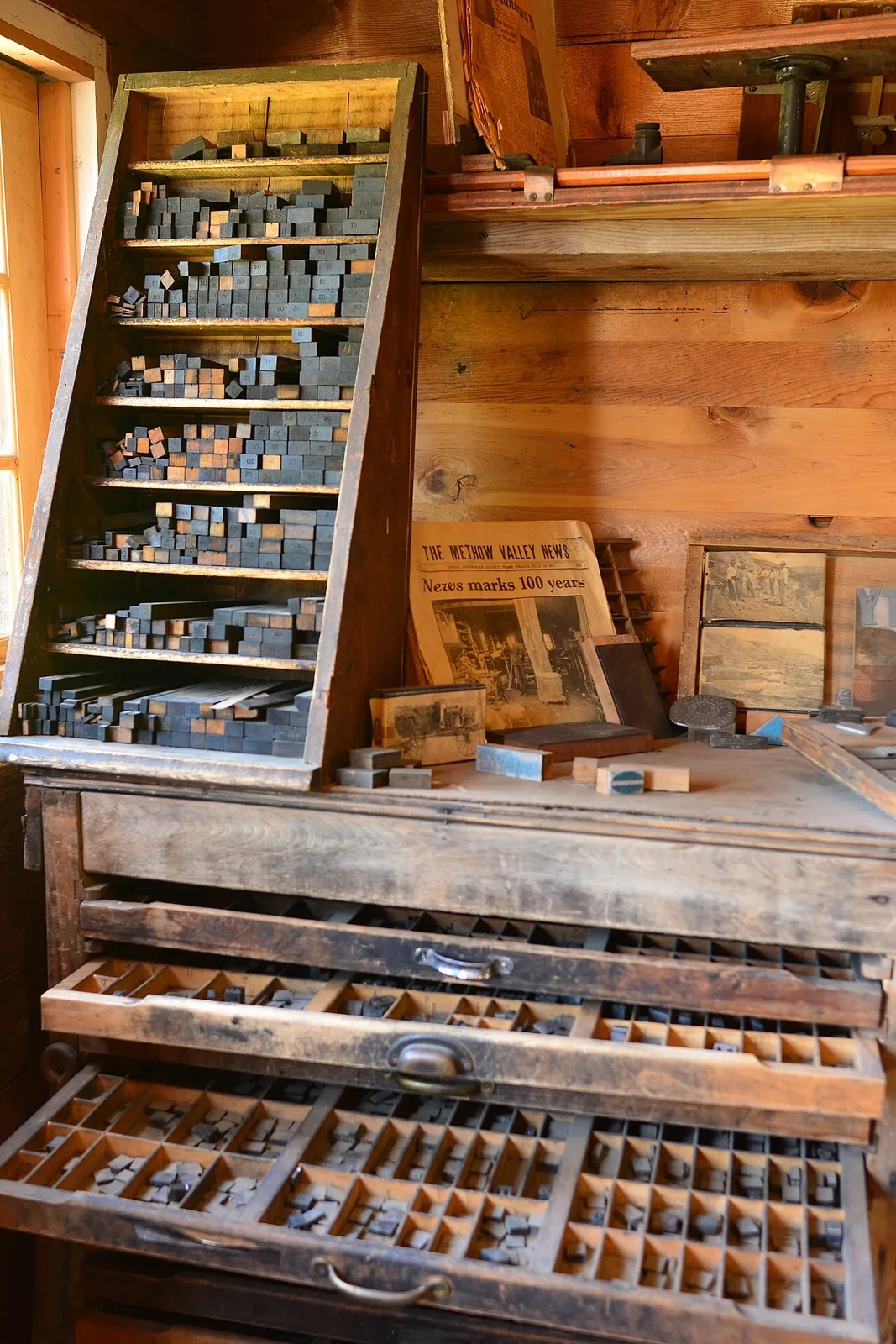
The Type Case as a Shop Index
A printer’s case is not a decorative box of letters. It is a working storage system that determines how a compositor reaches the type needed for a line. The cover’s…
4 min read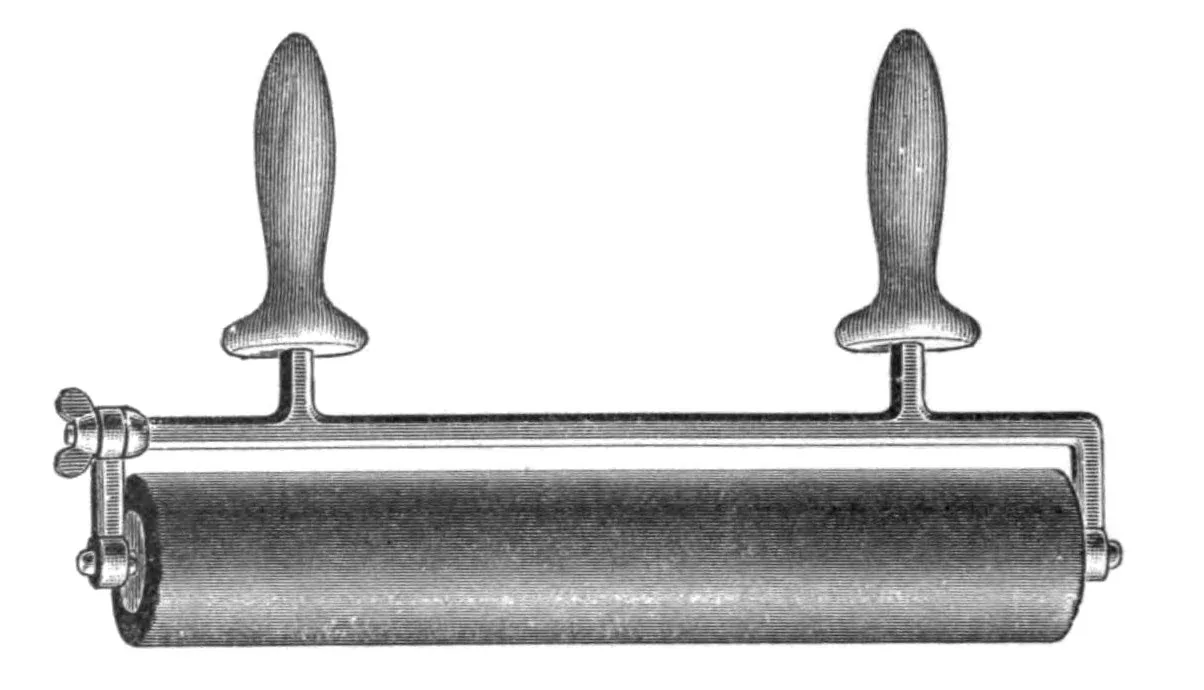
Inking with a Hand Roller
The cover reproduces an illustration of a composition hand roller from an American Type Founders catalogue dated 1906, as identified in the source file. The file…
5 min read