
The Print Field / Essay 17
Why a Linotype Line Is a Slug
The word “slug” sounds informal beside the machinery that produces one. In a line-casting machine, however, it names a very specific object: a single cast piece…
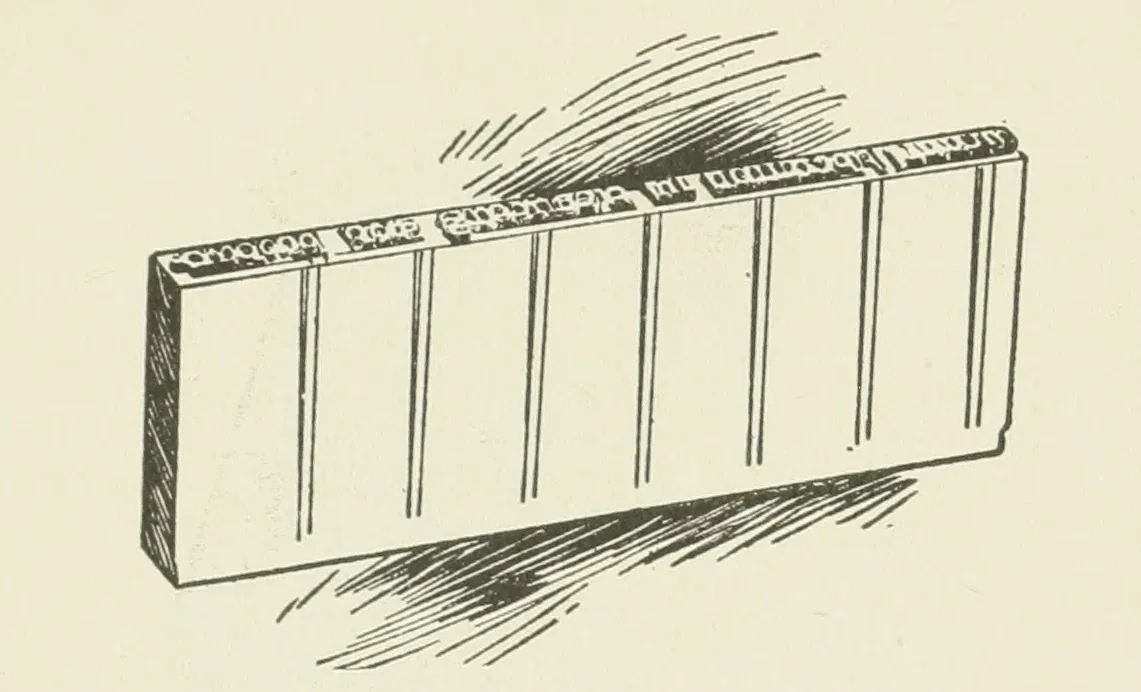
A line with no spaces between its letters
The word “slug” sounds informal beside the machinery that produces one. In a line-casting machine, however, it names a very specific object: a single cast piece carrying a complete line of text. The Smithsonian's account of an Intertype machine describes matrices being assembled from a keyboard, metal being cast into their moulds, and the resulting line leaving the machine to cool. The visible slug is the moment when a sequence of keystrokes becomes a solid object.
That object differs sharply from a line of hand-set type. In handset composition, letters, punctuation, and spaces are separate sorts. They can be rearranged or corrected individually. A slug has the line's characters cast together. If a word is wrong, the compositor cannot simply pluck out one letter and replace it. The line must be corrected in the machine and cast again. This trade-off is one of the clearest ways to understand mechanized composition: speed arrives with a different pattern of correction and reuse.
The line is born from a temporary mould
Before casting, the machine assembles matrices for the characters in the line. These are not the final type. They are reusable mould pieces that travel to the casting area. A spaceband mechanism allows the spaces in a justified line to expand so that the line can fit its measure. Once the line is ready, the machine brings the matrices into position and molten metal is forced into the mould openings. The cast line then cools and is checked before it joins the page layout.
Each stage imposes constraints. The line has a set measure, the matrices must meet the casting surface, and the metal must take the shape of the characters. The result is a line of type high enough to print as part of a forme. The exact machine design matters: an Intertype and a Linotype have related functions, but the name “slug” describes the cast line, not a brand or one particular model.
Why cast a whole line?
Casting an entire line changes the handling economy of printing. A shop preparing long columns does not need to retrieve and later redistribute each character as a separate piece. The machine makes the line as a unit. In newspapers, where many columns had to be composed repeatedly, this method could greatly increase the pace of setting type. The Smithsonian history of printing machines describes mechanization as an effort to print faster for less, while also emphasizing that faster presses required other parts of the system to keep pace. Composition was part of that broader effort.
The advantages do not erase the costs. A slug is less flexible than an assortment of individual letters. A correction can require recasting the entire line. A wrong slug can waste metal, operator time, and paper if it reaches the press unnoticed. The proof remains essential because the casting machine reproduces what was keyed; it cannot decide whether the copy is accurate or whether a name has been transposed.
The word also helps distinguish the slug from the matrix. The matrix carries the letter's mould impression and returns to storage for another cycle. The slug is the cast line that moves into composition and printing. After the printed job is finished, the line can be broken down and its metal returned to the melting pot. The matrix survives as a reusable component; the slug is a temporary arrangement whose useful life follows the job.
The physical evidence in a display
A photograph of a line slug can make its scale clear: what looks like many letters on a page is a narrow bar of metal. Look for the reversed characters on the printing face. They need to be reversed because the inked relief prints a readable impression on paper. The slug's body also has a consistent height and flat base so it can sit with other type in a locked form. A museum's object record may supply dimensions or materials; those details should be taken from the record rather than guessed from a photograph.
The small physical line invites questions that the finished page hides. How does the slug align with neighboring lines? What happens to spacing when the line is justified? How are errors found before printing? These questions connect a single cast object to proofing, page makeup, and press setup. A collection image by itself may not answer them, but it can direct a reader toward the machine documentation and trade histories that do.
Correction changes scale when the line becomes one body
The slug changes the practical unit of correction. In a simplified comparison, a hand-set line contains separate sorts that can be replaced and respaced. A cast line carries its characters on one body, so a textual change generally calls for a replacement line. This does not mean every shop corrected every defect in an identical way. It identifies the structural difference that makes linecasting more than hand composition performed faster.
Imagine a hypothetical correction that replaces a short word with a longer one. The change may affect spacing throughout the line, not just the letters at the error. Even if the surrounding text remains identical, the replacement has to fit its measure. A proofreader's local mark can therefore trigger a new material object containing an entire line. The visible correction is small; the production response is larger.
The comparison with the matrix is equally important. Matrices return to an inventory of reusable character designs, while a slug preserves an arrangement made for this job. This gives the line a temporary coherence: it can be moved and combined with neighboring lines as one piece, yet that convenience also binds its characters together when revision is needed. The word slug names that trade-off particularly well. It is the object that makes line handling more continuous, while ensuring that the material unit of a change is no longer always a single letter. That is why proofing belongs to its history as much as casting does.
Further reading
Sources & records
Linked records provide object descriptions and historical context. Comparisons, close readings, and explicitly hypothetical examples are editorial analysis. This essay was revised on 22 October 2026; it does not report first-hand workshop research. The image source and license appear in its caption.
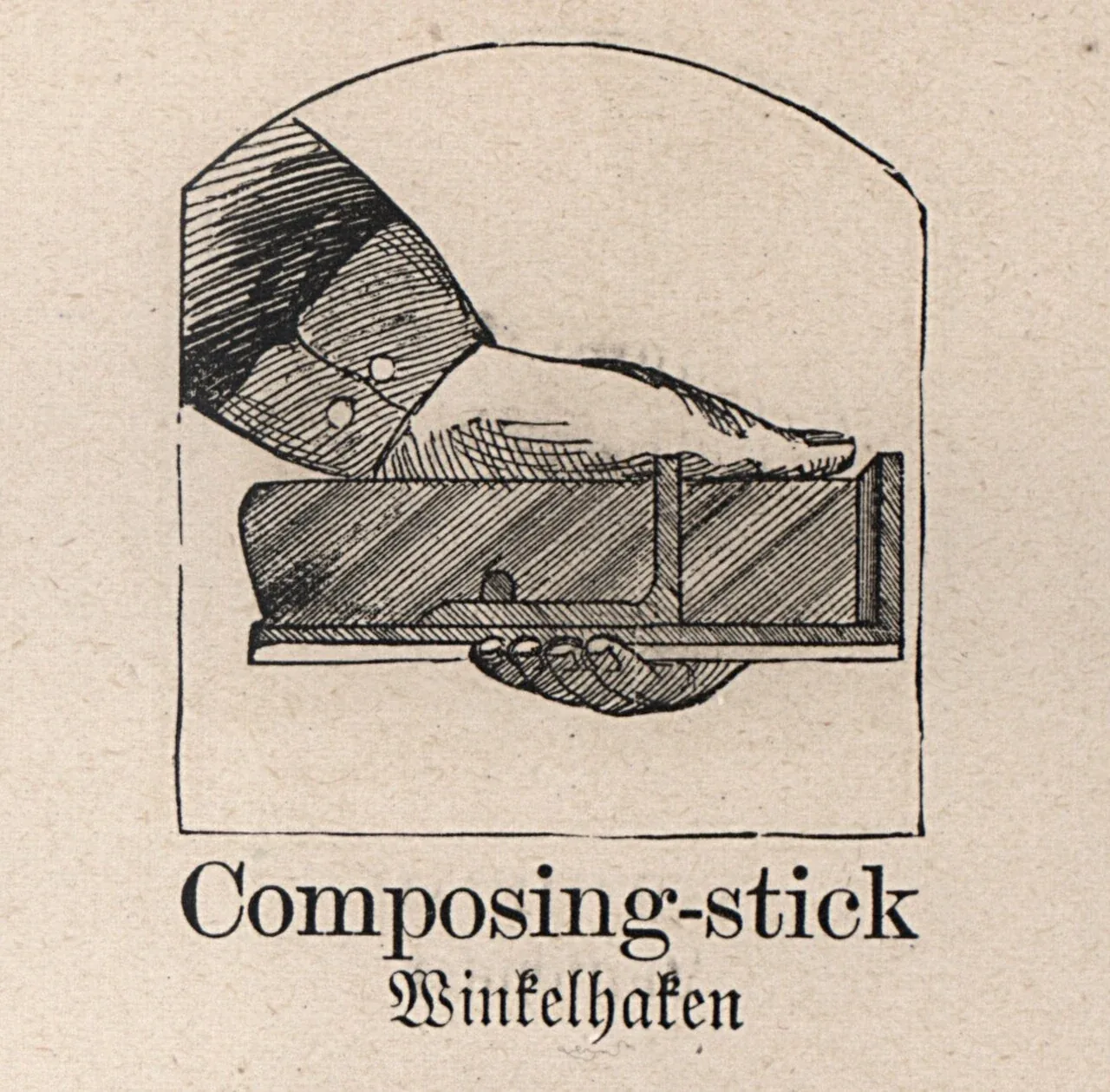
The Composing Stick, Line by Line
The composing stick is a small tool with an outsized role: it holds one line of type while a compositor assembles words from individual sorts. The Library of…
5 min read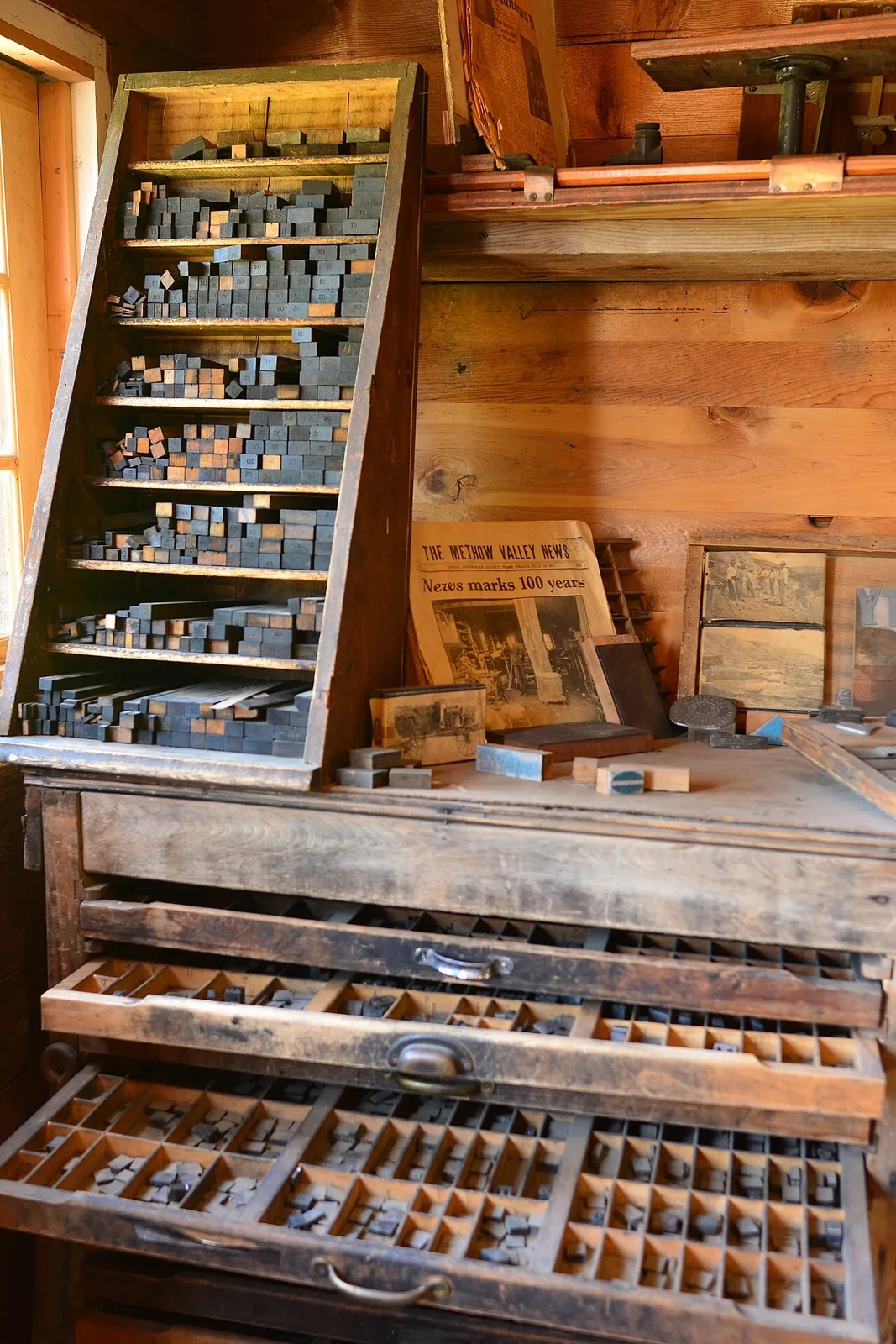
The Type Case as a Shop Index
A printer’s case is not a decorative box of letters. It is a working storage system that determines how a compositor reaches the type needed for a line. The cover’s…
4 min read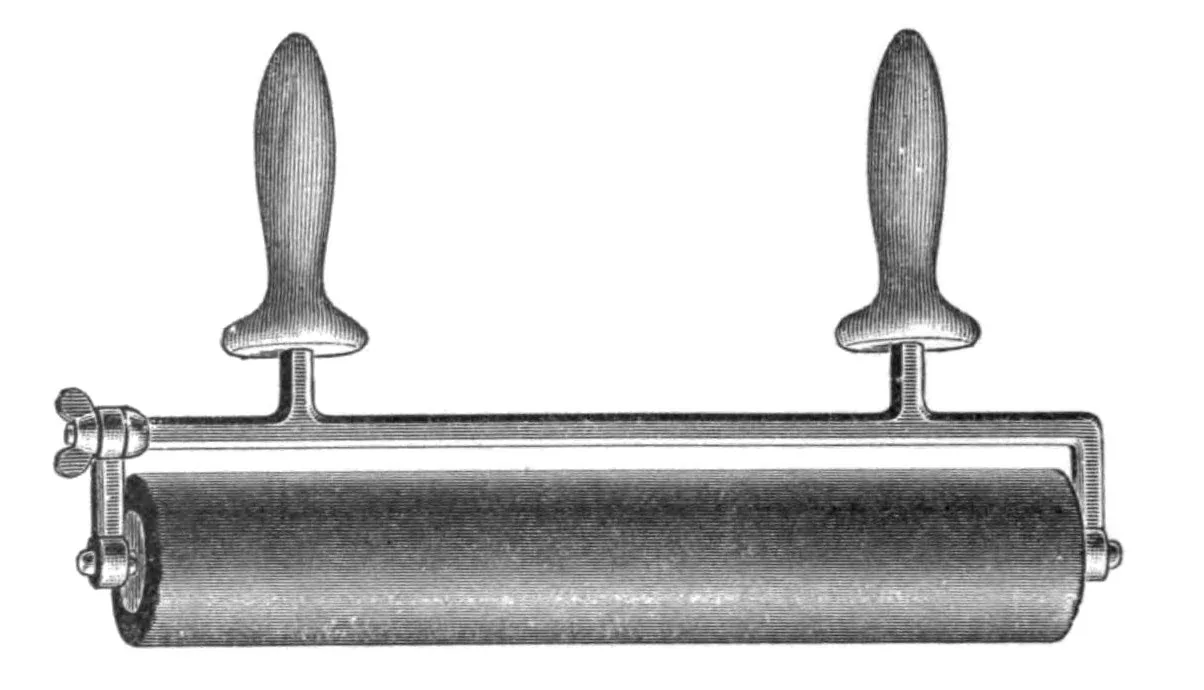
Inking with a Hand Roller
The cover reproduces an illustration of a composition hand roller from an American Type Founders catalogue dated 1906, as identified in the source file. The file…
5 min read