
The Print Field / Essay 09
Samaja Press and Odia Printing
The image record describes the machine shown here as a 1919 letterpress at Samaja Press in Cuttack, Odisha, and identifies it as one of the early machines used for…
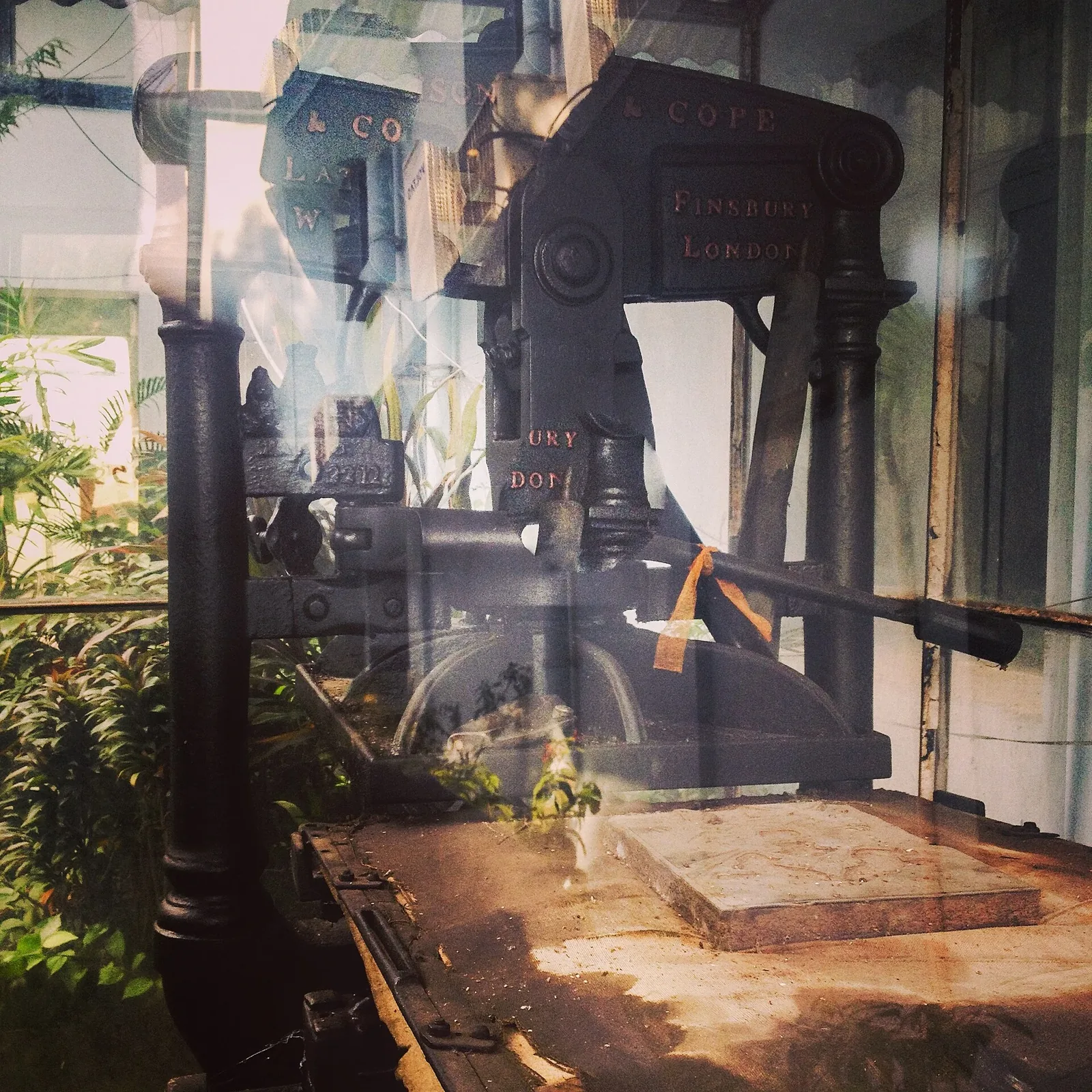
A press record that names its language
The image record describes the machine shown here as a 1919 letterpress at Samaja Press in Cuttack, Odisha, and identifies it as one of the early machines used for printing in the Odia language. That description matters because it connects a piece of machinery to a language community, not just to a manufacturer or press type. The record is a starting point, not a complete history. It should be read alongside scholarship on regional printing and the publication history of Odia newspapers and literary journals.
The Commons description is the source for the language association and the 1919 date. It is an attributed image caption, not a complete institutional history of Samaja. A separate regional history would be needed to evaluate claims about priority among Odia presses. This article instead develops the narrower question that the named object makes concrete: how a press, a stock of characters, and a readership depend on one another without being interchangeable parts of a publication.
Why a language detail changes the question
Printing machinery is often described through its frame, platen, rollers, and drive. Those parts matter, but a press only becomes a publishing instrument when it is supplied with type, text, and readers. A machine used to print in a language requires a type repertoire and composition practices that can represent that language. The press may be imported or locally maintained, while the words and readership belong to a particular community. That relationship makes a local print history more than a story of equipment arriving in a new place.
To understand a language’s print history, researchers need to ask which publications appeared, who prepared the text, which scripts and type forms were available, where the press operated, and how copies circulated. These are questions rather than established claims about the press pictured here. A photograph of the machine does not reveal the type cases or the papers it printed. It does make the question concrete by joining a named pressroom to a date and a language.
The local shop behind the impression
Every letterpress job depended on more than the machine. A compositor arranged type in a chase; a press worker prepared ink and paper; someone corrected the proof; a shop managed orders and copies. In a language-specific publishing environment, those tasks could involve choices about type availability, spelling conventions, and the range of texts a printer could set. The surviving object does not tell us who performed those roles at Samaja Press in 1919. A complete account would seek staff records, newspaper mastheads, surviving printed pages, and regional histories.
A comparison with surviving pages would help distinguish several layers of that work. A masthead might identify a publication and date; a printed column could reveal the characters and spacing used; production records could connect those pages to a particular machine. This is a proposed research comparison rather than a report of documents inspected for this press. It identifies the evidence needed to move from a photographed object to a local publishing history, without substituting a loosely named thesis for that connection.
What survives and what does not
A press can survive when the paper it produced does not. Printed matter may be lost through use, storage, or changing institutional priorities, while a large machine remains a visible landmark. That difference can distort how a region’s print history is remembered: the surviving machine is easy to photograph, but the editorial decisions, labor, circulation, and reading practices that gave it purpose are harder to recover. The evidence may live in many places—libraries, private collections, newspaper archives, institutional records, and oral histories.
The caption’s statement that this was among the early letterpress machines used to print in Odia is significant, but it should be attributed to the record unless corroborated by a specialized study. “Among the early machines” is not the same as “the first press,” and it does not establish an exact priority. This distinction protects the history from being simplified into an invention contest. Regional printing developed through networks of presses, printers, writers, publishers, and readers, not through one object alone.
Separate press capacity from publishing capacity
The Samaja image connects a machine with Odia printing, but a working press and a working publication are different kinds of capacity. The machine supplies a repeatable impression. A publication also needs a usable character stock, people who can prepare and correct the text, a supply of paper, and a route to readers. This distinction makes the language detail in the caption more significant: it asks how the physical resources of printing become resources for a particular readership.
Imagine the same press serving two hypothetical jobs with different character requirements. Its frame and impression mechanism might remain unchanged, while composition becomes difficult if the necessary sorts are unavailable. The bottleneck would be upstream of the press. Conversely, adequate type would not solve an interruption in paper supply or distribution. The example explains why a machine's nominal ability to print cannot stand in for the history of a newspaper or a language community.
For the pictured object, a fruitful next comparison would place an authenticated Samaja page beside its type and production records, if available. Letter repertoire, column arrangement, and corrections could then connect machinery with actual publishing decisions. The photograph alone does not provide that comparison, so no particular page is reconstructed here. What it does support is a sharper account of the problem: preserving a press keeps one part of the publishing system visible, while understanding Odia print culture requires following the material and editorial work that made its impressions readable.
Further reading
Sources & records
Linked records provide object descriptions and historical context. Comparisons, close readings, and explicitly hypothetical examples are editorial analysis. This essay was revised on 22 October 2026; it does not report first-hand workshop research. The image source and license appear in its caption.
Albion and the Press Lever
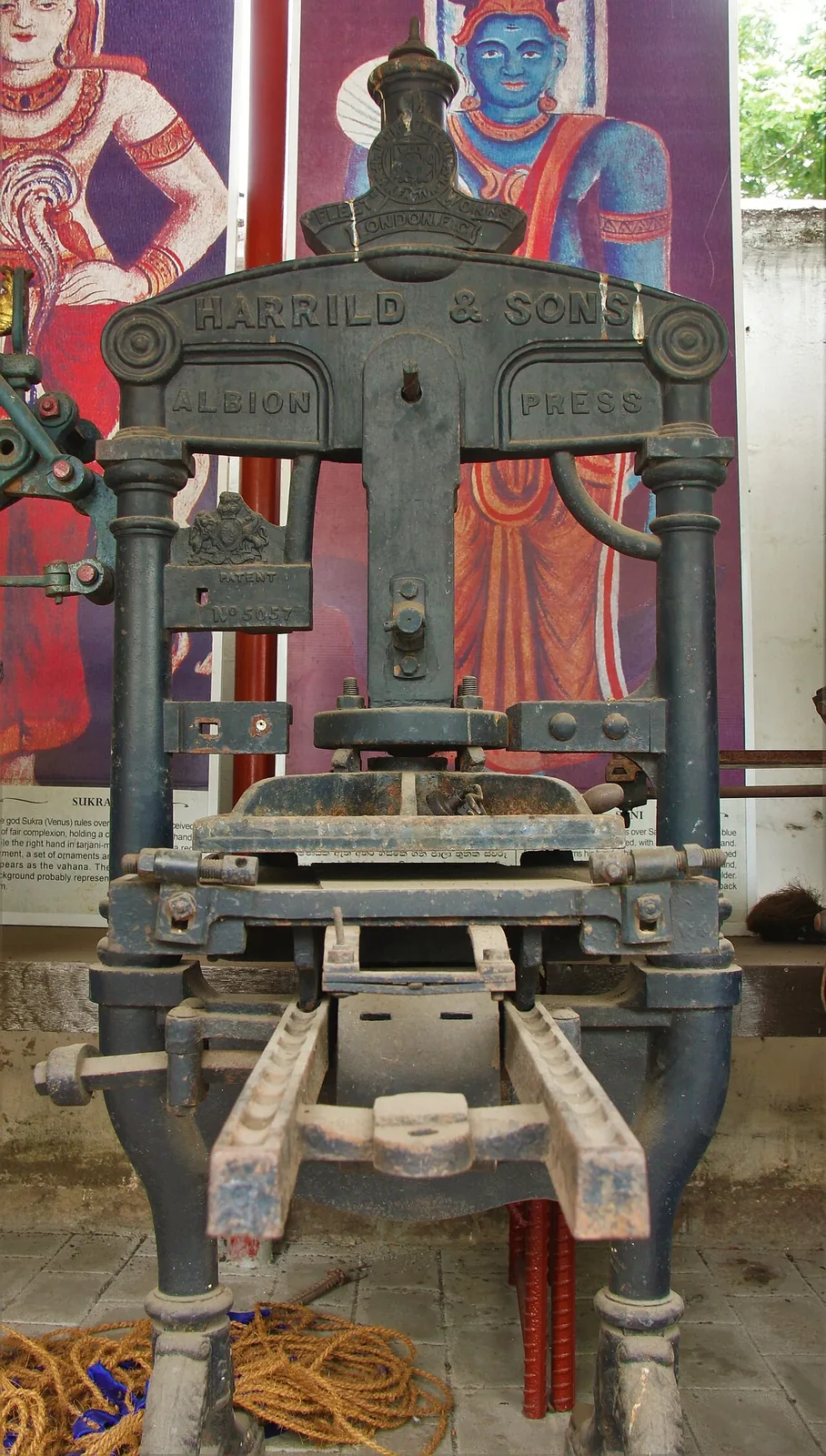
The Albion press is easiest to understand when it is treated as a working arrangement rather than as a sculptural object. A frame holds a bed and a platen in…
5 min read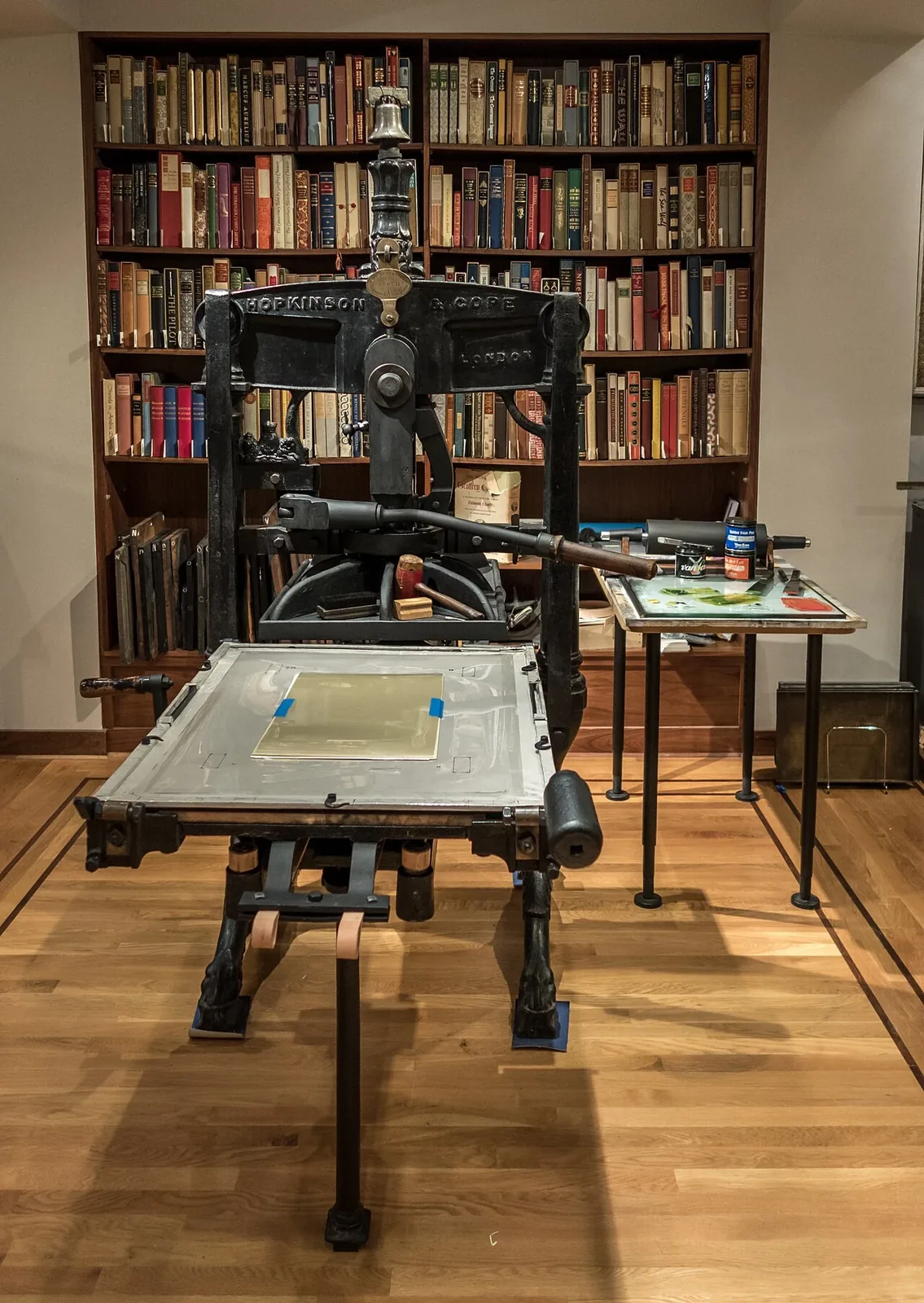
Kelmscott and the Goudy Albion
The press shown here is identified in its Commons file record as the Kelmscott–Goudy press at the Cary Graphic Arts Collection. RIT’s collection record gives the…
5 min read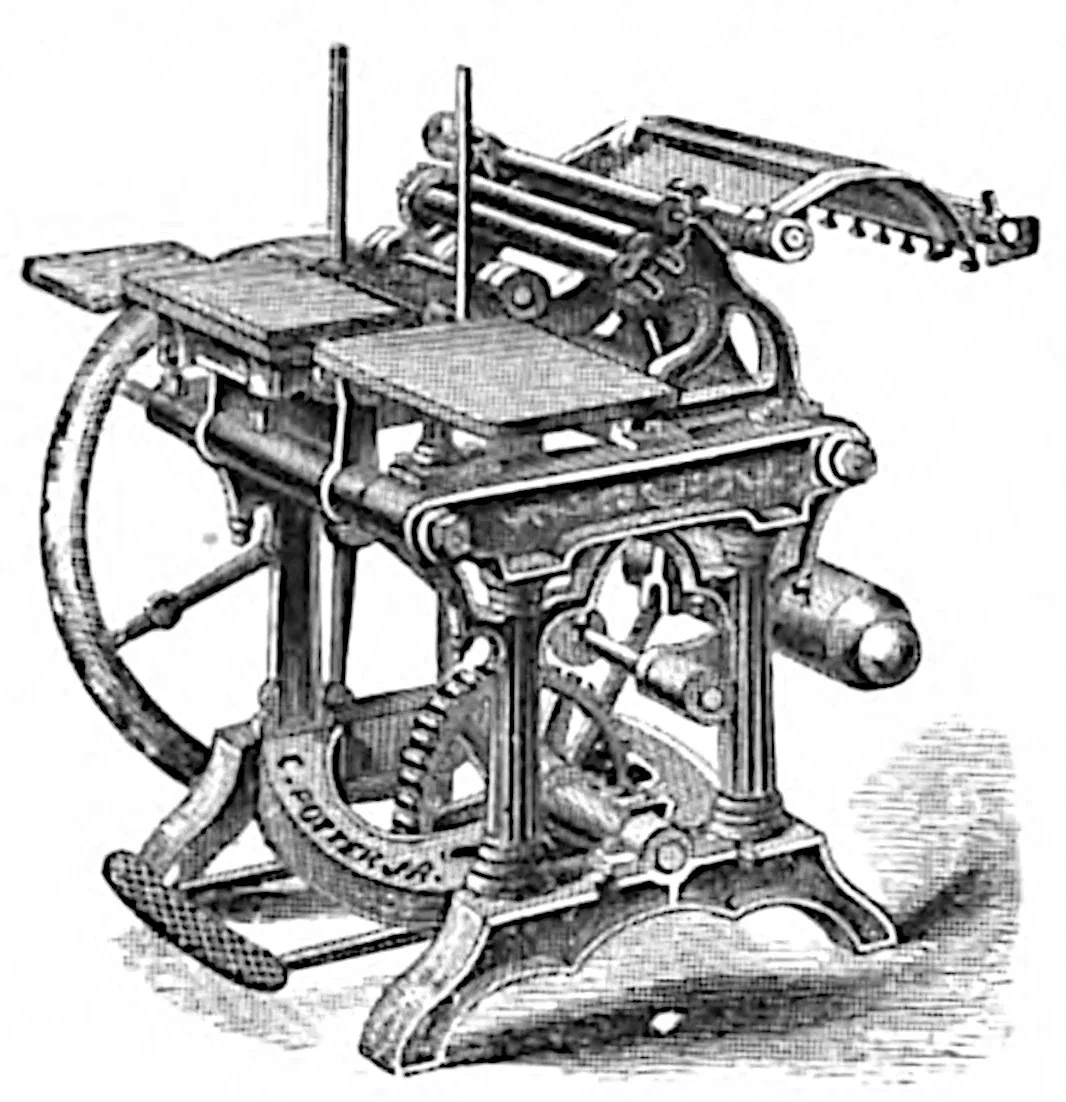
Babcock’s 1857 Jobbing Press
The file record for this cover identifies a Babcock jobbing press dated 1857. Its subject is a useful doorway into a part of printing that can disappear from…
5 min read