
The Print Field / Essay 45
Monardes’s Sassafras Woodcut
The woodcut of a sassafras tree is identified in its Commons record as an illustration from Nicolás Monardes's 1574 *Historia medicinal*. The same book appears in…
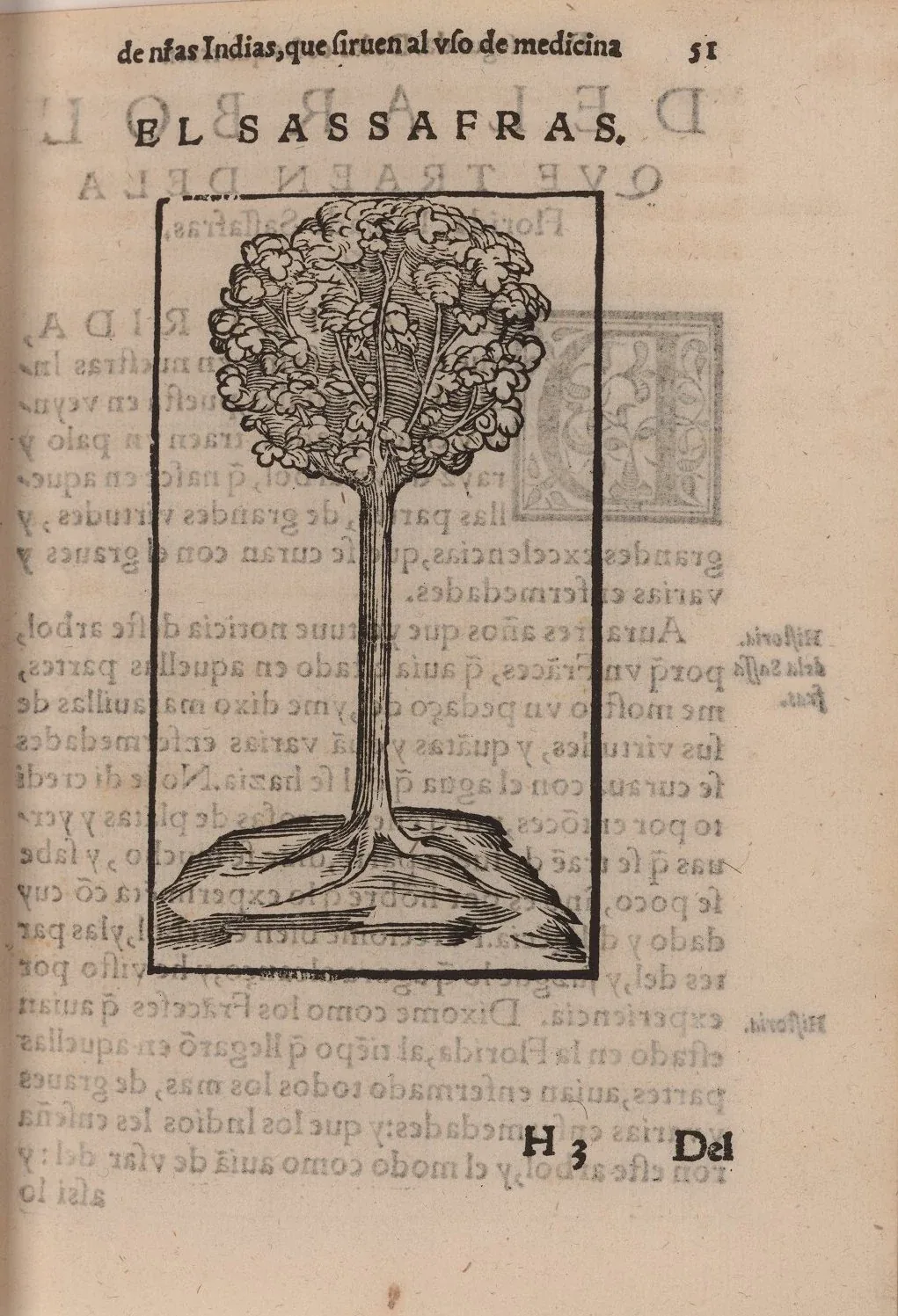
A tree rendered for a printed medical history
The woodcut of a sassafras tree is identified in its Commons record as an illustration from Nicolás Monardes's 1574 Historia medicinal. The same book appears in the title-page illustration of tobacco and in an image of an armadillo. These are not interchangeable images: each page presents a different subject, but all belong to a publication describing materials and knowledge associated with the Americas. The University of Notre Dame's exhibit describes the work's publication in three parts, in 1565, 1571, and 1574. Its page focuses on the 1571 second part; it does not discuss this particular sassafras illustration.
The tree image can be examined as both a botanical representation and a printed object. A woodcut translates branches and leaves into lines carved into a block. Raised areas carry ink; carved areas remain blank. The resulting impression is fixed on paper in reverse of the block. The image can be reproduced across copies, but its details depend on the artist's source, the carving, and the constraints of the page.
Botanical knowledge travels with names
The label “sassafras” anchors the image to a plant name used in the historical source. Plant names can change across languages and centuries, and historical descriptions do not always align neatly with modern taxonomy. A contemporary reader should avoid treating a sixteenth-century label as a fully precise scientific identification without comparing the text, image, and botanical scholarship.
Notre Dame's exhibit describes Monardes as writing from the materials and accounts reaching Seville rather than from personal travel to the Indies. That context suggests how names and objects moved through trade and print. A plant could be physically imported, described by people who encountered it, interpreted by a European author, and represented for readers through a woodcut. The source record for this illustration does not identify the individual who supplied the plant or drew the image, so those contributions should remain unassigned unless further evidence appears.
The carved image carries an argument about nature
Trees are difficult subjects for a small printed page because a branch can divide into many fine forms. A woodcut requires the artist to decide which divisions are essential. A strong trunk may establish the figure; clustered leaves can suggest a canopy; open channels can keep branches separate. These are general visual features of relief printing that a viewer can test against the actual image. They should not be presented as a documented account of the maker's process.
The image's position in a medical book gives it a practical role. It may help readers associate a written description with a visible plant form, while the text identifies the name and reported uses. A woodcut can assist recognition, but it is not a herbarium specimen. The printed image cannot reveal the plant's habitat, season, or exact botanical identity without related descriptions or specimens.
Historical remedies remain historical evidence
Monardes's work includes claims about substances and their uses. Such claims are valuable to historians of medicine because they show what was discussed and circulated in a particular period. They do not, on their own, establish modern efficacy or safety. A contemporary health question requires current clinical evidence, not an early modern page.
This distinction is especially important when a plant's old reputation is still repeated online. The presence of sassafras in a medical text does not automatically support a present-day treatment. An article about the woodcut can describe the book's historical subject and how it represented a plant, while explicitly separating that past from current medical advice. That keeps the site grounded in print history rather than wandering into unsupported health claims.
A page is a meeting of image and type
The 1574 book's page combines words and pictures. The type carries the author's claims; the woodcut makes a visual form repeatable; the paper holds both in a durable sequence. This union is one reason early printed natural-history and medical texts are useful to researchers. They preserve how a text organized information, not simply the information in isolation.
The image as a web file can lose that page-level context. Cropping out the margins or caption may remove the relation between the tree and its surrounding prose. The local cover file is therefore credited and linked back to the source. Readers can open the original page and examine the image in the book with which the reproduction is associated.
A plant label and a botanical identification have different reach
The source file identifies a sassafras illustration associated with Monardes's 1574 book. That establishes how this reproduction is catalogued. A modern botanical determination would require a different comparison: the depicted features, the historical description, and appropriate botanical evidence. The name attached to an early printed image is an essential clue, but it is not a substitute for examining how the plant is represented.
The Notre Dame page used here supplies context for Monardes's work and identifies the publication of its three parts. It does not discuss this particular sassafras cut. Keeping that boundary explicit avoids making a general book-history source appear to authenticate every object in the book. The image file supports the illustration's identification; the institutional exhibit supports the broader context; the compositional reading is the article's own analysis.
For that reading, branching is the useful problem. A tree divides repeatedly, while a printable woodcut has to preserve clear separations among its ink-bearing forms. The question is which divisions remain legible at the page's scale and which are simplified. This is a way to evaluate the representation, not a reconstruction of the unnamed cutter's sequence. It gives the illustration a role beyond repeating the historical label: the reader can investigate how a complex natural form becomes a portable printed pattern. Reproducibility then explains how the pattern travels, while taxonomy and medicinal claims remain matters for their own evidence.
Further reading
Sources & records
Linked records provide object descriptions and historical context. Comparisons, close readings, and explicitly hypothetical examples are editorial analysis. This essay was revised on 22 October 2026; it does not report first-hand workshop research. The image source and license appear in its caption.
Robert Bryden’s Carlyle Woodcut
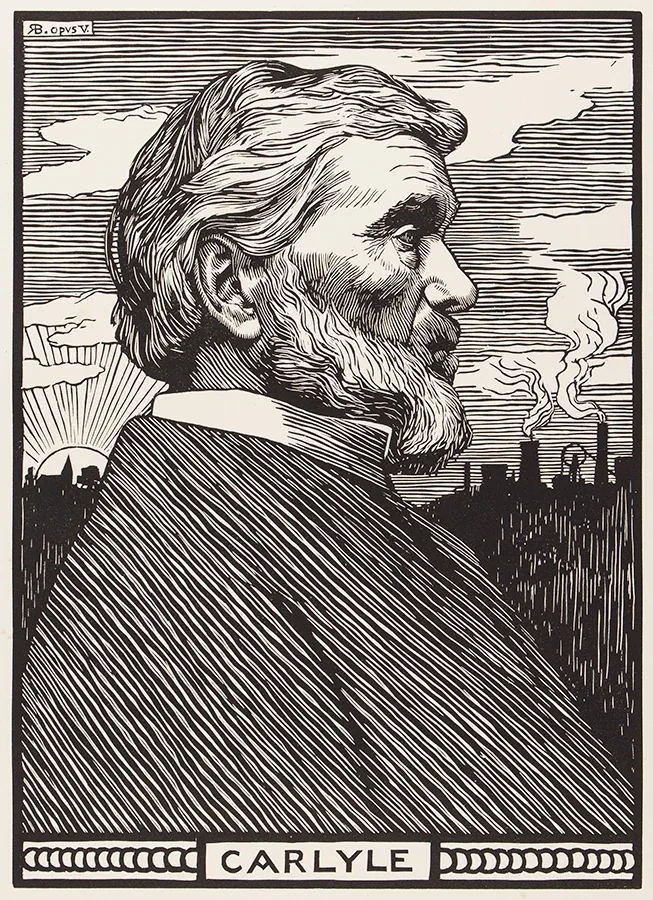
The file record identifies this image as Robert Bryden's woodcut of Thomas Carlyle, made for *Some Woodcuts of Men of Letters of the Nineteenth Century*. The file…
5 min read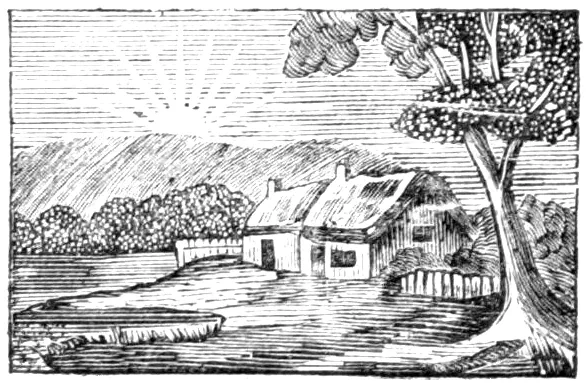
Popular Irish Stories: A Glasgow Chapbook
*Popular Irish Stories* appeared in Glasgow in 1850 as number 23 in a “New and Improved Series.” The National Library of Ireland catalogue describes it as a 24-page…
5 min read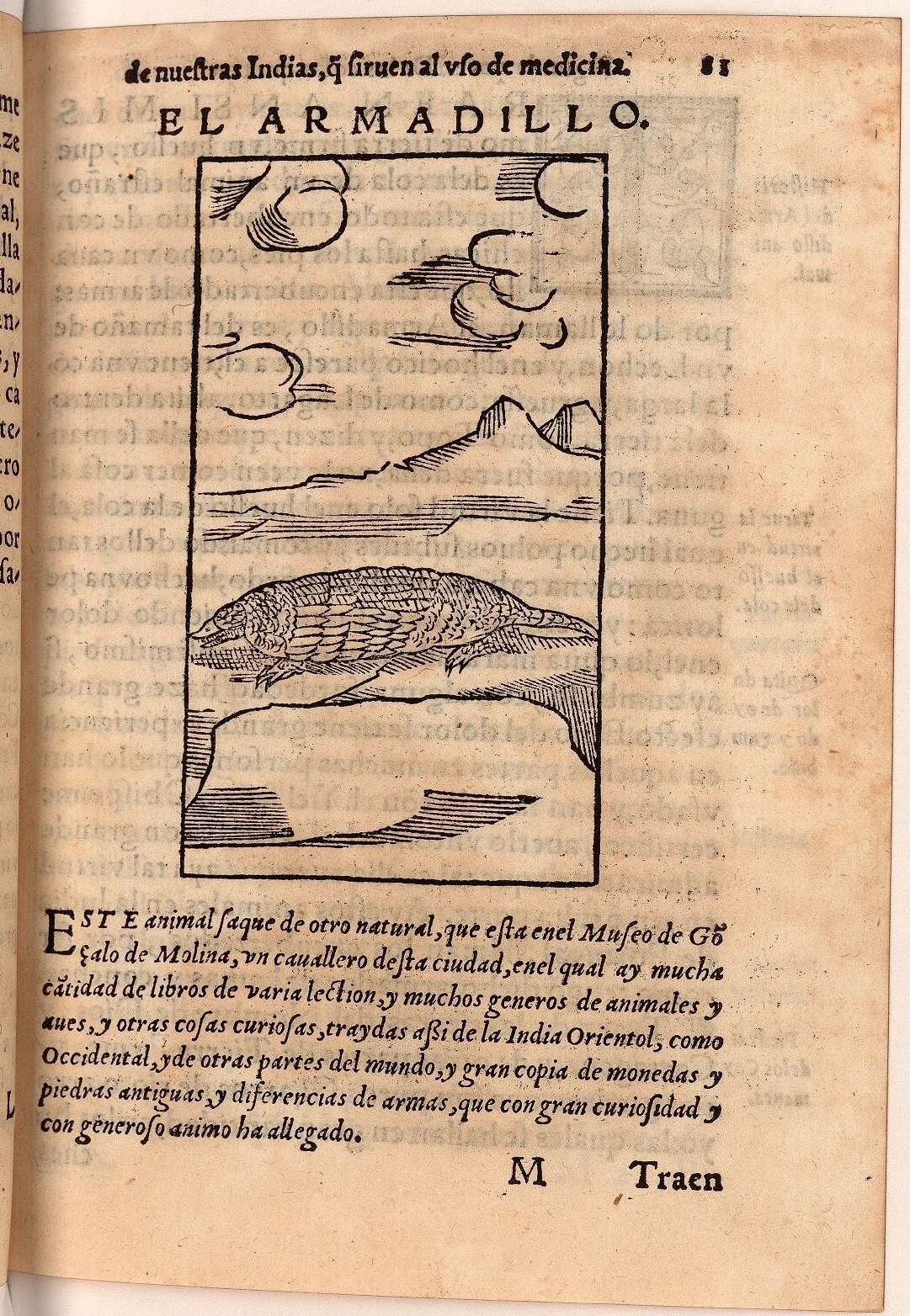
Monardes’s Armadillo Woodcut
The Commons record identifies this image as a woodcut illustration of an armadillo from Nicolás Monardes's 1574 *Historia medicinal*. The illustration belongs to a…
5 min read