
The Print Field / Essay 34
Maggie Laubser’s Swan and Arum Lilies
The work titled *Swan and Arum Lilies* is attributed to Maggie Laubser and described in its Commons record as a linocut measuring 25.5 by 30 centimetres. The file…
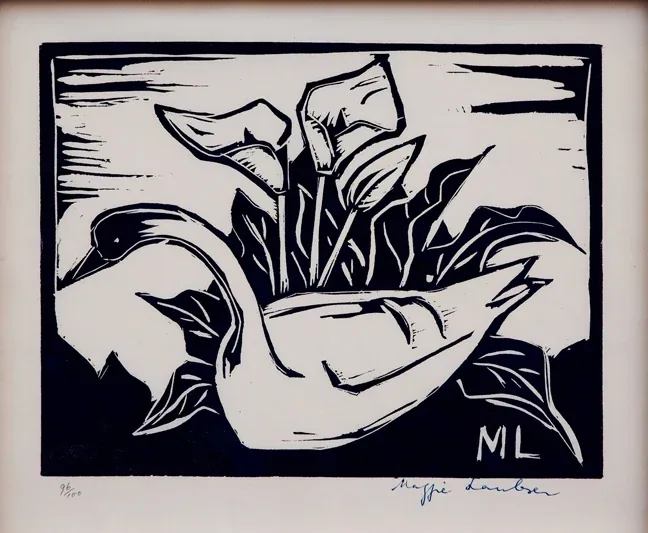
A swan and flowers in a block-printed field
The work titled Swan and Arum Lilies is attributed to Maggie Laubser and described in its Commons record as a linocut measuring 25.5 by 30 centimetres. The file page identifies the artist as Maria Magdalena Laubser, known as Maggie Laubser, and gives her dates as 1886–1973. It does not provide a specific year for this print; the record says only that it predates 1974. A careful account therefore names the artist and medium without assigning the work a precise date.
The title offers three anchors: a swan, arum lilies, and a relationship between animal and plant. It does not tell us exactly how the forms are arranged or what they symbolize. The image itself is the first source for those questions. A viewer can describe the direction of the bird's neck, the shape of the leaves, the balance between water and land, or the contrast of the carved marks. Those visual readings remain interpretations grounded in the print.
The relief surface is a way of seeing
In linocut, the artist cuts away parts of the block and prints from the raised areas. This makes the relationship between dark and light physical. A narrow channel can separate a leaf from the background; a wide uncut area can become a dark mass. The image is reversed during printing, so the artist has to anticipate how shapes will appear on paper. The process can favor bold contrasts, but it can also sustain fine detail when the block and tools allow it.
The material changes how a natural form is translated. A swan's body may be simplified into a single shape, while a plant's leaves can become a pattern of repeated contours. The artist decides which distinctions are important enough to carve. A print can feel observational without functioning as a scientific botanical plate. It is an artwork shaped by composition, not a neutral transcription of a specimen.
Keep title, medium, and subject separate
The file's catalogued details are useful precisely because they can be separated. “Swan and Arum Lilies” is the title. “Linocut” identifies the medium. The dimensions describe the sheet or printed image as given in the source. Laubser's name identifies the maker. These facts do not, by themselves, establish the work's original date, edition, exhibition history, or place of printing.
The digital image also comes with a rights record. The Commons page describes the two-dimensional artwork as public domain in relevant jurisdictions and provides a source and author credit. The image used on this website is a derivative WebP made for page performance; the composition has not been altered. The art record and the digital asset license are related pieces of provenance, but one should not be substituted for the other.
Arum lilies as a form, not an unsupported symbol
Arum lilies have a distinctive structure: a central spadix surrounded by a curved spathe. That botanical description can help a viewer identify the flowers in an image, but the plant label does not automatically tell us what the artist intended them to mean. Flowers can function as forms, subjects, cultural symbols, or all of those things at once. For this particular print, a claim about personal or symbolic meaning would need a catalogue essay or artist statement.
The same care applies to the swan. A swan can suggest grace in a viewer's interpretation, but that association is not a documented fact about Laubser's intention. Instead, look at how the body occupies the composition. Does the bird interrupt the plant pattern? Is it enclosed by leaves or set against open space? Which form carries the greatest contrast? Observations like these can support an interpretation without presenting it as the only correct reading.
Looking through the reproduction
The Commons reproduction is small enough that subtle marks may be lost. The listed dimensions tell us the work is a moderate-sized print, but a displayed web preview may not match the scale of the original. Ink density, paper tone, and texture can change under digitization. For close technical study, a museum or archive object record and a higher-resolution image would be more informative than a compressed thumbnail.
Still, the reproduction can reveal broad design decisions. The title helps the viewer locate the swan and flowers; the relief medium explains why dark masses and carved lines matter. The print's date remains broad in the available file record, and no edition information is given. Those gaps do not prevent analysis. They simply mark where the evidence ends.
Read animal and plant through a shared vocabulary of curves
The title establishes an animal and flowers as distinct subjects, but a composition can connect unlike things through similar contours. A useful reading of Laubser's print asks whether the bird and plants share a visual vocabulary: curved boundaries, enclosed light areas, or repeated directions where those can be seen. This proposes a relationship to examine; it does not assign a symbolic meaning to a swan or an arum lily on the artist's behalf.
The distinction matters because a recognizable motif can tempt a writer to bypass the image. Calling a swan graceful or a flower meaningful offers little explanation of how this particular print is organized. A more useful account identifies where one form interrupts another, which region of ink carries weight, and whether paper separates the subjects or joins their surrounding field. These relationships can be discussed without knowing a precise year or an edition size.
The file record gives dimensions of 25.5 by 30 centimetres and a broad dating limit rather than a specific production year. Those facts locate the work as an object; they need not be repeated as a warning in every section. The interpretive contribution is to treat animal and plant as participants in one relief structure. Looking for shared and contrasting curves can explain how the title's two subjects coexist on the sheet, while leaving religious, autobiographical, or personal symbolism to evidence that would actually support it.
Further reading
Sources & records
Linked records provide object descriptions and historical context. Comparisons, close readings, and explicitly hypothetical examples are editorial analysis. This essay was revised on 22 October 2026; it does not report first-hand workshop research. The image source and license appear in its caption.
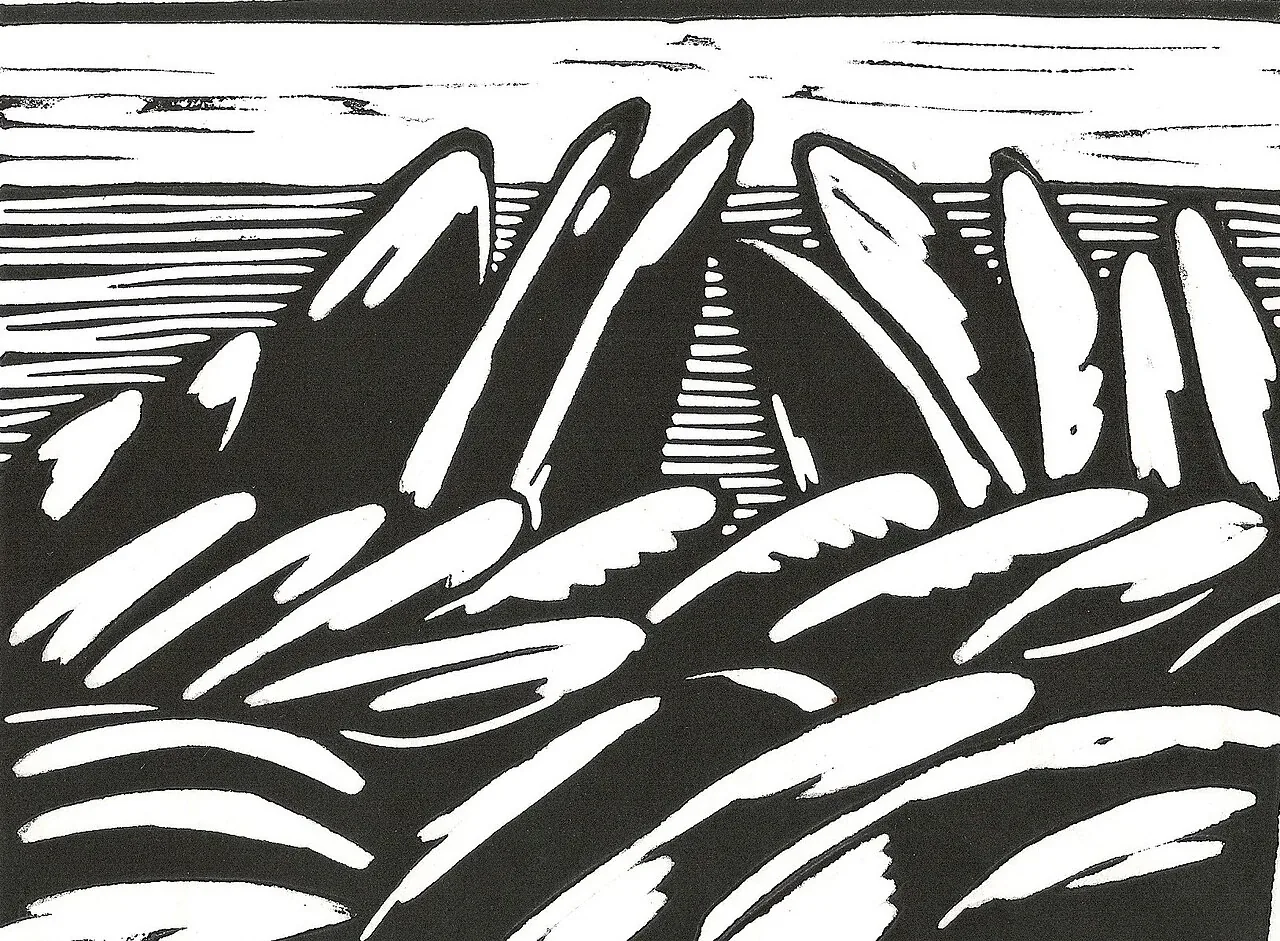
Rocks in Bretagne
The Commons object description identifies Ingeborg Bernhard's linocut as *Rocks in the Bretagne, France*, dated 1977, with dimensions of 21 by 30 centimetres. The…
5 min read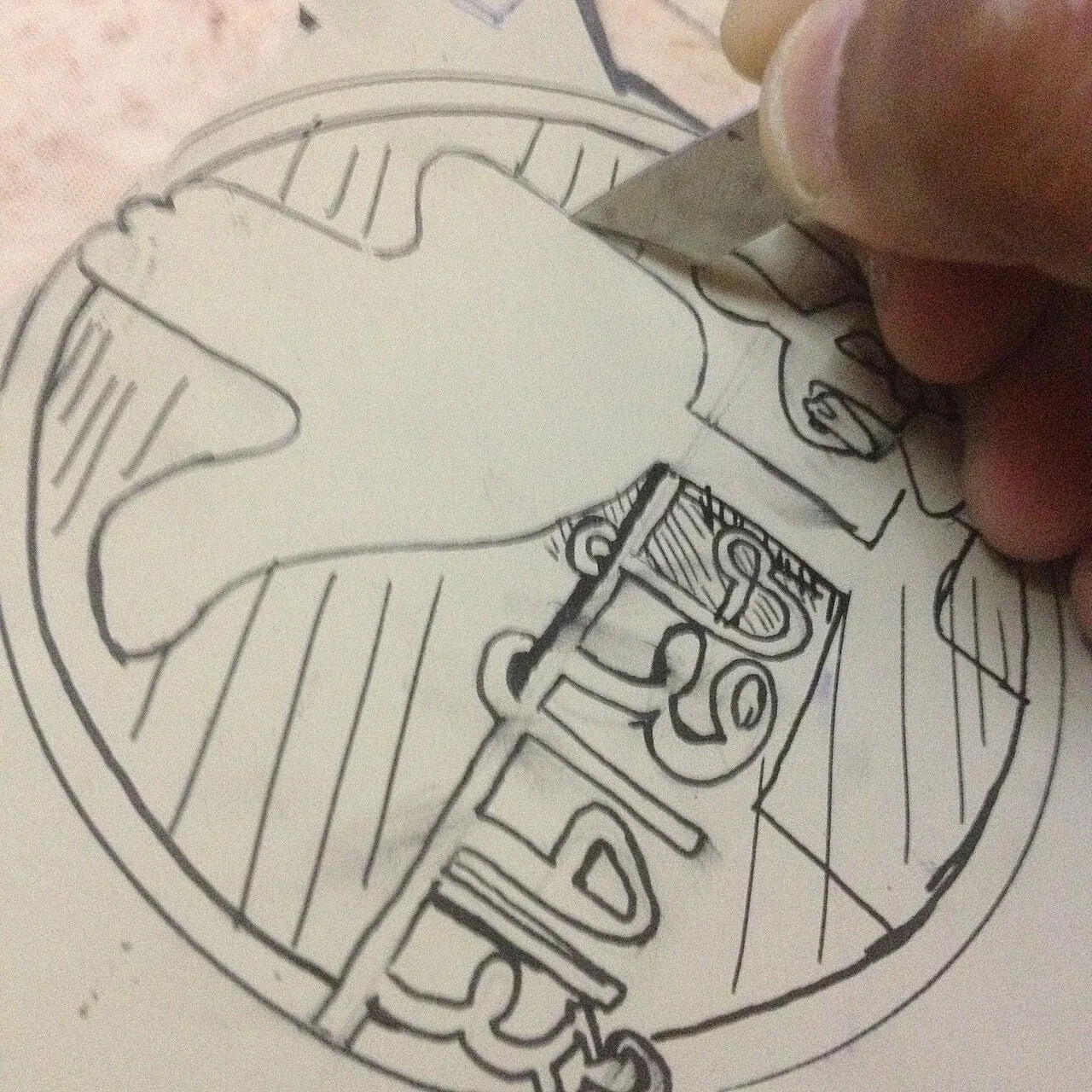
Carving a Chandigarh Stamp in Linoleum
The photograph shows a sheet of linoleum being carved for a stamp. Its caption identifies the design as a stamp featuring Chandigarh's Open Hand Monument, the Rock…
5 min read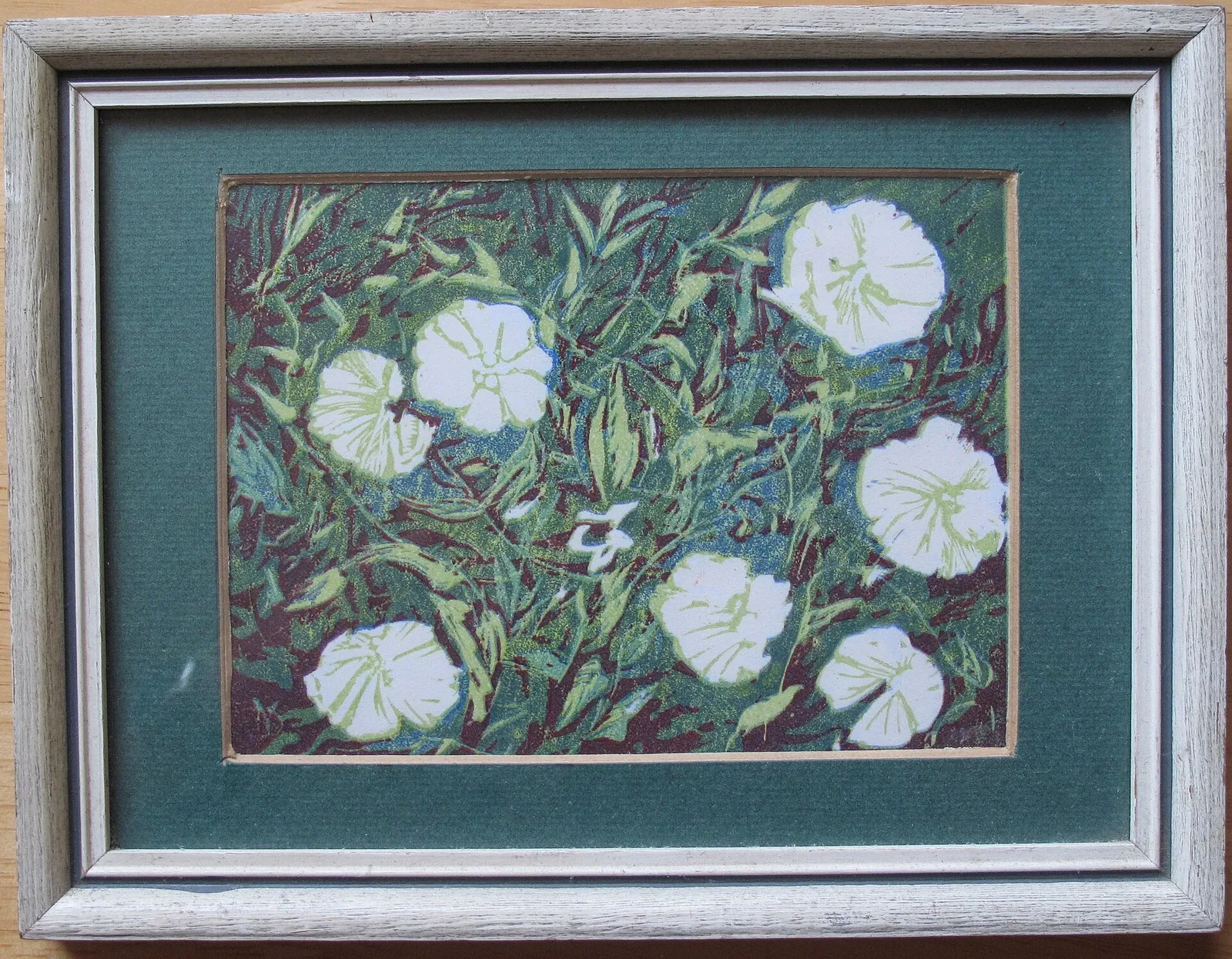
Yvonne Drewry’s Convolvulus Linocut
The Commons file record identifies this image as a linocut of convolvulus flowers by Yvonne Drewry, dated 1975. The photographed impression is the starting…
5 min read