
The Print Field / Essay 16
The Linotype Matrix as a Mold
A Linotype matrix looks modest when it is separated from its machine: a small brass piece carrying a character and the channels that guide it. In use, however, it…
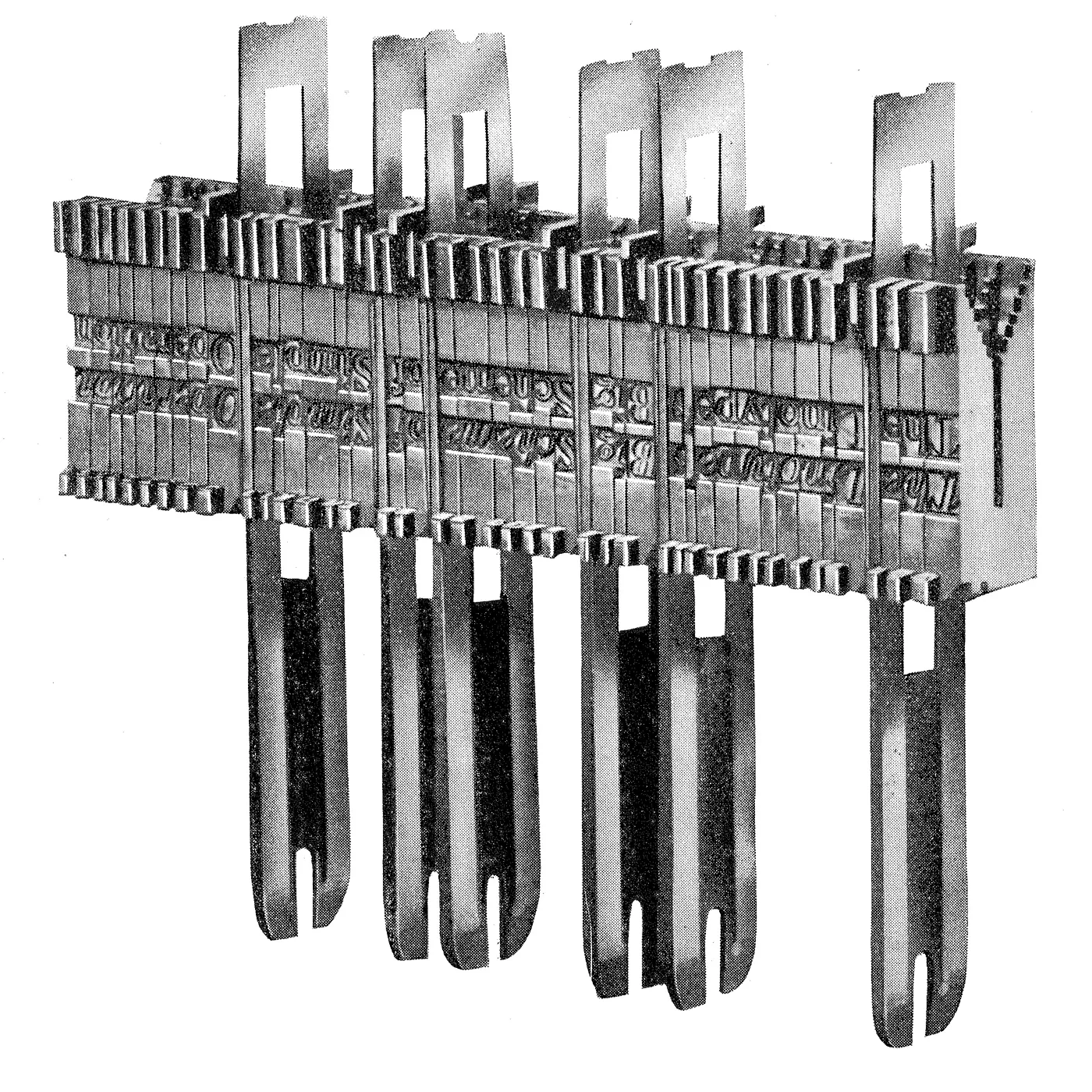
A letter waiting to become metal
A Linotype matrix looks modest when it is separated from its machine: a small brass piece carrying a character and the channels that guide it. In use, however, it is not a miniature piece of type. It is a reusable mould component. The distinction matters. A matrix carries the letter image to a casting point; the machine then casts a complete line as one piece. The National Museum of American History describes the sequence in its account of an Intertype machine: an operator keys a line, the machine assembles matrices, molten metal enters their casting parts, and the finished line leaves the machine to cool.
This is a different material logic from hand composition. A compositor selecting metal sorts handles the printed letters themselves, arranging them one by one. A Linotype operator instead works with matrices that are temporarily assembled and then returned to storage after casting. The line of type is the product; the matrix is the tool that makes it possible. Keeping those roles separate helps explain why a display of matrices and slugs is more than a collection of tiny letter blocks.
The face and the body do different jobs
The letter image is cut into one face of the matrix. That face defines the character that will appear in print. The matrix also has a body shaped to fit the machine's channels and casting arrangements. A matrix has to travel, align, meet the casting mechanism, and later return to the correct magazine. The machine is therefore a system of storage, transport, alignment, and casting, not simply a keyboard attached to a hot pot.
The Smithsonian curator's account provides a useful concrete example. The Intertype Model C used during a training class was advertised as a three-magazine machine, able to hold three different type sizes at once. That description belongs to that model, not to every line-casting machine. It shows how a shop could change the available type by selecting a magazine, while also reminding us that fonts and sizes were physically organized inventory. The matrices were not generic tokens. Their size, face, and machine compatibility determined what kind of line could be produced.
A line is assembled before it is cast
When the operator types a line, the machine releases or selects the matrices corresponding to the keystrokes and brings them together in sequence. Spaces require their own mechanism, too: in a justified line, expandable spacebands help adjust the measure so the line fits the intended width. Once the line is ready, it is moved to the casting position. Metal enters the matrix moulds; after the cast line is released, the matrices must be distributed back to storage so that they can be used again.
That return journey is easy to overlook because the finished slug is visible and the individual matrices quickly disappear from view. Yet distribution is central to the machine's operation. A matrix that does not return to its intended channel can interrupt later work. A line with a wrong or damaged matrix can carry an error into the proof. The machine's efficiency depends on each part completing its circuit, not merely on the operator pressing keys quickly.
Reading a matrix display
On a museum table, matrices can be examined at a pace that the machine's normal cycle would not allow. A visitor can compare repeated characters, look for the shallow face, and notice that a matrix is a component with a precise orientation rather than a piece of movable type ready for printing. The display also makes visible a feature of mechanized composition: the letterform survives as a durable tool, while the cast line is consumed by the job and can be remelted after use.
It is tempting to infer a machine's full operating history from a few matrices, but the objects alone cannot establish which publication used them, how many lines were cast, or who operated the machine. Those claims need records. A collection label can tell us the model, maker, date, or donor when documentation supports those facts. Without that evidence, the responsible description stays with visible construction and documented function.
Two objects carry one letter at different stages
The matrix and the printed letter can share a design without sharing a job. The matrix supplies a moulding surface within a casting system. The cast relief on the slug receives ink in the printing system. Treating both as simply metal letters hides the crucial transfer between them. Smithsonian's Intertype account makes that transfer visible: matrices are assembled, a line is cast, and the resulting type is removed for checking and printing.
Compare their useful lifetimes within a hypothetical job. A matrix may return to the machine's inventory after casting and participate in another line. The slug retains the particular sequence that has just been made. The reusable design information and the temporary text arrangement therefore reside in different objects. That separation helps explain how a machine can repeatedly make new wording from a more stable stock of character designs.
It also explains why a display of matrices should be interpreted differently from a proof. A proof shows the sequence that reached paper; a matrix display shows components from which sequences could be made. Neither can automatically reveal the other without evidence of the intervening assembly. For a reader unfamiliar with linecasting, this is the most useful distinction to carry away: the matrix is a means of reproducing a character, not the character-shaped printing surface that necessarily touched a particular sheet. The difference connects type design, machine inventory, and the physical life of a line of text.
Further reading
Sources & records
Linked records provide object descriptions and historical context. Comparisons, close readings, and explicitly hypothetical examples are editorial analysis. This essay was revised on 22 October 2026; it does not report first-hand workshop research. The image source and license appear in its caption.
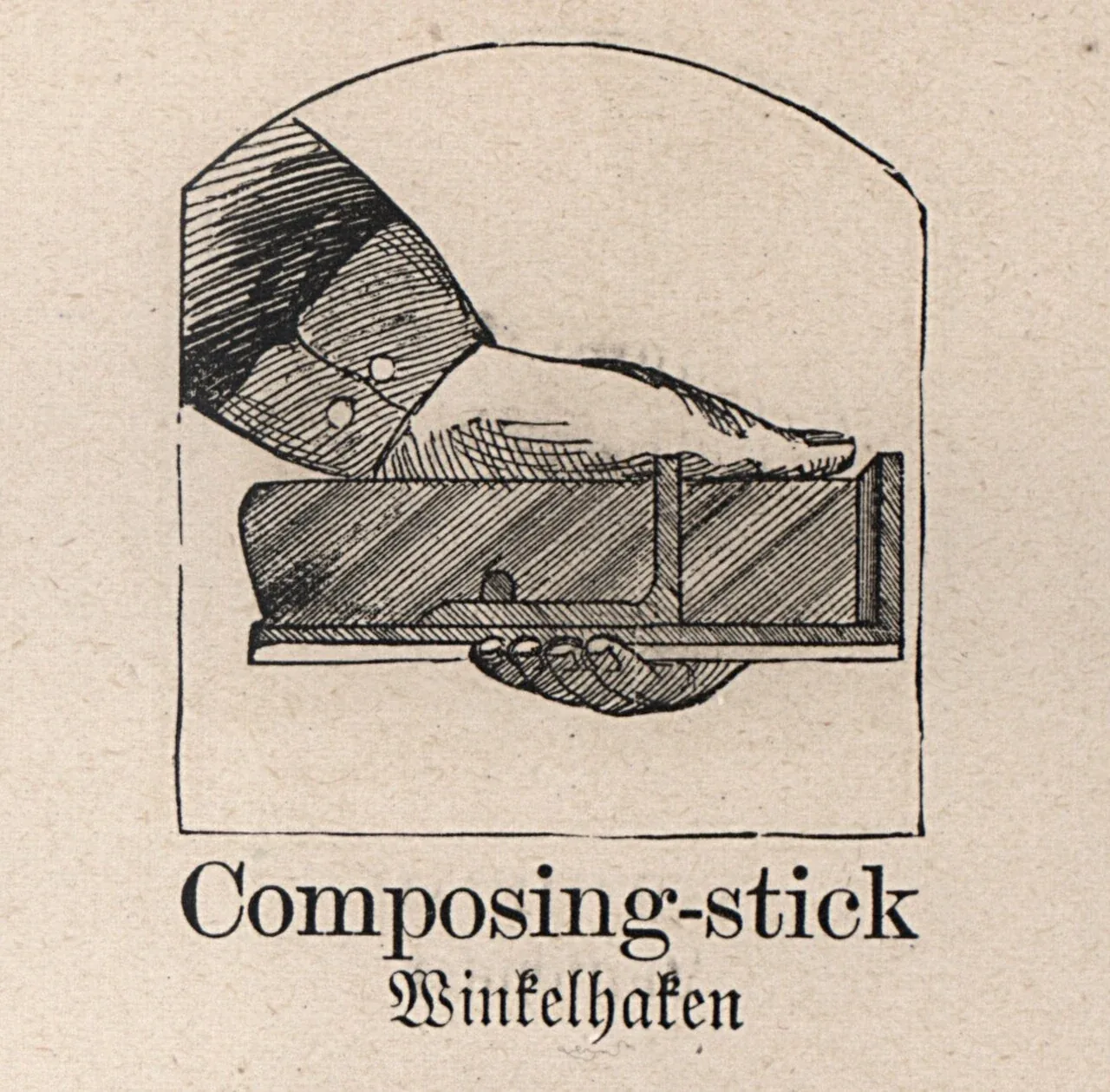
The Composing Stick, Line by Line
The composing stick is a small tool with an outsized role: it holds one line of type while a compositor assembles words from individual sorts. The Library of…
5 min read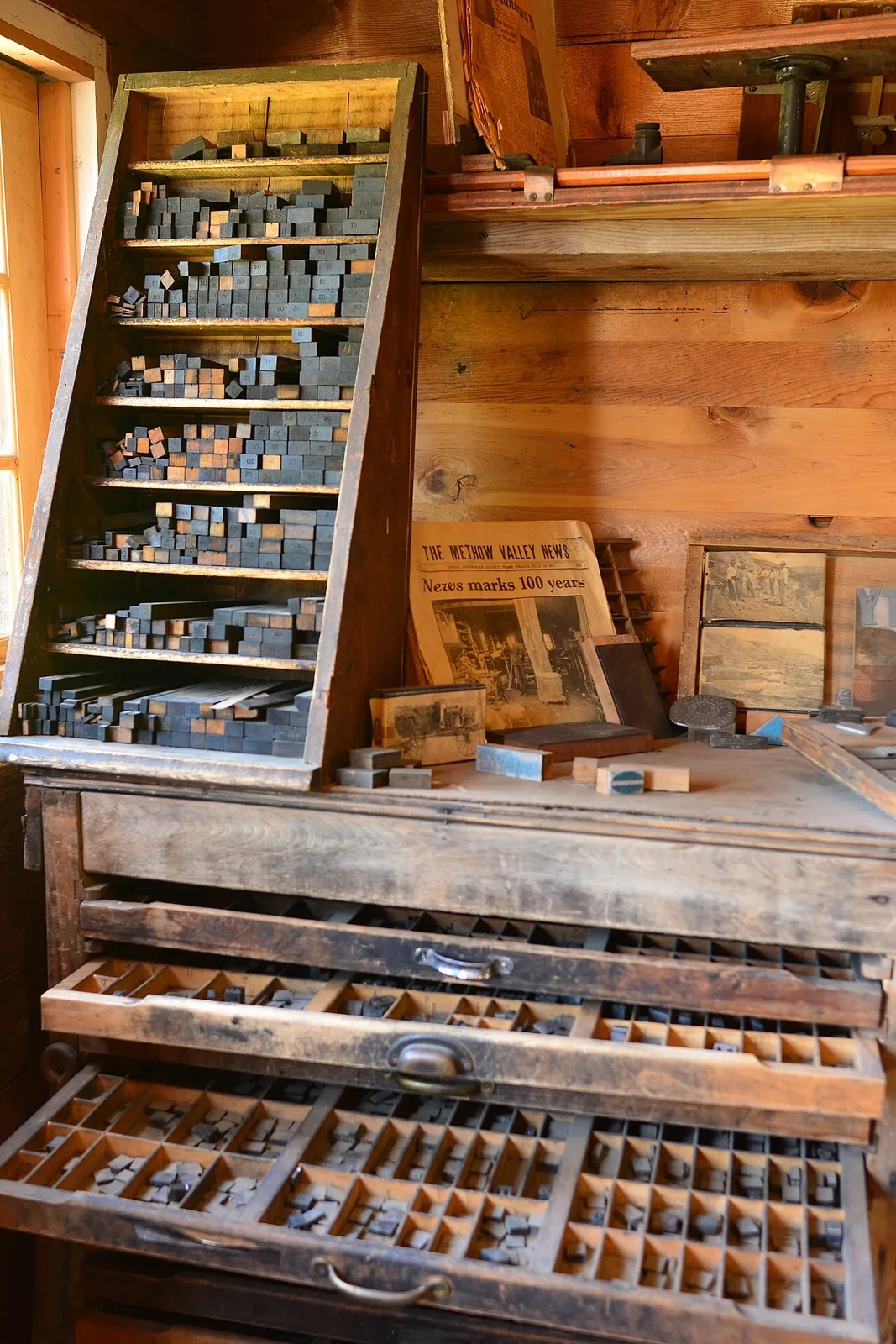
The Type Case as a Shop Index
A printer’s case is not a decorative box of letters. It is a working storage system that determines how a compositor reaches the type needed for a line. The cover’s…
4 min read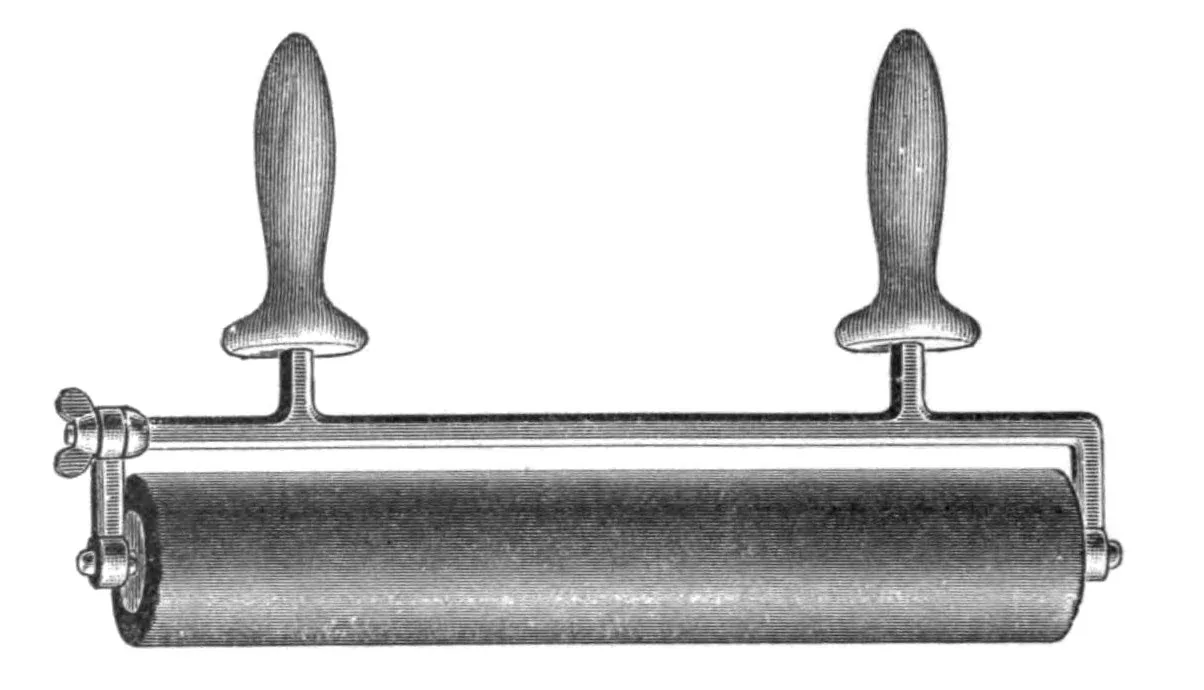
Inking with a Hand Roller
The cover reproduces an illustration of a composition hand roller from an American Type Founders catalogue dated 1906, as identified in the source file. The file…
5 min read