
The Print Field / Essay 48
The Lenox Gutenberg Bible
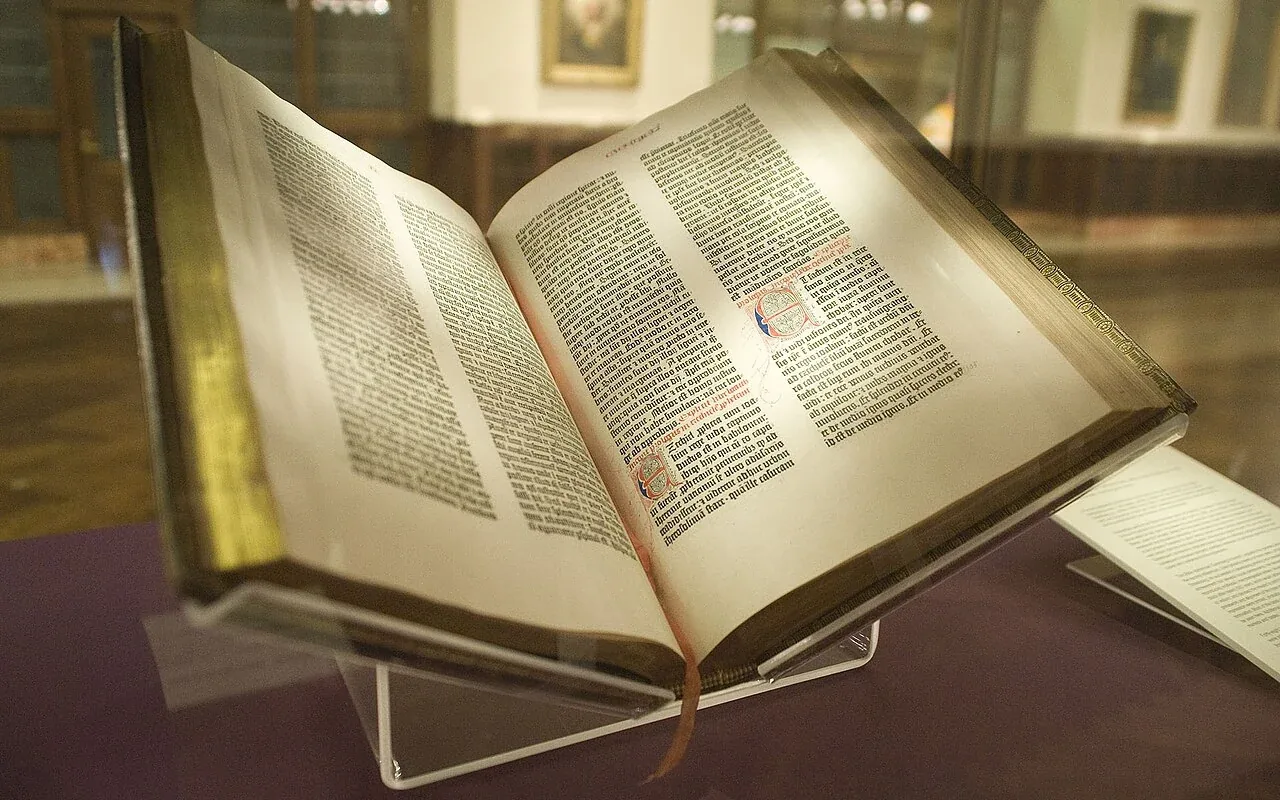
The photograph shows the Lenox copy of the Gutenberg Bible at the New York Public Library. The NYPL identifies it as a Latin Bible printed in Mainz around 1455 and…
A printed page with room for handwork
The photograph shows the Lenox copy of the Gutenberg Bible at the New York Public Library. The NYPL identifies it as a Latin Bible printed in Mainz around 1455 and notes that James Lenox acquired the copy in 1847. The image makes visible a quality of early printed books that can be overlooked when Gutenberg's press is described only as a technical milestone: printed type shares the page with work done by hand, including illumination and annotations.
The NYPL exhibition identifies the Latin Bible with Mainz and 1455; its institutional account supplies the production and collecting context used here. The Library says the edition was likely completed in the autumn of 1455 and estimates that about 180 copies were printed, with 48 known to survive at the time of the record. Those numbers are institutional estimates rather than immutable counts. They help describe scale, while the particular Lenox copy has its own provenance and physical history.
Repetition without identical pages
Movable metal type allowed printers to assemble characters and print repeated text. This made pages more consistent than copying each line by hand, but it did not make a finished book identical from cover to cover in every respect. The Bible's printed text can be accompanied by hand-applied color, initials, rubrication, or marginal notes. Those additions make each surviving copy an object with its own making history.
The NYPL photograph reveals an illuminated initial and handwritten marks in the margins. These visible details should be described from the pictured copy, not projected onto every Gutenberg Bible. Some surviving copies may differ in decoration, condition, or binding. A book can carry both a repeatable printed structure and unique work added after printing.
The Lenox copy has a collection history
James Lenox acquired the Bible in 1847, and the NYPL describes it as the first Gutenberg Bible to come to the United States. The story of its arrival is part of the institution's narrative about the object. The present repository preserves the copy within a public collection, while its acquisition record identifies a different event from the original printing. These facts explain how the copy reached its current repository; they do not exhaust its earlier provenance.
The library's exhibit page offers a detailed object history and describes its public-domain status under United States law. The photo used for this article comes from a separate Commons file page, where the photographer and license are recorded. Artwork, physical copy, museum photograph, and local WebP conversion are linked but distinct objects. Maintaining those distinctions makes credit and collection history clearer.
A press did not finish the book alone
Printing the text required type, ink, paper, a press, and skilled labor. The page still depended on finishing work: folding, gathering, binding, and any illumination or rubrication. The print technology made the text reproducible; handwork gave some copies additional color and visual hierarchy. A printed Bible was therefore neither a purely mechanical object nor simply a manuscript reproduced by machine.
The precise production arrangements for the Lenox copy should be drawn from the NYPL's catalogue and scholarship rather than assumed from a general account of the press. The photograph can show the result, but not the names of all printers, rubricators, scribes, or binders involved. Historical books often preserve the output more clearly than the labor behind each stage.
The page as a meeting of systems
Movable type arranged repeated letters into lines. A printing press transferred ink to paper. A page layout determined how columns and margins organized the text. Hand-applied color could mark openings or emphasize sections. A reader navigated both the words and their visual architecture. These processes were interdependent, but each left different evidence in the book.
The NYPL's image shows Latin text in two columns and a hand-finished initial. The two columns make the page dense; the colored letter gives the eye a point of entry. Marginal handwriting adds another layer of later use. A close look reveals a book that is both a printed edition and an individual artifact.
“First” needs a defined scope
The Gutenberg Bible is often called the first major book printed with movable type in Europe, and NYPL credits Gutenberg as the first European to use movable metal type in book production. These descriptions need a geographic and historical scope. Printing had long histories in East Asia, and the 868 Diamond Sutra is an earlier dated printed book. The Gutenberg Bible marks a major development in European printing, not the beginning of printing everywhere.
That distinction improves the story. It lets us recognize the Bible's influence without erasing earlier print traditions. The New York copy is important because of its production and collecting history, but it belongs within a global history of printing with multiple origins and technologies.
Edition, copy, opening, and photograph are four scales of evidence
The Lenox Bible can be examined at four nested scales. The edition concerns repeated text produced through printing. The copy concerns the particular book that collectors acquired and preserved. The opening exposes only two facing pages within that copy. The photograph selects a view of that opening. A claim established at one scale does not automatically apply at all the others. A photograph showing a decorated initial, for example, cannot prove the decoration of every surviving copy.
This distinction makes the relationship between printing and handwork more precise. Printed text can be shared across copies while later decoration, binding, use, and ownership give individual books different histories. Repetition makes the edition possible; subsequent work and events help make a particular copy singular. There is no need to describe those processes as contradictory. They concern different stages and different units of the object.
NYPL's account anchors the Lenox acquisition in 1847 and provides estimates for the edition and surviving copies. The article's analysis uses those facts to ask a separate question: what does a reader actually learn from the selected photograph? The visible opening can connect typographic organization with hand finishing, while the catalogue supplies information outside the camera's field. Reading them together avoids turning Gutenberg into a single invention slogan. It also gives a clear method for looking: identify the scale of each claim before transferring a visible detail from one book to the history of an entire edition.
Further reading
Sources & records
Linked records provide object descriptions and historical context. Comparisons, close readings, and explicitly hypothetical examples are editorial analysis. This essay was revised on 22 October 2026; it does not report first-hand workshop research. The image source and license appear in its caption.
Robert Bryden’s Carlyle Woodcut
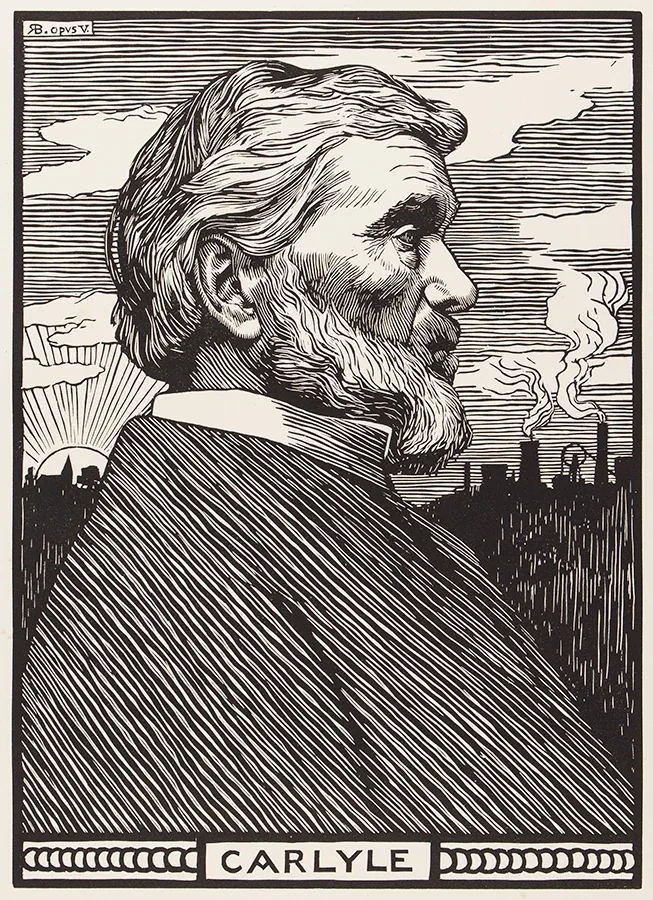
The file record identifies this image as Robert Bryden's woodcut of Thomas Carlyle, made for *Some Woodcuts of Men of Letters of the Nineteenth Century*. The file…
5 min read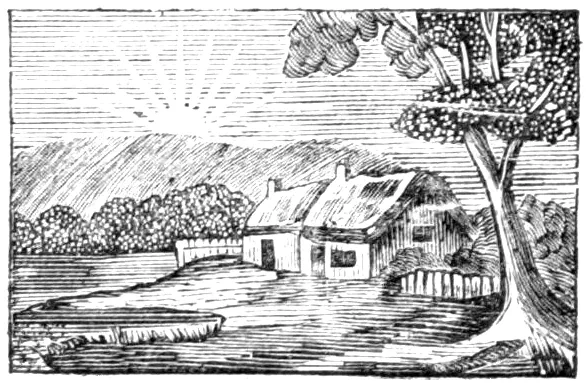
Popular Irish Stories: A Glasgow Chapbook
*Popular Irish Stories* appeared in Glasgow in 1850 as number 23 in a “New and Improved Series.” The National Library of Ireland catalogue describes it as a 24-page…
5 min read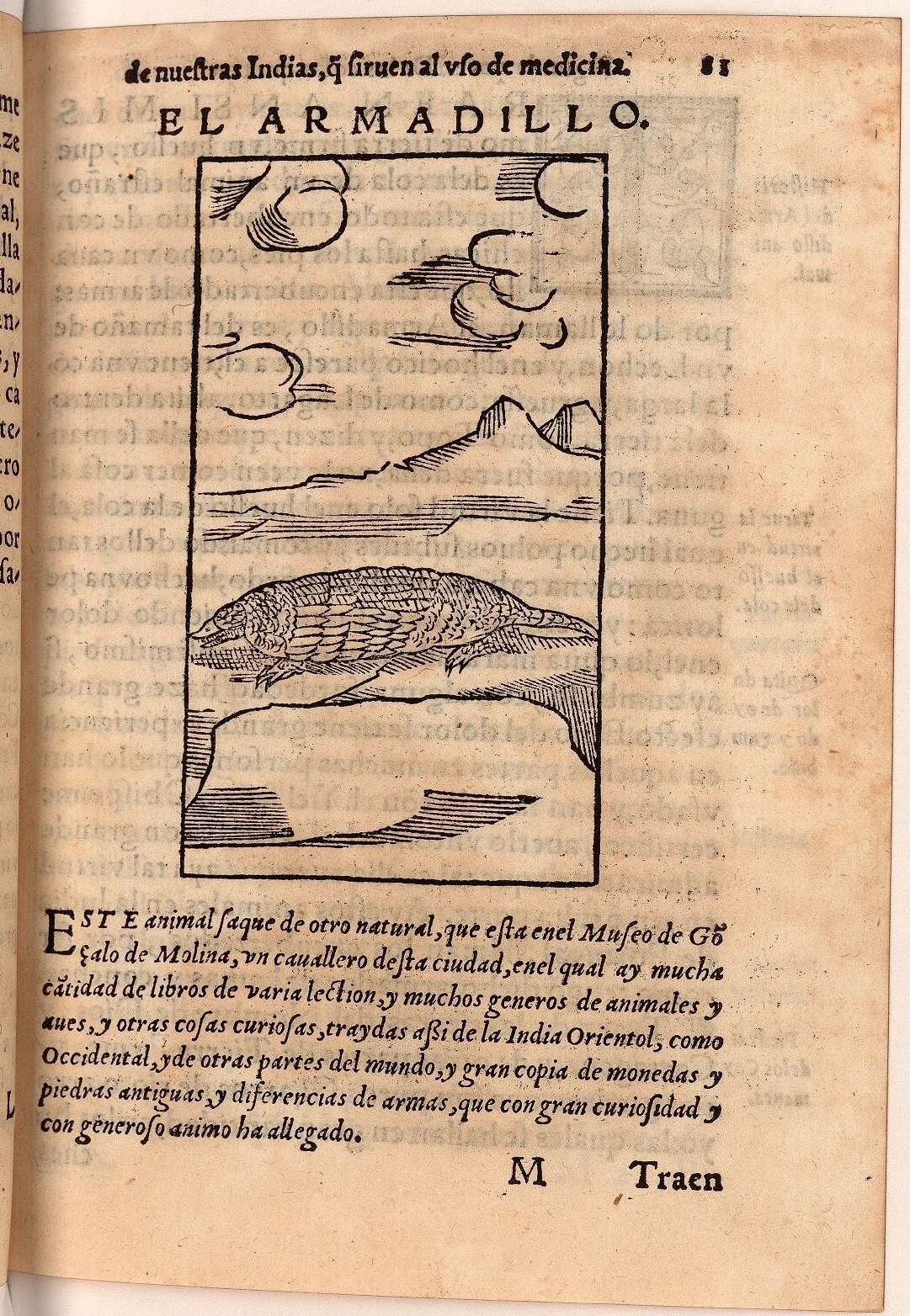
Monardes’s Armadillo Woodcut
The Commons record identifies this image as a woodcut illustration of an armadillo from Nicolás Monardes's 1574 *Historia medicinal*. The illustration belongs to a…
5 min read