
The Print Field / Essay 46
Hokusai’s Hawk and Cherry Blossoms
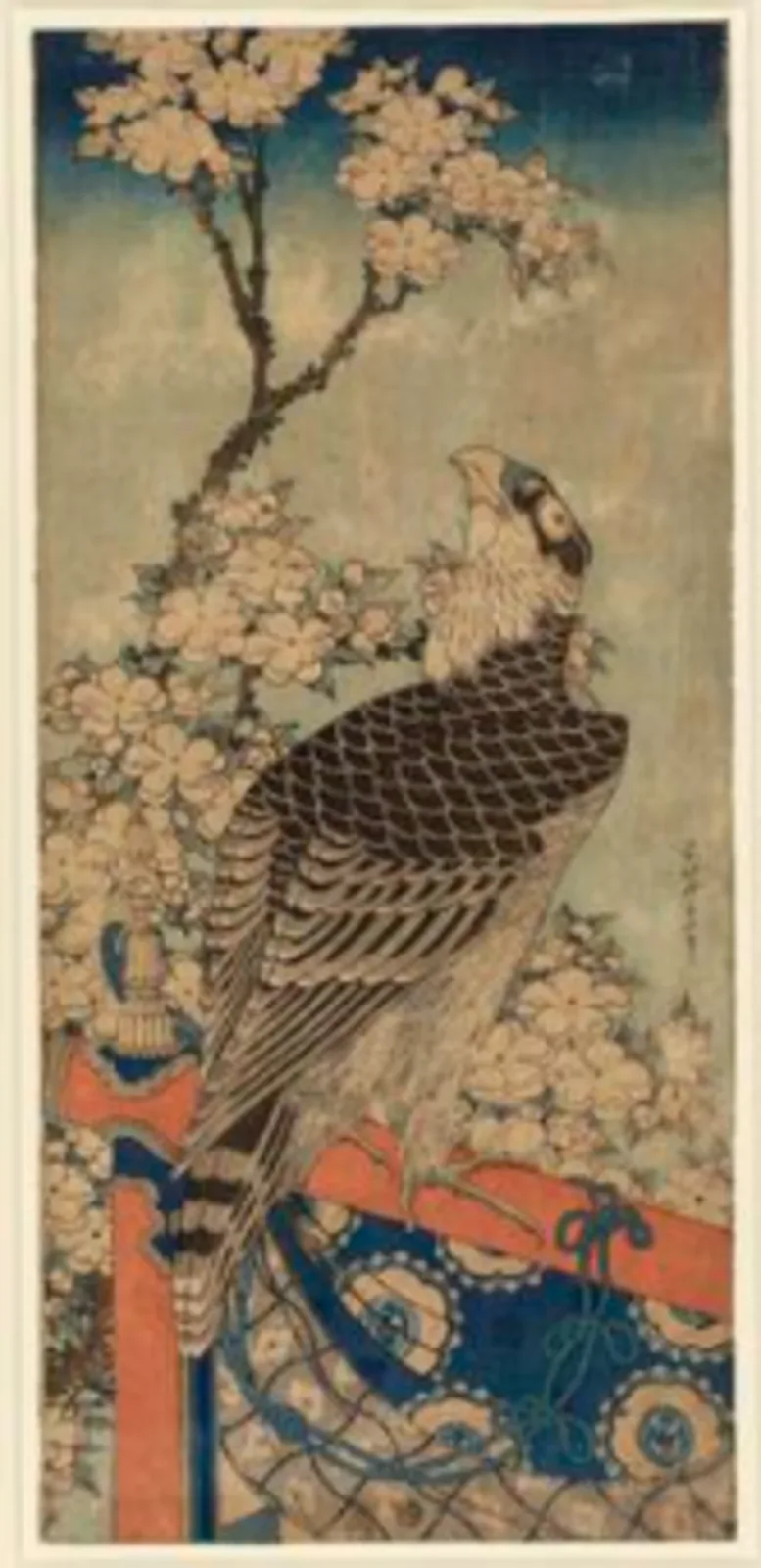
The cover image is catalogued as a woodcut diptych by Katsushika Hokusai, dated 1833–1834 and made in Japan. Its description places a hawk on an ornamental perch…
A hawk suspended beneath blossoms
The cover image is catalogued as a woodcut diptych by Katsushika Hokusai, dated 1833–1834 and made in Japan. Its description places a hawk on an ornamental perch reaching toward cherry blossom. The vertical format gives the scene a hanging-scroll quality: the bird, branch, and flowers occupy a tall field rather than a conventional landscape rectangle. The image does not simply illustrate an animal; it arranges the animal, plant, and empty space into a composed encounter.
The British Museum's record for a related print in Hokusai's group of large vertical bird and animal subjects notes that the other works include “Hawk and cherry.” The museum describes the tall format as imitating a hanging scroll and suggests that the group may have been made for the New Year. That context is useful, but it should be attached to the group as a curatorial interpretation, not presented as a certainty about every individual impression.
A diptych is designed across a join
A diptych consists of two joined or paired sheets. The division between them is part of the design problem. A branch or ornament may cross the seam; the viewer's eye has to move between the two panels to complete the image. In the Hokusai print, the vertical orientation makes that movement pronounced. The paper format recalls a hanging scroll, while the printed sheets remain separate components that must be read together.
Woodblock printing creates each color or line through a carved surface. A block is cut so that the raised portions carry ink. In a multi-colour print, separate blocks can contribute different parts of the image, requiring careful registration between impressions. The file record identifies this as a woodcut but does not give a block count or sequence. It is better to discuss the process at the level supported by the source than to assign a specific number of blocks.
The bird looks and the flower answers
The catalogued description gives the hawk a direction: it reaches toward a flowering cherry branch. That gesture links the two principal subjects. The perch creates a second line, a human-made element that organizes the bird's position. A viewer can follow the hawk's gaze, trace the branch, and notice how the flowers balance the bird's mass. Those observations are grounded in the image rather than a claim about symbolic meaning.
In Japanese visual culture, animal and flowering-plant subjects can carry seasonal or auspicious associations. The British Museum curator notes that the five vertical prints in the related group depict auspicious subjects and may have been produced for the New Year. This is a contextual possibility, not a definitive reading of the hawk image. The article should preserve the museum's wording and avoid assigning a specific symbolic meaning without a source that treats this exact print.
The image is not the woodblock
What survives in this digital file is an impression of a print, not the carved blocks. It reveals the composition and the color or line on paper, but it cannot show the full carving process or how the blocks were stored and used. It may also be one impression among a larger edition. The original file record identifies the artwork as a public-domain woodcut; the derivative WebP on this site is a conversion made for local display and keeps the image unchanged.
A digital image can alter the experience of scale. The vertical print is shown on a screen that may be short or narrow, while its original paper can be examined at a different size. The museum's related-object record characterizes the format as large and vertical. That helps orient a viewer, but the precise dimensions of this hawk impression should be taken from its own catalogue entry if needed.
Looking through the seam
Begin at the perch, then follow the bird's body upward. At what point does the cherry branch take over the movement? Does the central join interrupt the flow or intensify it? Look for the spacing of blossoms and how they stand against the blank paper. The print can make a moment feel suspended, even though its design is divided between two sheets.
The vertical format also asks the viewer to look up and down rather than across. The eye may travel from the perched bird to the flower, then return to the point where the two panels meet. That movement helps explain why the image can feel more like an arranged scroll than a flat scene. The museum source gives a historical comparison; the print itself supplies the rhythm.
The join creates a second route through the image
Hokusai's tall paired-sheet format offers two different continuities. The depicted relation among bird, perch, and blossom can lead the eye through the composition. The physical division between sheets introduces another boundary through which that reading must pass. A useful interpretation asks whether a contour bridges the division, pauses near it, or redirects attention across it. The answer must come from the reproduction, rather than from assuming that any diptych handles its join in the same way.
This differs from the problem of registering several colors on one sheet. Color registration coordinates successive impressions on a support. A paired-sheet composition also requires the viewer to relate separate supports as one visual field. Both involve alignment, but they operate at different levels. Recognizing the difference helps explain why a picture of the whole work can conceal part of the object's structure.
The British Museum's discussion of related vertical bird-and-animal prints supplies context for a comparison with hanging scrolls. Its suggestion of an auspicious or New Year setting remains a curatorial possibility, not a proven occasion for this particular impression. The article's original reading concentrates instead on a verifiable formal question: how can two sheets sustain one encounter between a bird and flowering branch? The join gives that question a material location. Attending to it links the print's object format with the path of looking, without inventing an audience, edition count, or symbolic programme for the work.
Further reading
Sources & records
Linked records provide object descriptions and historical context. Comparisons, close readings, and explicitly hypothetical examples are editorial analysis. This essay was revised on 22 October 2026; it does not report first-hand workshop research. The image source and license appear in its caption.
Robert Bryden’s Carlyle Woodcut
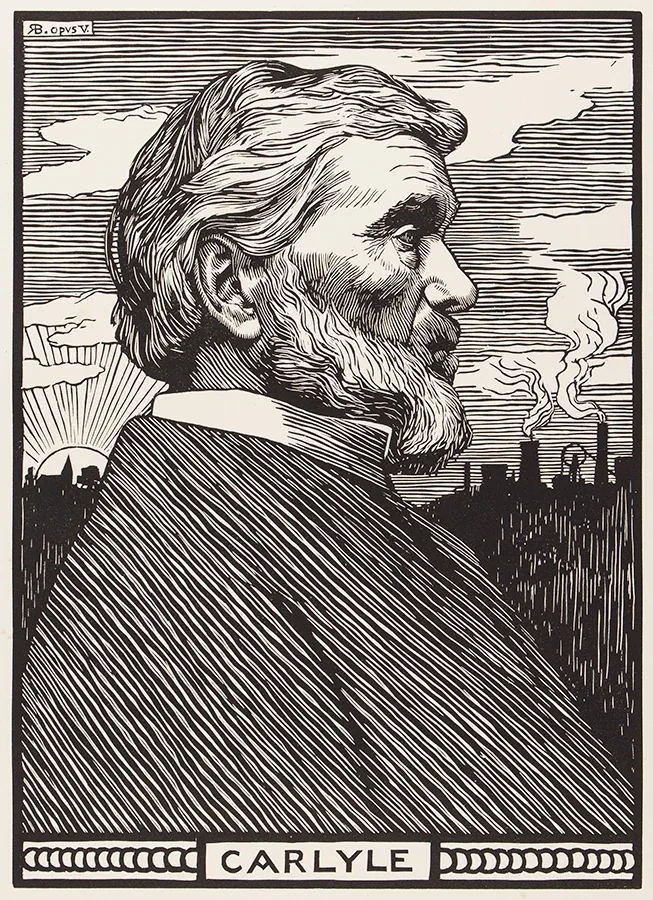
The file record identifies this image as Robert Bryden's woodcut of Thomas Carlyle, made for *Some Woodcuts of Men of Letters of the Nineteenth Century*. The file…
5 min read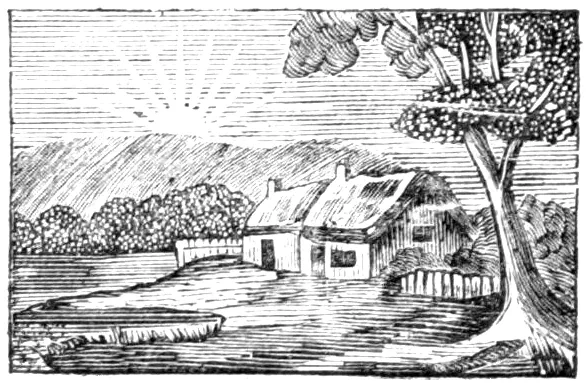
Popular Irish Stories: A Glasgow Chapbook
*Popular Irish Stories* appeared in Glasgow in 1850 as number 23 in a “New and Improved Series.” The National Library of Ireland catalogue describes it as a 24-page…
5 min read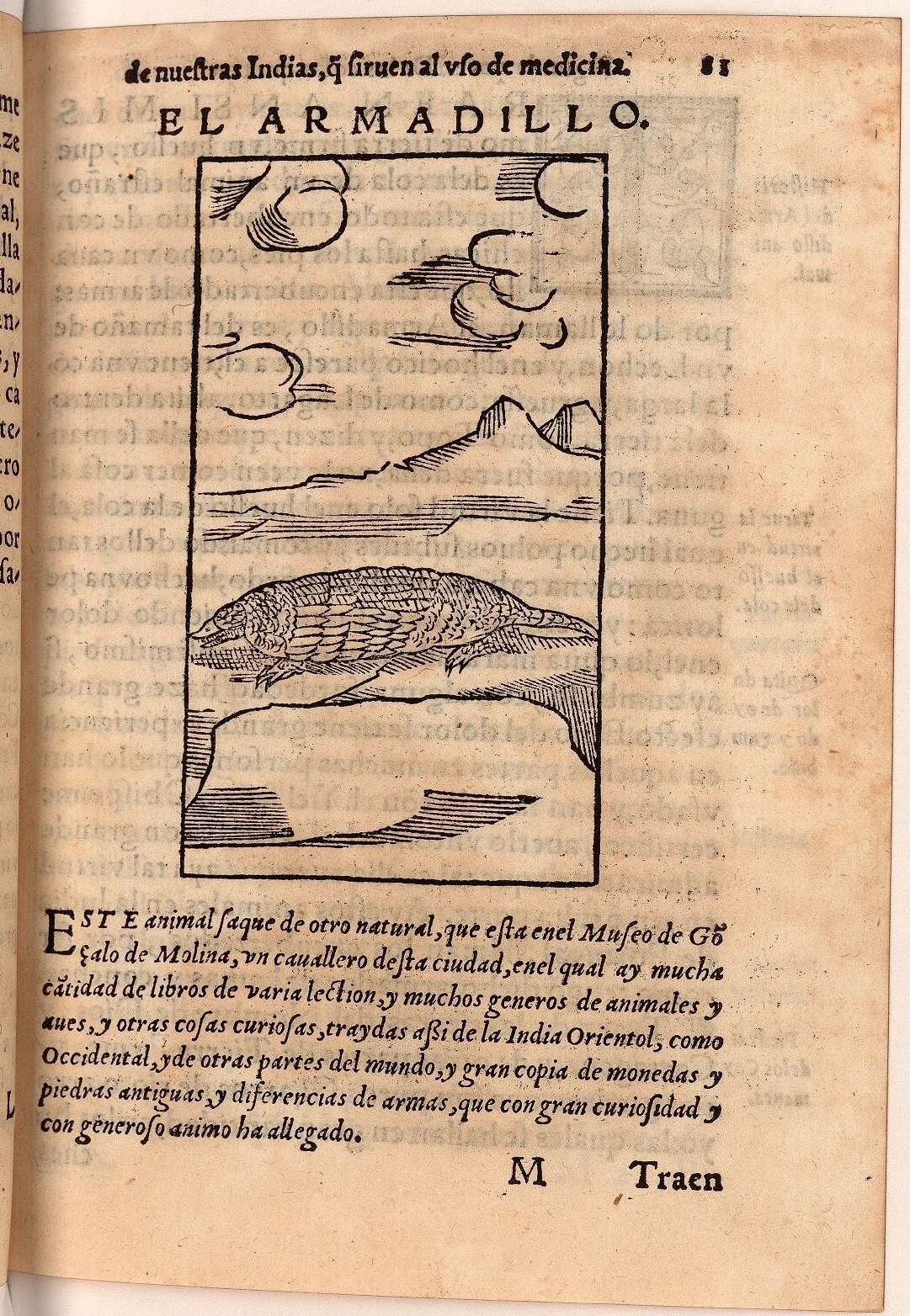
Monardes’s Armadillo Woodcut
The Commons record identifies this image as a woodcut illustration of an armadillo from Nicolás Monardes's 1574 *Historia medicinal*. The illustration belongs to a…
5 min read