
The Print Field / Essay 19
Chinese Type Casts in Hong Kong
The photographed display of traditional Chinese character casts at Hong Kong Open Printshop raises a question that a single tray cannot settle: how does movable…
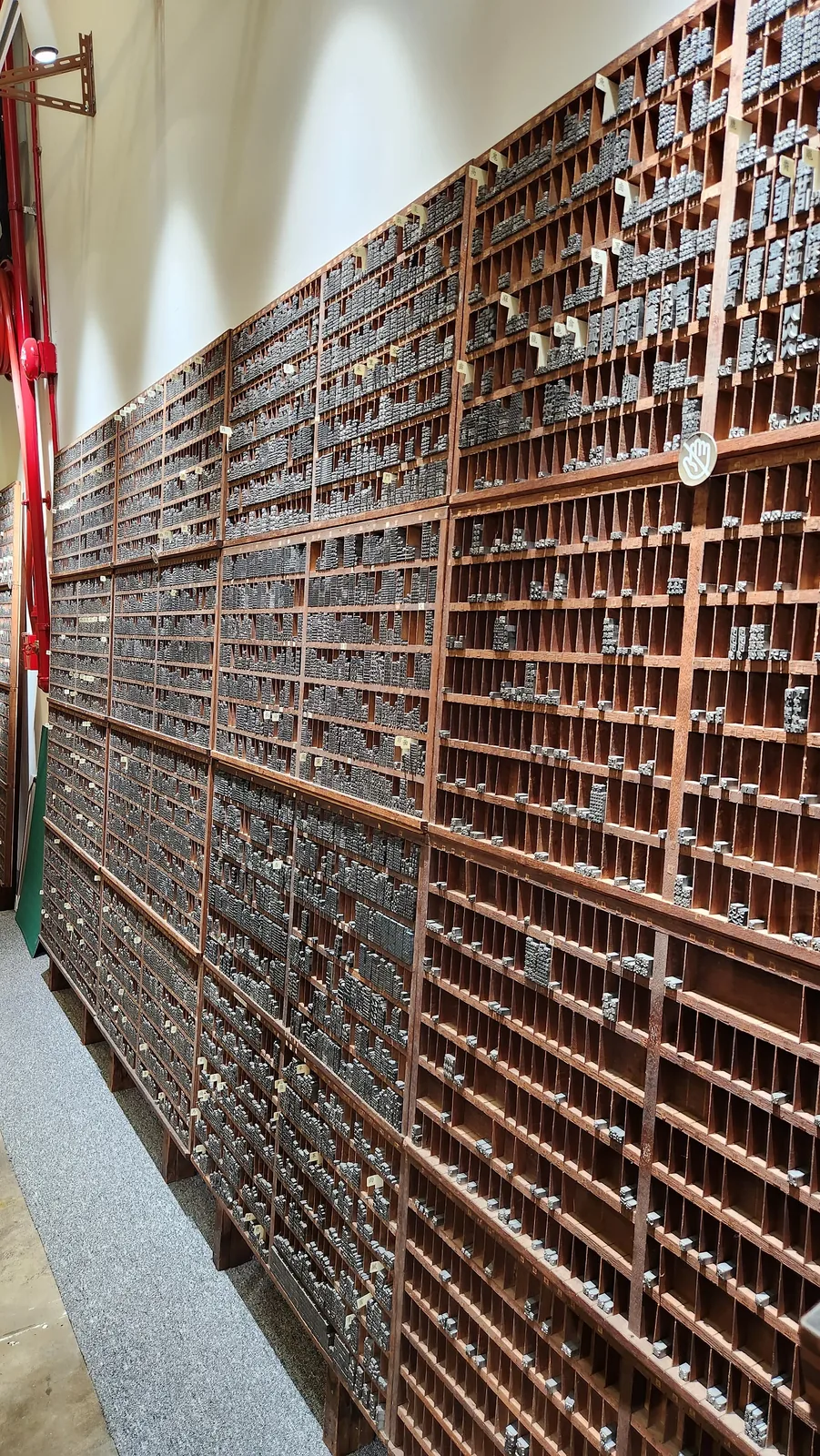
A small set inside a large language
The photographed display of traditional Chinese character casts at Hong Kong Open Printshop raises a question that a single tray cannot settle: how does movable type work when a writing system uses a much larger repertoire of characters than a small alphabet? The image record identifies the objects as historical casts of traditional Chinese characters. The Hong Kong Heritage Museum's exhibition material, “Between the Lines,” offers a more specific example from the region's printing history: the mid-nineteenth-century “Hong Kong Type,” also called Ming No. 4, whose matrices were located in the Netherlands and used as the basis for a 2020 recasting project.
Those are separate bodies of evidence. The Commons photograph tells us what its caption says is on display. The museum booklet describes the documented search for and recasting of one historical type. It would be misleading to claim, from the photograph alone, that its casts are the same “Hong Kong Type” or that they belong to that particular project. What the sources together make possible is a careful discussion of the practical problems that character repertoire, storage, type design, and preservation create for printing.
Storage is part of typography
Movable type must be available, identifiable, and retrievable. In an alphabetic case, familiar letters can be divided by frequency and organized across compartments. A printer working with a larger repertoire faces a different inventory problem: more distinct sorts have to be stored, sorted, and located. The exact solution has varied by place, period, printing technology, and language. A single object display cannot stand in for all Chinese type shops, just as an English case cannot represent every Latin-script workshop.
The Hong Kong Type story makes the material scale visible. The Heritage Museum booklet documents a set of lead matrices associated with type dating to 1860, found in the collection of the National Museum of Ethnology in Leiden. The project team recast a first set of 73 characters in July 2020. That figure describes the initial output of that specific recasting effort. It is not a count of the complete historical character set, nor a measure of every character used in nineteenth-century Hong Kong printing.
A typeface travels through records
The search described in the exhibition booklet crosses institutions and national borders. In 2018, Hong Kong Open Printshop's programme director received a photograph from the Netherlands; researchers then traced documents in the University of Amsterdam archive and identified matrices in Leiden. The history is not only about a typeface's shapes. It is also about how a group of objects can become separated, how names and labels carry partial clues, and how institutional cooperation can reconnect them to a place and a craft tradition.
That movement cautions against treating a typeface as an abstract design that exists independently of its objects. A surviving matrix preserves a form, but it also records a process of manufacture and a route through collections. A recast character preserves the ability to print, but its relationship to a historical source must be described transparently. Reproduction is not the same thing as uninterrupted survival; it is a new act informed by evidence about an earlier object.
The case and the character are not the whole story
A character cast can invite visual comparison: how is the face shaped, how deep is the relief, how does its body sit beside others? Those questions belong to typography and printing technique. They do not tell us who read the resulting pages, how printers set each job, or how a shop organized its full stock. To answer those questions requires books, workshop records, photographs, and collection histories alongside the type itself.
The museum exhibition also places movable type beside lithography in a broader account of Hong Kong printing. That pairing is important because print histories are rarely a simple march from one machine to another. Different processes could coexist, serve different kinds of work, and be maintained by separate practitioners. The objects in a gallery may be arranged to tell a historical argument; their labels and catalogue entries should be read for the scope of that argument.
Preserving a design and supplying a text are different achievements
The first recast group of 73 Hong Kong Type characters is significant as the outcome of a documented recovery project. It should not be judged as if it were automatically a complete stock for any proposed publication. A typeface can be historically recognizable in a small group of casts, while setting a particular text requires the right characters in the right quantities. These are distinct measures of success: recovering forms and supplying composition.
A hypothetical short paragraph illustrates the difference. It might need several copies of one common character and a single instance of a rarer one. A display containing many different characters once each would not necessarily provide the required distribution. Counting distinct forms alone therefore misses the inventory that makes continuous setting possible. This reasoning concerns movable type generally; it does not assign a production capacity or a missing character list to the museum's recasting project.
The distinction gives preservation a richer purpose. Original matrices, newly cast sorts, demonstration impressions, and a full working stock can each preserve different aspects of typography. The Heritage Museum booklet documents the project and its first output; the cover photograph documents a separate display. Reading them together helps explain why a recast can be a substantial scholarly achievement before it becomes a practical resource for every line a contemporary printer might wish to set. The contribution is renewed access to a documented design, with composition remaining a material question of repertoire and quantity.
Further reading
Sources & records
Linked records provide object descriptions and historical context. Comparisons, close readings, and explicitly hypothetical examples are editorial analysis. This essay was revised on 22 October 2026; it does not report first-hand workshop research. The image source and license appear in its caption.
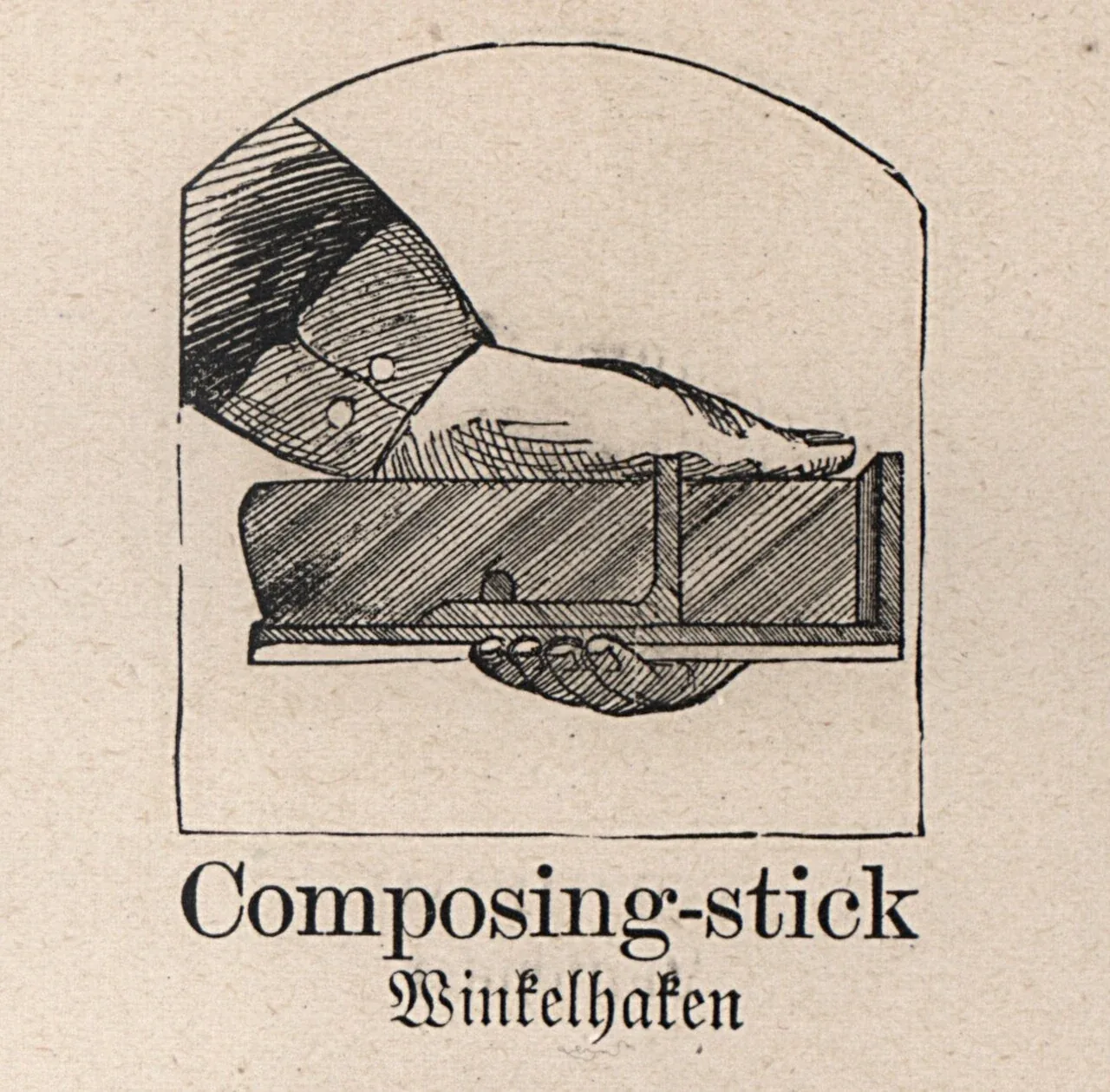
The Composing Stick, Line by Line
The composing stick is a small tool with an outsized role: it holds one line of type while a compositor assembles words from individual sorts. The Library of…
5 min read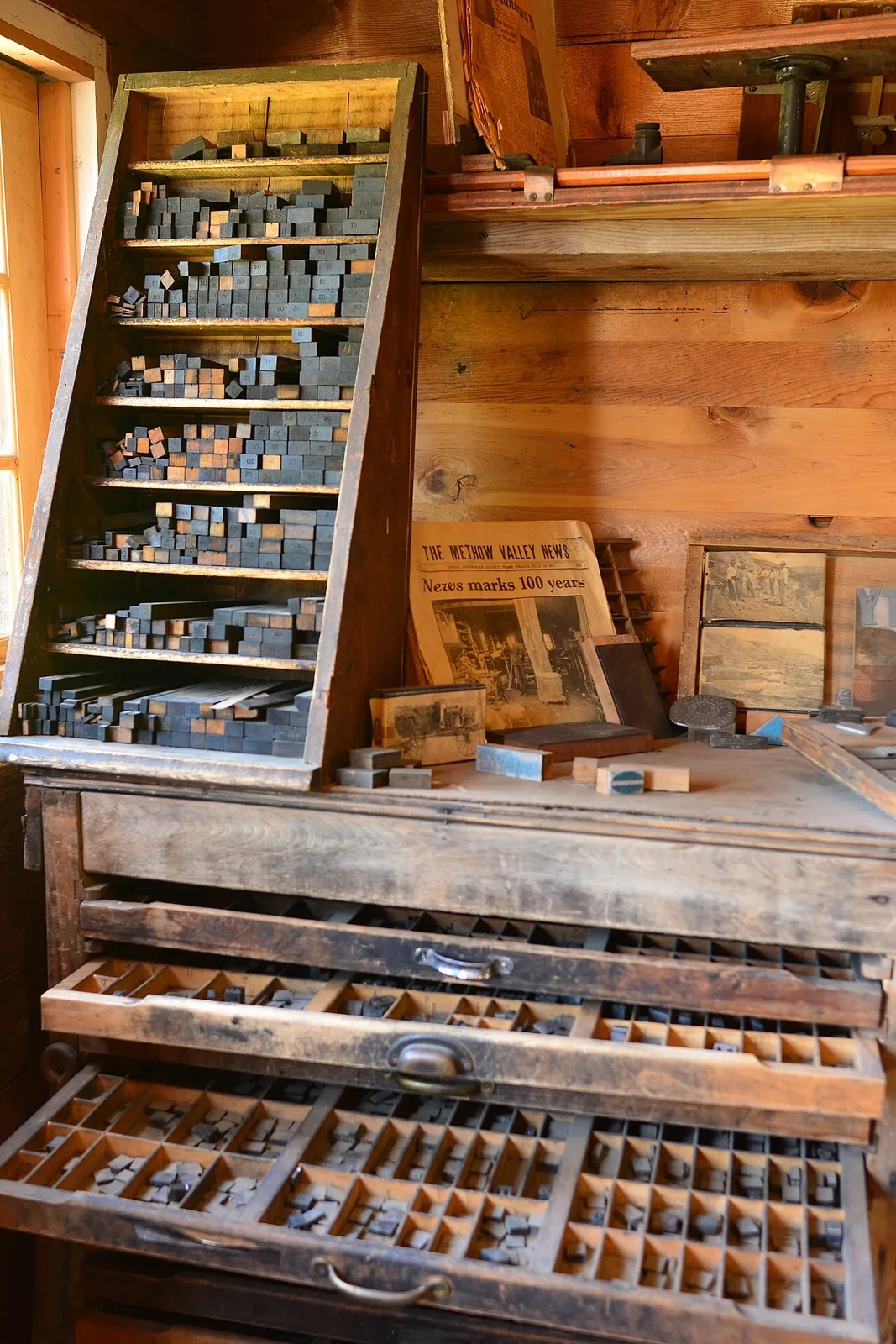
The Type Case as a Shop Index
A printer’s case is not a decorative box of letters. It is a working storage system that determines how a compositor reaches the type needed for a line. The cover’s…
4 min read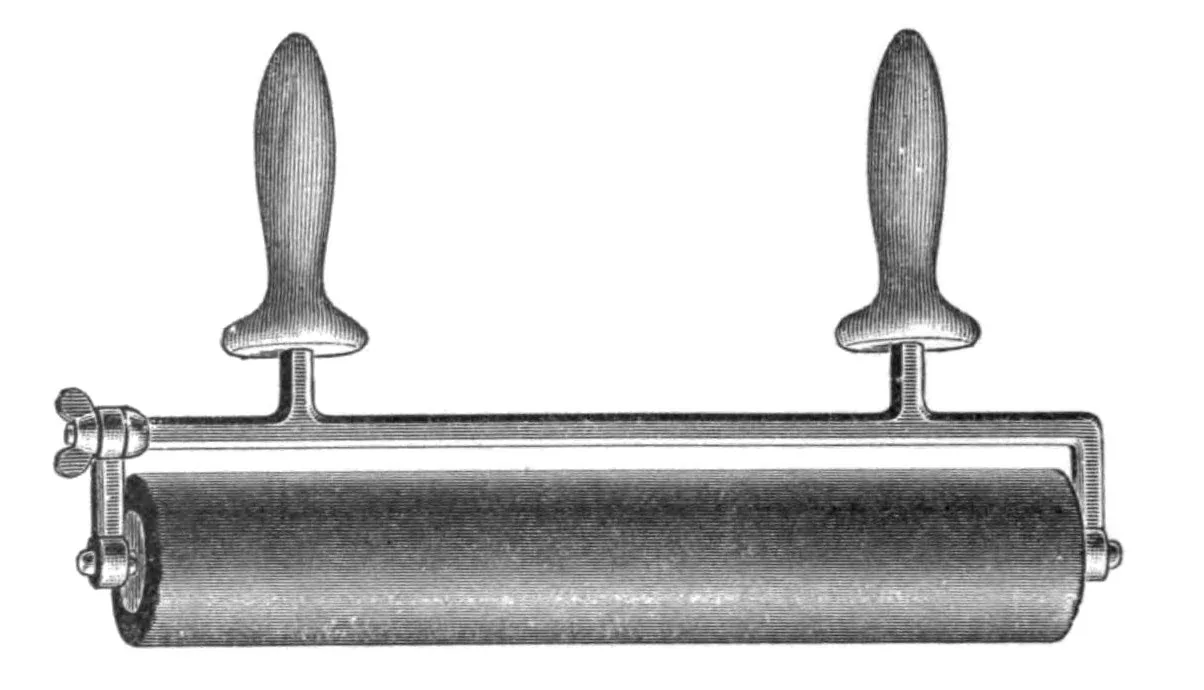
Inking with a Hand Roller
The cover reproduces an illustration of a composition hand roller from an American Type Founders catalogue dated 1906, as identified in the source file. The file…
5 min read