
The Print Field / Essay 37
An Amsterdam Riverside Linocut
The Commons file describes a linocut of riverside buildings in Amsterdam and credits Subhashish Panigrahi. Its permission text explicitly says that the linocut or…
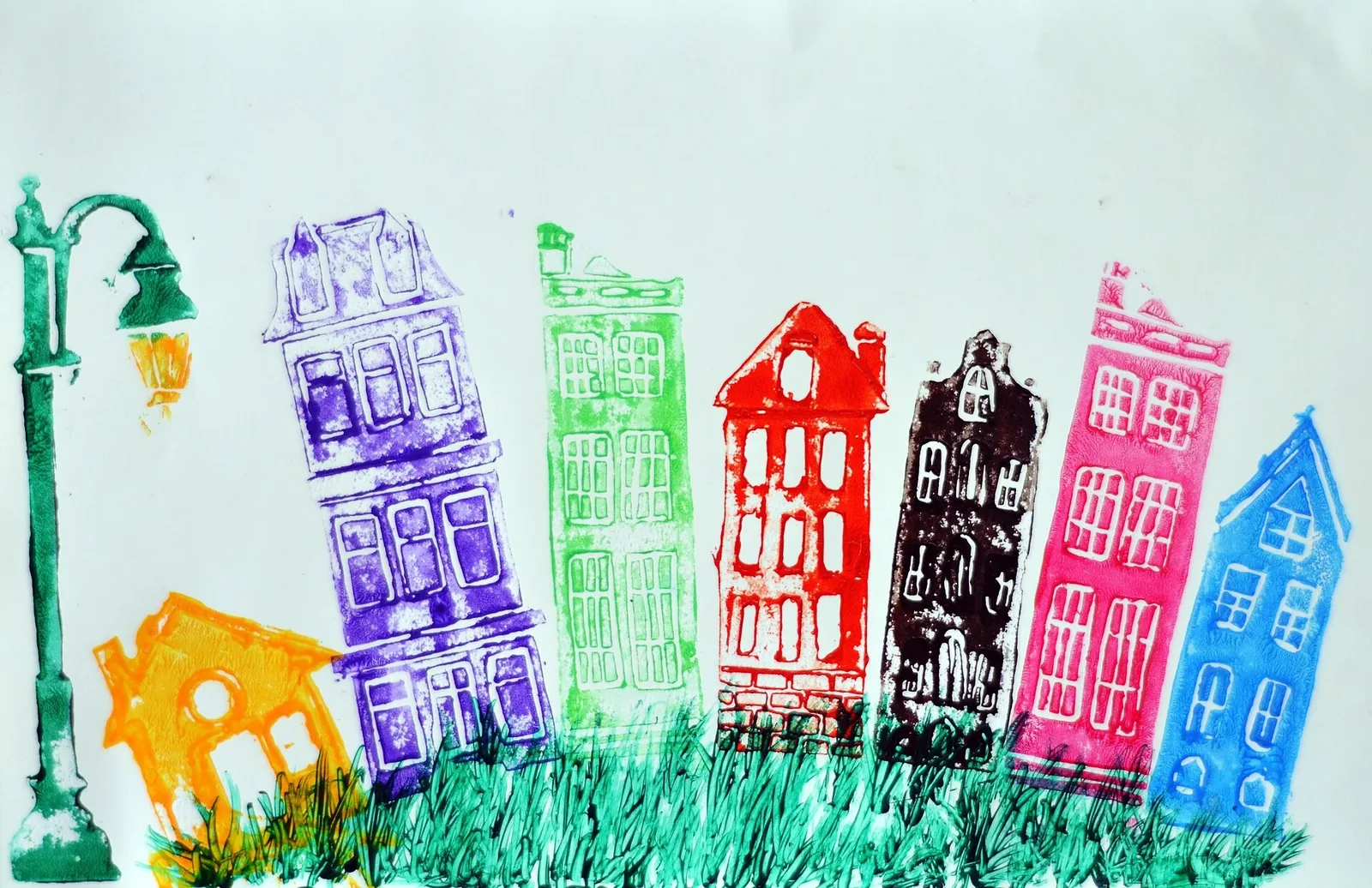
A city enters the block through its edges
The Commons file describes a linocut of riverside buildings in Amsterdam and credits Subhashish Panigrahi. Its permission text explicitly says that the linocut or stencil and/or its prints were created by Panigrahi. This is a self-attributed work in the file record, rather than an independently authenticated museum attribution. The recorded credit should be retained without inventing a detailed studio history, exact viewpoint, or printing sequence that the page does not provide.
Riverside architecture is a subject made of repeated edges. Rooflines meet the sky; façades descend toward water; windows break a wall into smaller units. A linocut reduces those structures to raised and cut shapes. The maker decides which parts of a building remain as ink and which disappear into the paper. This can make a city view feel more graphic than a photograph, but it does not make it less attentive to structure.
What relief does to a façade
Linoleum is carved so that selected areas remain at printing height. Ink touches those raised areas, and pressure transfers them to paper. A carved groove prints as a light channel; a broad uncut plane can become a dark wall. The printed image is reversed from the block, so directional details such as lettering or a specific architectural feature need to be planned accordingly.
In a riverside view, the water may provide an open field against which the buildings stand. A repeated window pattern can establish scale; a broken reflection can soften the rigid geometry of a façade. These are ways to read a city image, not claims about the artist's technique in this particular print. The source identifies the subject but does not document the block count, paper, colors, or printing sequence.
The city is recognizable without being a map
Amsterdam's canals and riverside buildings are a recognizable urban motif, but a print can compress or rearrange what it sees. The viewer should avoid treating the image as a precise record of a specific address unless the source names one. A city print may be based on direct observation, photographs, memory, or a combination; without artist documentation, the method stays unknown.
That uncertainty does not prevent a grounded visual description. Look at the angle of the buildings, the height of the horizon, the position of the water, and the rhythm of repeated façades. Ask whether the composition draws attention to a single structure or to the continuous waterfront. If the image appears simplified, note which architectural details survive that reduction. These observations can explain the print without locating it beyond the source's wording.
Water is a second kind of surface
Water in a print can mirror architecture, distort it, or act as an open interval. A sequence of carved lines may suggest movement; a solid dark plane may make the water feel still. The artist can also leave the water mostly unmarked and allow the buildings to carry the contrast. Such choices are especially visible in relief, where each mark comes from a physical alteration to the block.
Because the image is a reproduction of a print, not the block itself, some process clues may be concealed. A high-resolution view could reveal carving direction and ink texture; an examination of the original could show paper and relief more clearly. The online record is still valuable as a source for the depicted work and its digital license, but technical claims should not exceed what the file provides.
Cities and print circulation
A linocut can be repeated and shared more easily than a one-off drawing. Its impressions can travel as prints, cards, or illustrations. The city view therefore has two geographies: the place represented and the route by which the print itself circulates. The available record identifies Amsterdam as the subject. It does not say where the print was made, who first owned it, or how widely it was distributed.
Catalogues can sometimes answer those questions through collection histories, inscriptions, or artist archives. Until such a record is available, the article should not transform the image into a travel diary. The city is present through forms on paper; its depiction remains a constructed view. That distinction is useful across print history, where images can appear to document a place while also reflecting an artist's particular arrangement of it.
Architecture and reflection organize space differently
A riverside view offers two related systems of edges. Buildings can provide repeated vertical divisions and rooflines; water can interrupt, echo, or dissolve those divisions. In a relief image, both have to be made from relationships between ink and paper. The useful critical question is how the print distinguishes a stable façade from the less stable surface beside it, rather than how faithfully it records an address that its source does not identify.
One reading exercise is to compare the intervals between buildings with the intervals within the water where visible. Repetition may organize the waterfront into a sequence, while interruptions prevent that sequence from becoming a uniform grid. This is a way to examine the reproduction, not a claim that the printmaker credited in the file permission statement used a documented theory of urban rhythm. It keeps the proposed explanation accountable to shapes another reader can locate.
Amsterdam is the named subject, but recognizable architecture is not sufficient evidence of the exact making place, viewpoint, or date of the work. The file's permission statement supplies a creator attribution, although a fuller object history is not provided. These limits can be stated once while the article does something more useful with the available image. Reading the meeting of architecture and water explains a particular representational problem: how a block can give rigidity and movement different graphic forms within the same view. It offers a reason to look at this print closely even before a fuller object history has been recovered.
Further reading
Sources & records
Linked records provide object descriptions and historical context. Comparisons, close readings, and explicitly hypothetical examples are editorial analysis. This essay was revised on 22 October 2026; it does not report first-hand workshop research. The image source and license appear in its caption.
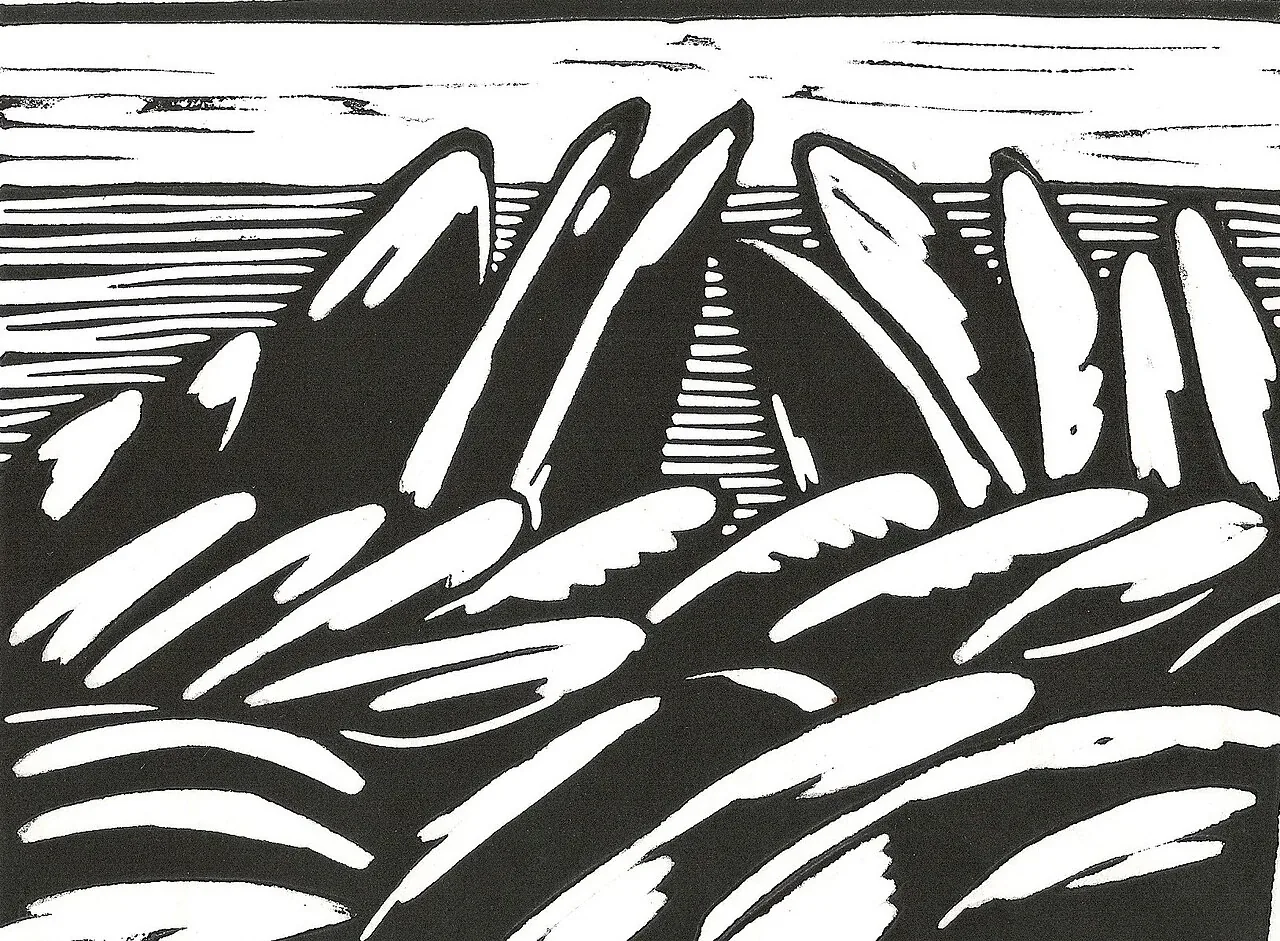
Rocks in Bretagne
The Commons object description identifies Ingeborg Bernhard's linocut as *Rocks in the Bretagne, France*, dated 1977, with dimensions of 21 by 30 centimetres. The…
5 min read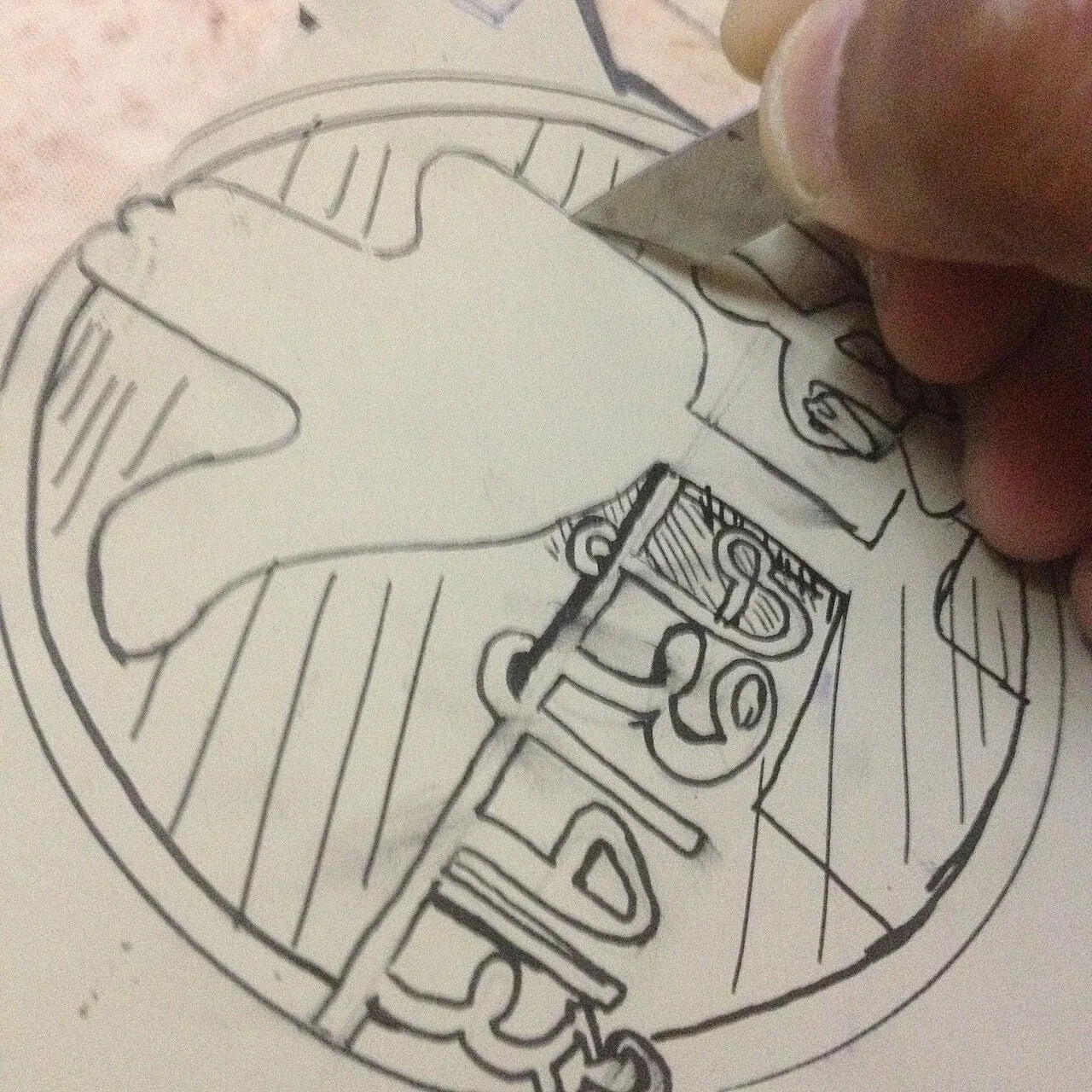
Carving a Chandigarh Stamp in Linoleum
The photograph shows a sheet of linoleum being carved for a stamp. Its caption identifies the design as a stamp featuring Chandigarh's Open Hand Monument, the Rock…
5 min read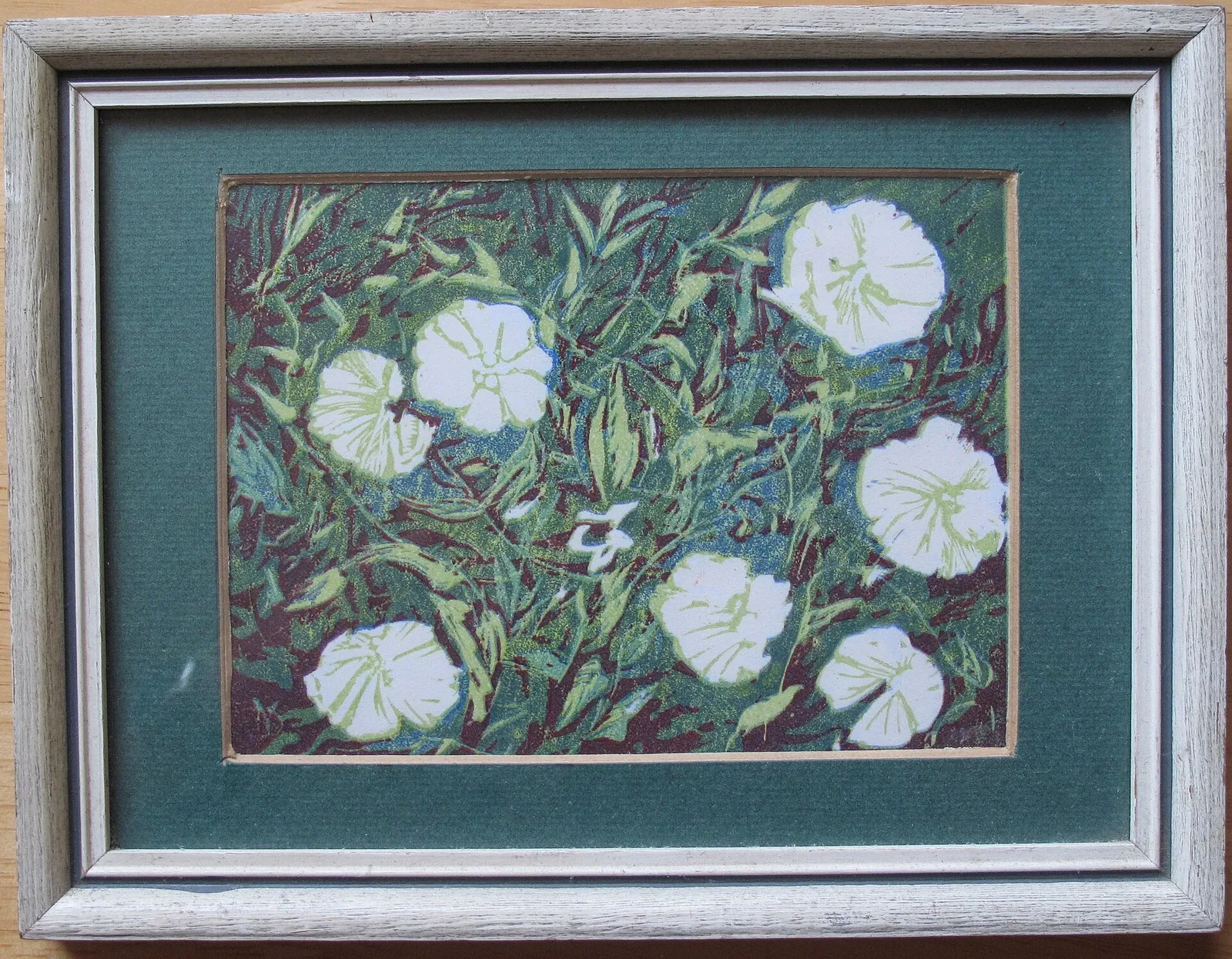
Yvonne Drewry’s Convolvulus Linocut
The Commons file record identifies this image as a linocut of convolvulus flowers by Yvonne Drewry, dated 1975. The photographed impression is the starting…
5 min read