
The Print Field / Essay 40
Allan Jordan’s Small Woodcut
The cover image shows a one-colour woodcut by Allan Jordan, described as self-titled and measuring 5.2 by 6.8 centimetres. Its Commons record dates it to the 1930s…
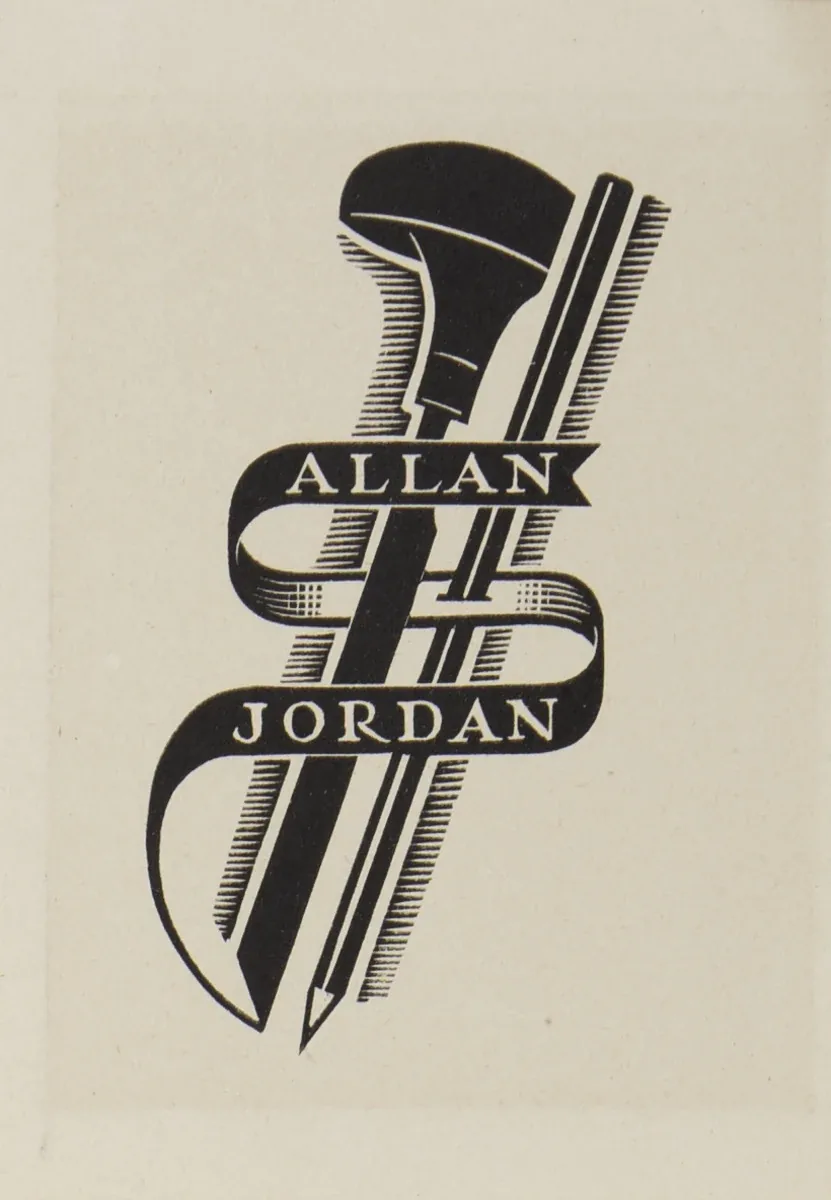
A very small woodcut with a documented home
The cover image shows a one-colour woodcut by Allan Jordan, described as self-titled and measuring 5.2 by 6.8 centimetres. Its Commons record dates it to the 1930s and identifies the Hamilton Gallery Collection as its home. At that scale, the print can be held close to the eye. Every cut has to carry a meaningful edge, and every dark area competes for a small portion of paper.
The phrase “self-titled” is wording from the Commons description; it does not establish that the work is untitled or identify a depicted sitter. The description does not supply a subject, so an article should not guess what the image depicts or attach a narrative to it. The print can be discussed through the facts that are documented: maker, medium, approximate date, dimensions, and collection. A close visual reading can add observations about contrast and carving while keeping the subject open.
Woodcut begins with the surface that remains
Woodcut is a relief process. The artist cuts away the parts that should not print and leaves the raised surface to receive ink. Pressure then transfers the image to paper. The final print is reversed from the block, and the cut lines appear as unprinted marks. The grain, hardness, and direction of the wood can influence how a line behaves, although the source record does not identify the wood species used for Jordan's print.
At 5.2 by 6.8 centimetres, the object is close to the scale of a small ex libris or bookplate, but the record does not call it one. That comparison is only about dimensions. The size comparison does not establish a bookplate function for this particular work; that identification would require a relevant catalogue description or inscription. A viewer should not transform a size resemblance into a function.
One colour makes value carry the composition
With one colour, the print's structure depends on the relationship between ink and paper. A single ink can create a wide range of visual effects through the size of solid forms, the density of carved lines, and the amount of blank surface. If the image has a strong silhouette, it may remain legible at a glance; if its interest lies in fine details, it rewards close looking.
The online reproduction may be enlarged far beyond the object's actual dimensions. That magnification helps inspection but can make the image seem larger and more detailed than its physical encounter. The recorded measurements are a useful corrective. A viewer can imagine how the print sits in a collection or portfolio, then return to the image to see which marks survive at that scale.
The object and its reproduction have separate records
The Hamilton Gallery source link in the Commons record identifies the collection context. The Commons file page documents the digital image, creator attribution, and public-domain designation. These records answer related but different questions: where the work is held, who made it, what the image is called, and how the reproduction may be reused. The gallery's full catalogue would be the best place to confirm additional details about the object.
The phrase “one-colour woodcut” also describes a production process, not the number of impressions. A single block could produce multiple copies, but the edition size is not stated in the cited record. We should not infer whether the print was an edition, a proof, or a unique pull. The visible object and its catalogue entry would need to say more.
A small format is a demanding one
Small prints compress the work of carving. A narrow cut can separate two forms; a tiny gap can keep a letter or shape from filling in. The printmaker needs to anticipate how ink spreads and how pressure transfers detail. A simple-looking mark may have required careful tool control. Because the image contains only one ink, contrast has to do much of the work that a larger palette could otherwise share.
Small scale also changes how a viewer encounters the print. The eye moves across the image quickly, then returns to inspect its texture. The hand and the page are close together, making the object feel intimate. These are observations about format, not documented statements about Jordan's intention. The artist may have chosen the dimensions for a specific use that the current record does not identify.
Enlargement changes the balance between mark and field
A print measuring 5.2 by 6.8 centimetres can occupy much of a screen when enlarged. That change helps inspection, but it also changes what seems visually dominant. A small cut can become a broad channel; a compact area of texture can seem like a landscape of marks. Returning to the recorded dimensions is therefore part of interpretation, not simply a courtesy to the catalogue.
The useful comparison is between two viewing tasks. An enlarged image helps identify relationships among fine lines. A representation at approximate physical size helps ask which shapes organize the whole at a glance. Neither replaces an examination of the actual sheet, but together they prevent magnification from becoming an unspoken assumption about the work's intended scale. This is a proposed reading method, not a report of a physical examination of Jordan's print.
Small size also explains why a comparison with a bookplate can be tempting yet insufficient. Similar dimensions do not establish function. A bookplate identification would need a title, inscription, accession description, or other relevant evidence. Here the record supports a small one-colour woodcut in the Hamilton Gallery context. That is enough to develop a distinctive analysis: a limited field makes each separation between ink and paper carry more organizational work. This comparison connects documented size with the consequences of viewing, while keeping an unverified purpose from becoming part of the object's history.
Further reading
Sources & records
Linked records provide object descriptions and historical context. Comparisons, close readings, and explicitly hypothetical examples are editorial analysis. This essay was revised on 22 October 2026; it does not report first-hand workshop research. The image source and license appear in its caption.
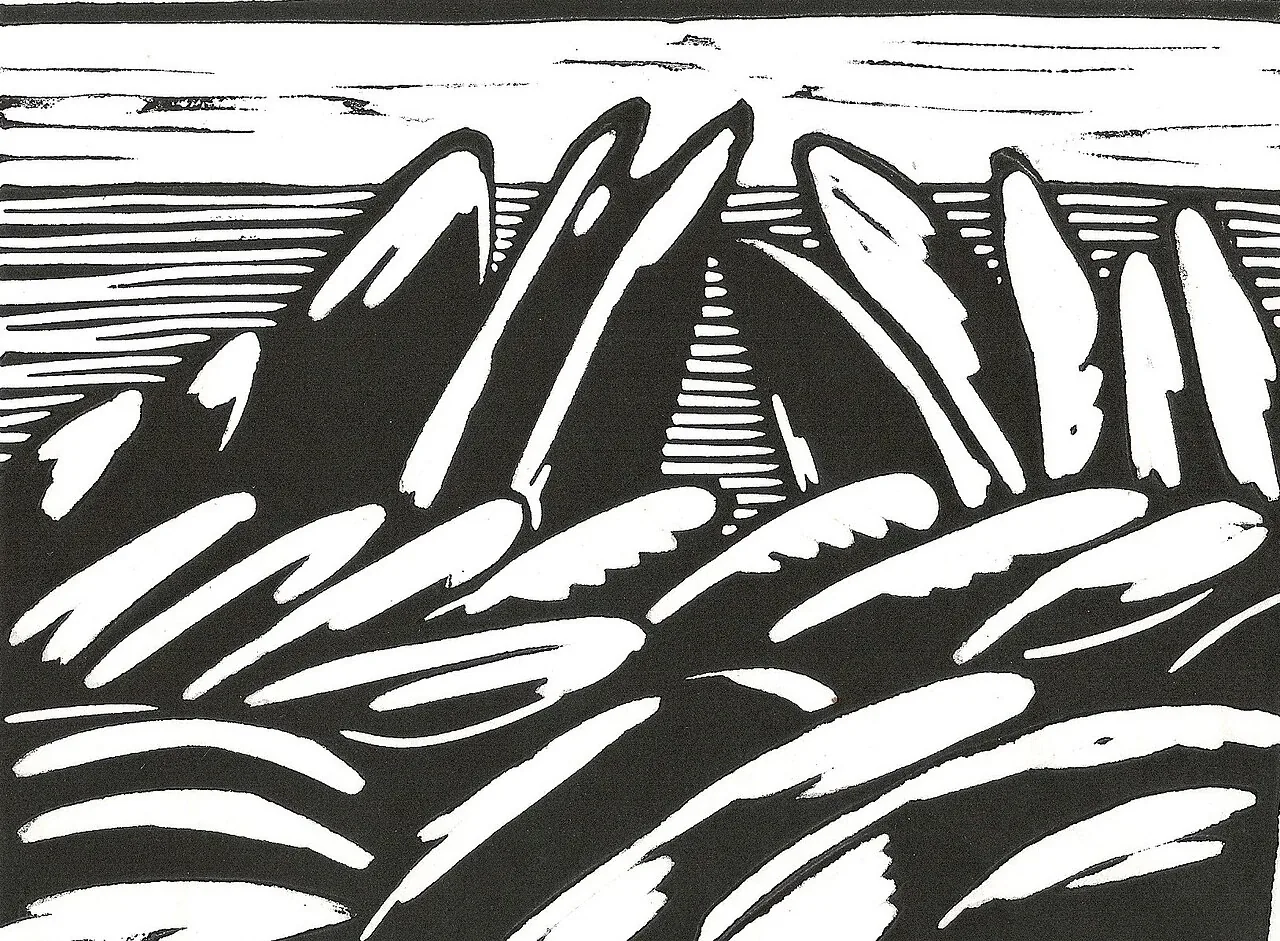
Rocks in Bretagne
The Commons object description identifies Ingeborg Bernhard's linocut as *Rocks in the Bretagne, France*, dated 1977, with dimensions of 21 by 30 centimetres. The…
5 min read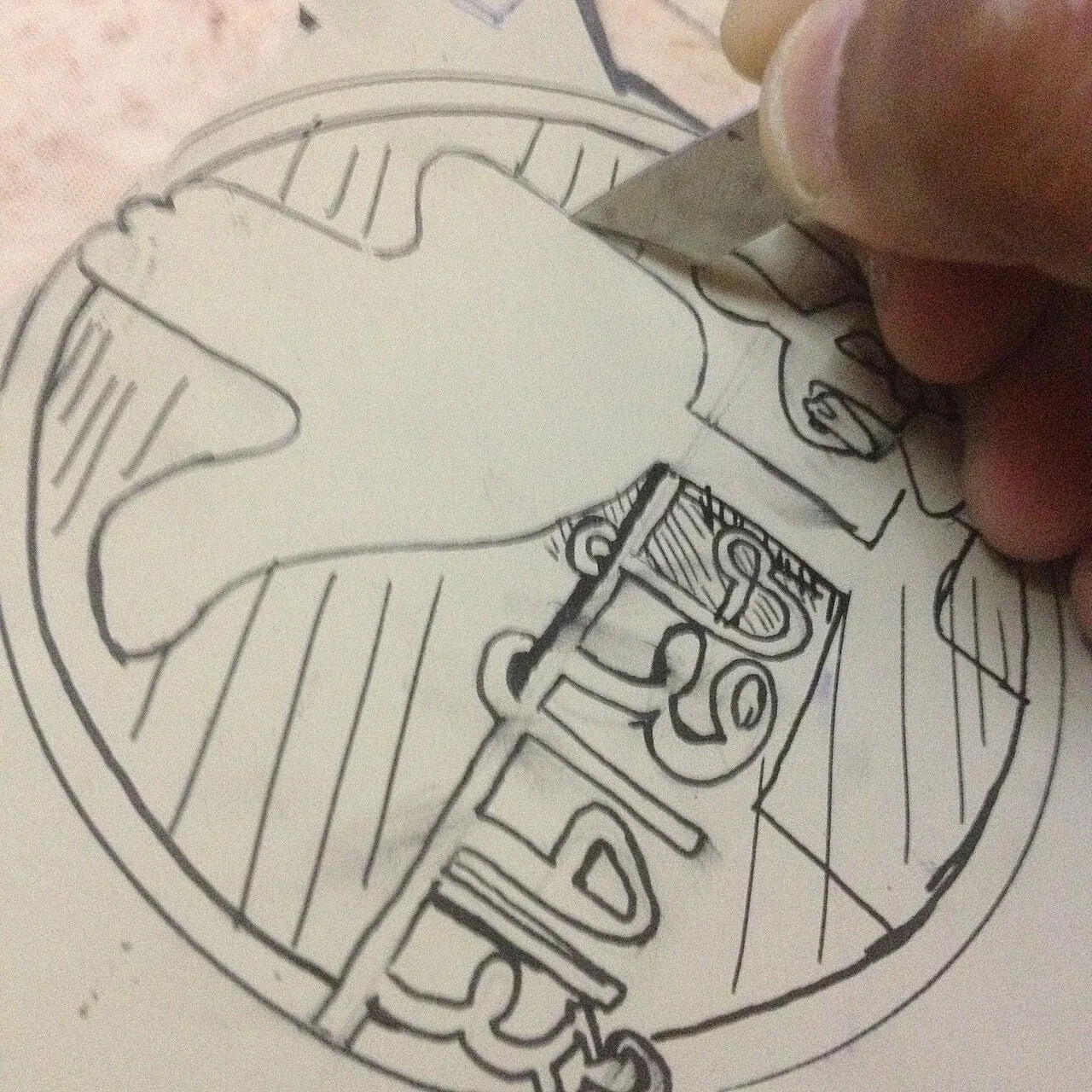
Carving a Chandigarh Stamp in Linoleum
The photograph shows a sheet of linoleum being carved for a stamp. Its caption identifies the design as a stamp featuring Chandigarh's Open Hand Monument, the Rock…
5 min read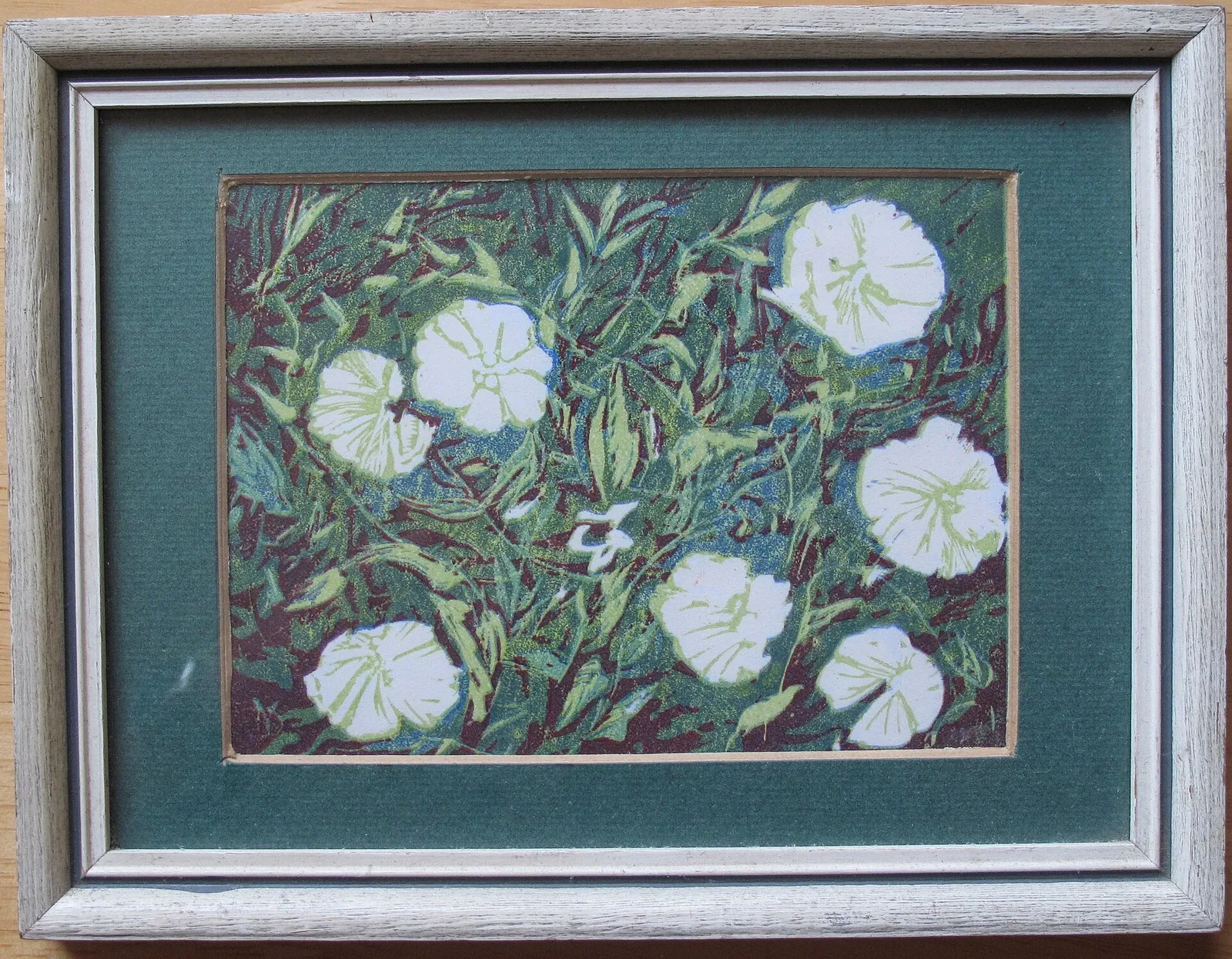
Yvonne Drewry’s Convolvulus Linocut
The Commons file record identifies this image as a linocut of convolvulus flowers by Yvonne Drewry, dated 1975. The photographed impression is the starting…
5 min read